
🎭 Art & Culture कला और संस्कृति
801 exam-ready facts · 758 MCQs
-
701
Kharchi Puja is a prominent festival of Tripura held in Old Agartala, dedicated to the worship of fourteen indigenous tribal deities whose head-images carry Brahmanical names.
Tripura's Department of Information and Cultural Affairs describes Kharchi as a festival of indigenous tribal deities held at Old Agartala , and speaks of the legends about these fourteen deities . The deities&#x…
Asked in SSC CGL 2025 (14 Sep, Shift 2)
Practice (1)
Q677The Kharchi Puja of Tripura is associated with worship of how many deities?
Show answer
Correct answer: B — 14
Answer: (B)Tripura's Department of Information and Cultural Affairs describes Kharchi as a festival of indigenous tribal deities held at Old Agartala, and speaks of the legends about these fourteen deities.
The deities' head-images carry Brahmanical names such as Hara, Uma and Hari. Fourteen is option (b).
Why the others are wrong(a)12: Twelve is not the count. The Tripura government's account of Kharchi speaks of fourteen deities, worshipped as head-images at Old Agartala.(c)15: Fifteen overshoots by one. Tripura's Department of Information and Cultural Affairs counts fourteen deities at Kharchi.(d)16: Sixteen is two too many. Tripura's government account places fourteen deities at the centre of Kharchi, worshipped at Old Agartala in June-July. -
702
Panthi dance is a traditional folk dance performed by the Satnami community of Chhattisgarh, who are the dedicated followers of social reformer Guru Ghasidas.
Panthi is the dance of the Satnami community of Chhattisgarh, and the Satnamis are the followers of Guru Ghasidas . The Sangeet Natak Akademi describes Satnamis setting up the Jaitkham on festive occasions and dancing…
Asked in SSC CGL 2025 (14 Sep, Shift 2)
Practice (1)
Q678Fill in the Blank:<br>Panthi dance is linked to the followers of _____ in Chhattisgarh.
Show answer
Correct answer: A — Guru Ghasidas
Answer: (A)Panthi is the dance of the Satnami community of Chhattisgarh, and the Satnamis are the followers of Guru Ghasidas.
The Sangeet Natak Akademi describes Satnamis setting up the Jaitkham on festive occasions and dancing in praise of "the true name of the Guru", to the mandar drum and the jhanjh.
Why the others are wrong(b)Kabir: Kabir, the saint-poet, has his own following, the Kabirpanth. The Panthi dancers are Satnamis, the followers of Guru Ghasidas.(c)Kabuli: Kabuli names no saint or sect. The word means "of Kabul", as in Kabuli chana, so there are no followers of it to dance Panthi.(d)Nanak: Guru Nanak founded Sikhism, whose heartland is Punjab. Panthi belongs to Chhattisgarh's Satnami community. -
703
Kalbelia songs and dances of Rajasthan form an oral nomadic heritage recognized by UNESCO, characterized by rich mirror-embroidered costumes and passed down without written texts.
Statement 1 is true. UNESCO says the Kalbelia songs and dances form "an oral tradition for which no texts or training manuals exist" , passed down from generation to generation. Statement 2 is false. UNESCO…
Asked in SSC CGL 2025 (14 Sep, Shift 2)
Practice (1)
Q679Which of the following statements are correct?<br>1. Kalbelia performers rarely document their art due to its oral nomadic heritage.<br>2. Costumes avoid stitched elements in honor of serpent rituals.<br>3. The community’s art was included in UNESCO ICH list without any written application process.
Show answer
Correct answer: A — Only 1
Answer: (A)Statement 1 is true. UNESCO says the Kalbelia songs and dances form "an oral tradition for which no texts or training manuals exist", passed down from generation to generation.
Statement 2 is false. UNESCO describes the dancers' garments as richly embroidered with small mirrors and silver thread.
Statement 3 is false. The element was inscribed in 2010 on a written nomination file, No. 00340. That leaves statement 1 only.
Why the others are wrong(b)Only 2 & 3: Both statements it keeps are false. The costumes are richly embroidered with mirrors and silver thread, and the UNESCO listing rests on a written nomination file.(c)All 1, 2 & 3: Statements 2 and 3 are false. UNESCO describes embroidered garments, and Kalbelia's 2010 inscription rests on a written nomination file, No. 00340.(d)Only 1 & 3: Statement 3 is false. Kalbelia was inscribed in 2010 on a written nomination file (No. 00340), which comes with a record of the communities' consent. -
704
Ghana Vadya refers to solid idiophone instruments in Indian music classification that require no tuning before playing and are primarily used to provide rhythm in folk music.
The Natya Shastra sorts instruments by how they sound: stringed (tata), hollow or wind (sushira), covered (avanaddha) and solid (ghana). Ghana vadya are idiophones, instruments whose solid body itself sounds when stru…
Asked in SSC CGL 2025 (14 Sep, Shift 3)
Practice (1)
Q680Which of the following statements best defines Ghana Vadya in the context of Indian traditional music?
Show answer
Correct answer: C — Solid, non-tunable instruments primarily used for rhythm in folk music
Answer: (C)The Natya Shastra sorts instruments by how they sound: stringed (tata), hollow or wind (sushira), covered (avanaddha) and solid (ghana).
Ghana vadya are idiophones, instruments whose solid body itself sounds when struck. They need no tuning before playing and are principally rhythmic, best suited to folk and tribal music and dance. That is option (c).
Why the others are wrong(a)Tuned melodic instruments played with strings and bow: Strings and a bow describe tata vadya, the stringed family, where bowed instruments like the sarangi sit alongside plucked ones like the sitar. Ghana instruments have no strings.(b)Percussion instruments requiring precise tuning before use: Drums that need tuning are avanaddha vadya, covered instruments with a skin stretched over a frame or vessel, like the tabla and mridangam. Ghana instruments are solid, with no skin to tune.(d)Wind instruments made of bamboo or reed used in classical traditions: Bamboo and reed instruments are sushira vadya, where sound comes from air blown into a hollow column, as in the bansuri or shehnai. Ghana means solid, not hollow. -
705
Rauf (or Rouf) is a traditional women's group folk dance of Kashmir, predominantly performed during festive occasions like Eid, featuring a distinctive face-to-face footwork formation.
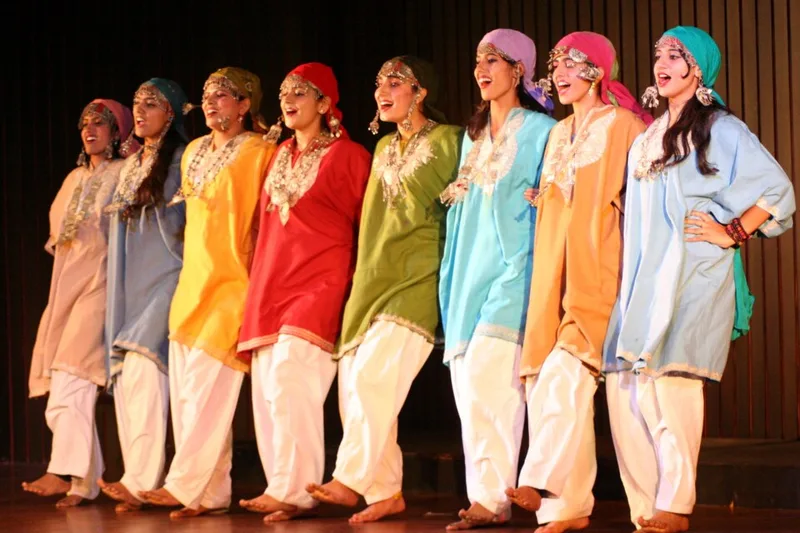
Statement 1 is right. J&K Tourism describes Rouf as a dance performed by a group of women on festive occasions such as Eid and the days of Ramzan. Statement 2 matches its form: the women stand face to face , and f…
Asked in SSC CGL 2025 (16 Sep, Shift 1)
Practice (1)
Q681Consider the statements about Rauf:<br>1. It is a women’s group dance of Kashmir usually performed at Eid.<br>2. Dancers align in two facing rows executing toe-heel footwork called ras.<br>Which is/are correct?
Show answer
Correct answer: C — Both 1 & 2 correct
Answer: (C)Statement 1 is right. J&K Tourism describes Rouf as a dance performed by a group of women on festive occasions such as Eid and the days of Ramzan.
Statement 2 matches its form: the women stand face to face, and footwork is the dance's most notable feature.
Both → option (c).
Why the others are wrong(a)Only 1 correct: Statement 2 is also right: Rouf dancers stand facing each other, and their footwork is the dance's best-known feature.(b)Only 2 correct: Statement 1 is also right: Rouf is danced by women in Kashmir, especially at Eid and in Ramzan, and at weddings too.(d)Neither 1 nor 2 correct: Both statements describe Rouf as its sources do: women, festive occasions such as Eid, dancers facing each other, footwork at the centre. -
706
Tusu is a traditional harvest festival celebrated in the tribal belt of Jharkhand, West Bengal, and Odisha on the last day of the Hindu calendar month of Poush, particularly prominent around Bundu.
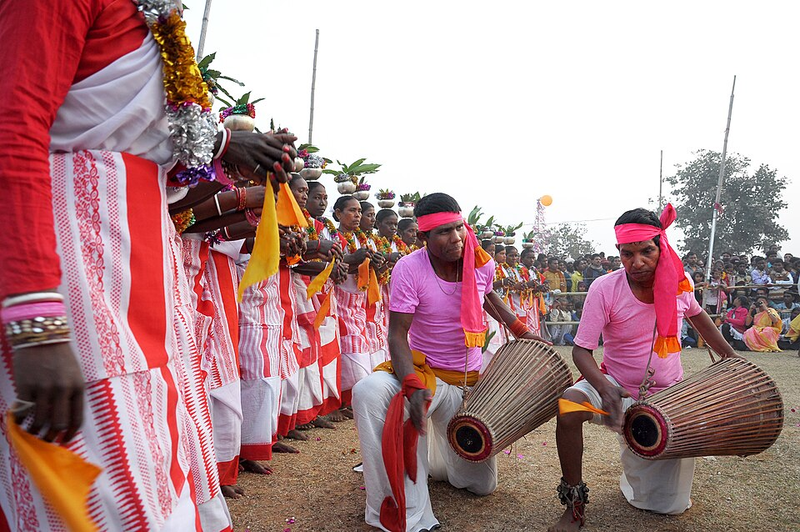
The Government of Jharkhand's own description says Tusu "is mostly seen in the area between Bundu, Tamar and Raidih area of Jharkhand". The stem follows that sentence, so the blank is Bundu . The same d…
Asked in SSC CGL 2025 (16 Sep, Shift 2)
Practice (1)
Q682Fill in the blank:<br>The Tusu festival is primarily celebrated in the tribal belt of Jharkhand, especially around the area between ______, Tamar, and Raidih.
Show answer
Correct answer: B — Bundu
Answer: (B)The Government of Jharkhand's own description says Tusu "is mostly seen in the area between Bundu, Tamar and Raidih area of Jharkhand". The stem follows that sentence, so the blank is Bundu.
The same description calls Tusu a harvest festival held in winter, on the last day of the month of Poush.
Why the others are wrong(a)Dumka: Dumka is the headquarters of the Santhal Pargana division, well away from the belt the state names for Tusu: Bundu, Tamar and Raidih.(c)Daltonganj: Daltonganj (Medininagar) is the headquarters of Palamu district in north-western Jharkhand. It is not one of the places the state's description names.(d)Chaibasa: Chaibasa is the headquarters of West Singhbhum district. The state's description of the Tusu belt names Bundu, Tamar and Raidih, not Chaibasa. -
707
Pandit Vishnu Narayan Bhatkhande developed the modern notation system for Hindustani classical music and meticulously documented ragas in his monumental six-part work, Kramik Pustak Malika.
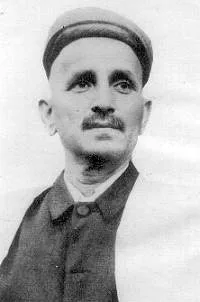
Vishnu Narayan Bhatkhande (1860–1936), born at Walkeshwar in Bombay, wrote the Kramik Pustak Malika , a detailed textbook of Hindustani music in six parts that describes the important ragas. He also devised the notati…
Asked in SSC CGL 2025 (16 Sep, Shift 2)
Practice (1)
Q683Who is credited with developing the modern notation system for Hindustani classical music and documenting compositions in the Kramik Pustak Maalika?
Show answer
Correct answer: C — Pandit Vishnu Narayan Bhatkhande of Bombay
Answer: (C)Vishnu Narayan Bhatkhande (1860–1936), born at Walkeshwar in Bombay, wrote the Kramik Pustak Malika, a detailed textbook of Hindustani music in six parts that describes the important ragas.
He also devised the notation system that became the standard way of writing Hindustani music down, and grouped its ragas into ten thaats.
Why the others are wrong(a)Ustad Allauddin Khan of Maihar Gharana: Ustad Allauddin Khan is the great guru of the Maihar gharana, remembered as a teacher of instrumentalists. The Kramik Pustak Malika and the standard notation are Bhatkhande's, not his.(b)Pandit Vishnu Digambar Paluskar of Gwalior: Vishnu Digambar Paluskar founded the Gandharva Mahavidyalaya at Lahore in 1901 and wrote Sangeet Bal Prakash. He was Bhatkhande's contemporary, but the Kramik Pustak Malika is not his work.(d)Saint Tyagaraja of Carnatic Tradition: Tyagaraja was a composer of Carnatic music, the southern tradition. The question is about a Hindustani notation and a Hindustani textbook. -
708
Poikkal Kuthirai Aattam is a traditional dummy-horse folk dance of Tamil Nadu, performed during religious festivals with dancers wearing a lightweight horse frame and wooden hooves, associated with Ayyanar worship.
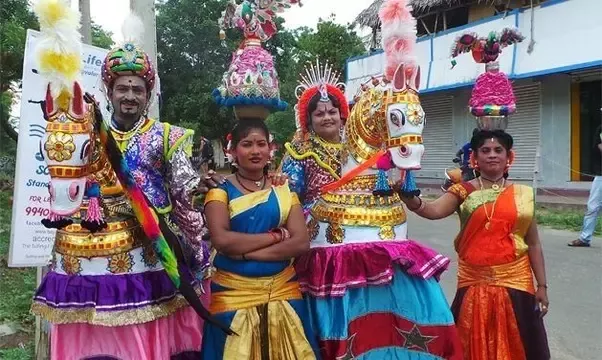
Poikkal Kuthirai Aattam is a folk dance of Tamil Nadu . The name means false-leg horse dance: the dancer fits inside a light dummy horse and ties wooden legs to the feet, which sound like hooves when tapped. It is arr…
Asked in SSC CGL 2025 (15 Sep, Shift 3)
Practice (1)
Q684Poikkal Kuthirai Aattam, or dummy horse dance, is performed primarily during religious festivals in which state?
Show answer
Correct answer: B — Tamil Nadu
Answer: (B)Poikkal Kuthirai Aattam is a folk dance of Tamil Nadu. The name means false-leg horse dance: the dancer fits inside a light dummy horse and ties wooden legs to the feet, which sound like hooves when tapped.
It is arranged during religious festivals and is linked to the worship of Ayyanar, mainly around Thanjavur: option (b).
Why the others are wrong(a)Kerala: The dummy-horse dance is documented as a Tamil Nadu form centred on Thanjavur. Kerala is the home of Kathakali and Mohiniyattam.(c)Karnataka: Karnataka is the key for Yakshagana at 26 Sep 2024, 16:00, GA Q.2. The dummy-horse dance belongs to Tamil Nadu and is performed mainly around Thanjavur.(d)Telangana: The dance is documented in Tamil Nadu, not Telangana. Its link to Ayyanar, a Tamil village guardian deity, ties it to Tamil Nadu festivals. -
709
During the Fagli festival in the Lahaul-Spiti (Pattan Valley) region, the 'punha' ritual involves symbolic indoor ploughing using willow sticks to invoke agricultural prosperity during heavy winter snows.
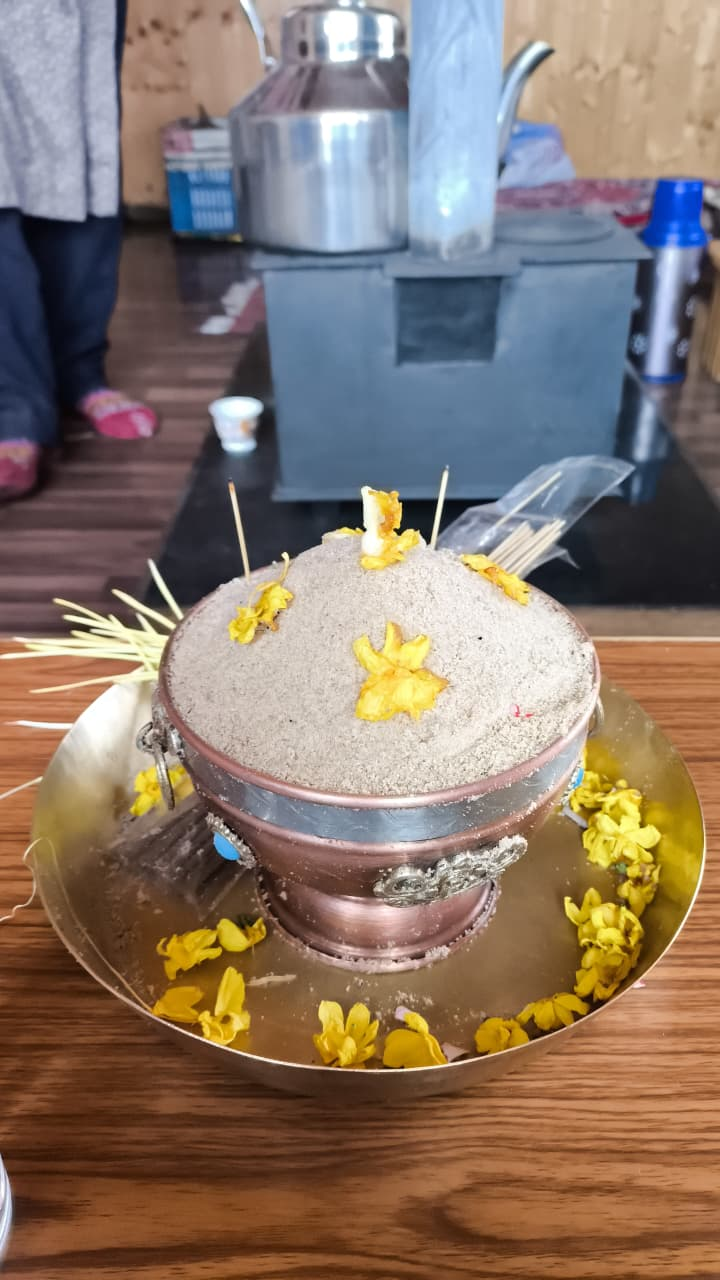
The Lahaul-Spiti district administration describes a day of Fagli called punha , a symbolic ploughing of the fields. The fields lie under snow at that season, so two green willow sticks stand for the bullocks and two …
Asked in SSC CGL 2025 (16 Sep, Shift 1)
Practice (1)
Q685Which of the following best captures the core rituals and symbolism of the Fagli (Kus/Kuns) festival in Pattan Valley?
Show answer
Correct answer: B — Punha involves symbolic ploughing indoors using willow sticks, reflecting farming hopes during snow.
Answer: (B)The Lahaul-Spiti district administration describes a day of Fagli called punha, a symbolic ploughing of the fields.
The fields lie under snow at that season, so two green willow sticks stand for the bullocks and two more for the yoke and plough, and they are moved forward in the room before the Baraza → option (b).
Why the others are wrong(a)Baraza, symbolizing Shikhara-Appa, is made with marigold and turmeric and placed at village shrines.: Village shrines is the error. The Baraza does represent Shikhara-Appa and is decked with marigolds, but it is a draped bamboo stick set up inside the house.(c)Totu, made of wheat and honey, is offered on rooftops to priests, then fed to goats.: Wheat and honey is wrong: totu is a dough of roasted barley flour and buttermilk. It is offered to the deities on the roof, then shared by the family as prasada.(d)Kwari sweets are made by elder women for temple offerings, as men chant to crow spirits.: Crows are fed, not chanted to. The head of the family and his wife prepare kwari, and it is thrown to the crows waiting for it, not made for a temple. -
710
Simikla Koom (Binayo), a bamboo harp of the Limboo community in Sikkim, is traditionally believed to be the first musical instrument created for the deity Tetlara Lahadongna.
In the Limboo Mundhum myth, as the Sikkim Government's Cultural Affairs and Heritage page tells it, the first musical instrument was a bamboo harp: the Simikla Koom , Binayo in the Khas language. The brothers Sam…
Asked in SSC CGL 2025 (16 Sep, Shift 1)
Practice (1)
Q686Which musical instrument from Sikkim is believed to have been the first created for the deity Tetlara Lahadongna, and is associated with mythological origins?
Show answer
Correct answer: B — Simikla Koom (Binayo)
Answer: (B)In the Limboo Mundhum myth, as the Sikkim Government's Cultural Affairs and Heritage page tells it, the first musical instrument was a bamboo harp: the Simikla Koom, Binayo in the Khas language.
The brothers Samdang Khewa and Lingdang Khewa made it for their sister Tetlara Lahadongna → option (b).
Why the others are wrong(a)Niyara Hongsing Ke: Niyara Hongsing Ke belongs to the same Limboo myth, spelled as printed here, but the myth makes it the next instrument. The first, made for Tetlara Lahadongna, is the Simikla Koom.(c)Yema Dhol: A dhol is a drum. The first instrument in the Limboo myth, made for Tetlara Lahadongna, is a bamboo harp, the Simikla Koom.(d)Nagara of Yeba: A nagara is a drum too. The instrument made for Tetlara Lahadongna is the Simikla Koom, a bamboo harp, not a drum. -
711
Rauf is a traditional Kashmiri women's dance performed during Eid and spring-wedding festivities, while Karma is danced at the Karam festival on Bhadra Ekadashi.
Match each dance to its home and occasion. Rauf (1): Kashmiri women's dance of Eid and weddings → A Karma (2): danced at the Karam festival on the eleventh day of Bhadra → B Tamasha (3): Maharashtra's folk t…
Asked in SSC CGL 2025 (16 Sep, Shift 2)
Practice (1)
Q687Match the dance with its prime social/religious context:<br><table><tr><td>Dance</td><td>Social/religious context</td></tr><tr><td>1. Rauf</td><td>A. Eid & spring-wedding festivities</td></tr><tr><td>2. Karma</td><td>B. Bhadra Ekadashi agrarian ritual</td></tr><tr><td>3. Tamasha</td><td>C. Night-long folk-theatre in Shimga season</td></tr><tr><td>4. Jhumar</td><td>D. Post-monsoon tea-garden recreations</td></tr></table>
Show answer
Correct answer: A — 1-A 2-B 3-C 4-D
Answer: (A)Match each dance to its home and occasion.
Rauf (1): Kashmiri women's dance of Eid and weddings → A
Karma (2): danced at the Karam festival on the eleventh day of Bhadra → B
Tamasha (3): Maharashtra's folk theatre → C, the only theatre row
Jhumar (4): harvest dance of eastern India, Assam included → D1-A 2-B 3-C 4-D → option (a).
Why the others are wrong(b)1-A 2-C 3-B 4-D: Karma is not folk theatre, and Tamasha is no harvest rite. Option (b) swaps B and C between them, so both pairs break.(c)1-B 2-A 3-C 4-D: Rauf and Karma are swapped. Rauf belongs to Kashmir's Eid and wedding festivities, while the Bhadra Ekadashi ritual is the Karam festival.(d)1-A 2-B 3-D 4-C: Tamasha and Jhumar are swapped. Tamasha is theatre, so it cannot be the tea-garden recreation, and Jhumar is a dance, not folk theatre. -
712
The Bhagoria festival begins seven days before Holika Dahan, which is celebrated on the full moon of the Phalguna month in Madhya Pradesh.
Bhagoria runs through the week that ends at Holika Dahan , the bonfire lit on the eve of Holi. The Jhabua district administration in Madhya Pradesh says the Bhagoria haats begin seven days before the burning of Holika…
Asked in SSC CGL 2025 (17 Sep, Shift 1)
Practice (1)
Q688The festival of Bhagoria begins seven days before which Hindu festival?
Show answer
Correct answer: B — Holika Dahan
Answer: (B)Bhagoria runs through the week that ends at Holika Dahan, the bonfire lit on the eve of Holi.
The Jhabua district administration in Madhya Pradesh says the Bhagoria haats begin seven days before the burning of Holika. Holika Dahan falls on the full moon of Phalguna, so the festival's anchor is option (b).
Why the others are wrong(a)Diwali: Diwali is the autumn festival of lamps, in October–November. Bhagoria's haats run in the week before the Holi bonfire, in February–March.(c)Navratri: Navratri is not the anchor. The spring Navratri begins about two weeks after Holi, and the autumn one falls in September–October.(d)Makar Sankranti: Makar Sankranti is a solar festival fixed around 14 January, when the Sun enters Makara. Bhagoria follows the lunar calendar to the Holi full moon. -
713
In Pt. Somnath's Rāga Vivodha, Swarlakshana defines a rāga's tonal structure, detailing the specific musical notes (svaras) it uses and their behavioral features.
The question wants the term for a rāga's tonal structure , meaning its notes. Svara means a musical note and lakṣaṇa a defining feature, so Swarlakshana is literally 'the features of the notes': which s…
Asked in SSC CGL 2025 (17 Sep, Shift 1)
Practice (1)
Q689In Rāga Vivodha, Pt. Somnath defined a rāga through Devamāyā svarūpa (ethos). Which of the following, denoting its tonal structure?
Show answer
Correct answer: C — Swarlakshana
Answer: (C)The question wants the term for a rāga's tonal structure, meaning its notes.
Svara means a musical note and lakṣaṇa a defining feature, so Swarlakshana is literally 'the features of the notes': which svaras a rāga uses and how they behave.
Somanatha's Rāga Vibodha describes rāgas in these note terms, through graha, aṁśa and nyāsa: option (c).
Why the others are wrong(a)Tālanga: Tālanga belongs to tāla, the rhythmic cycle: the aṅgas are the parts a tāla is built from. It measures time, not the notes of a rāga.(b)Rūpa: Rūpa means form, close to the svarūpa the stem already names as the rāga's ethos. The tonal structure is the svara detail, which is Swarlakshana.(d)Jāti: Jāti classifies rather than describes: in rāga theory it counts the notes used, five, six or seven (auḍava, ṣāḍava, sampūrṇa), and in older texts it names ancient melodic types. -
714
Perini Shivatandavam is a traditional warrior dance of Telangana that prospered under the Kakatiya dynasty and was revived in modern times by Dr. Nataraja Ramakrishna.
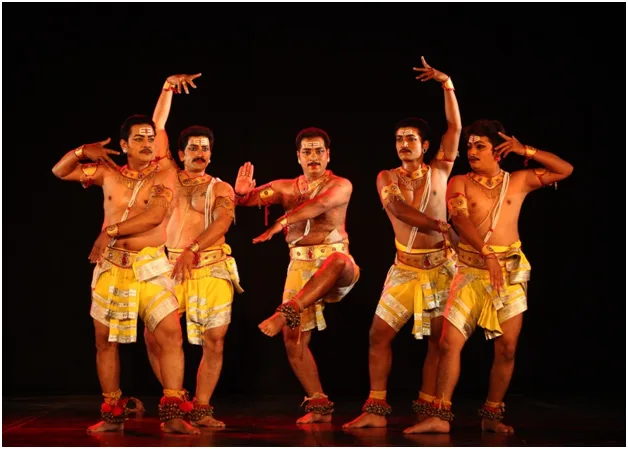
Statement 1 is true. Perini Shivatandavam is the dance of warriors: before leaving for battle, warriors performed it before the idol of Shiva. Its modern life is a revival. Dr Nataraja Ramakrishna revived it by studyi…
Asked in SSC CGL 2025 (16 Sep, Shift 3)
Practice (1)
Q690Consider the following statements:<br>1. Perini Shivatandavam is a warrior dance revived in modern times.<br>2. It originated from the court of Chola kings of Tamil Nadu.<br>Which of the above statements is/are correct?
Show answer
Correct answer: A — Only 1 is correct
Answer: (A)Statement 1 is true. Perini Shivatandavam is the dance of warriors: before leaving for battle, warriors performed it before the idol of Shiva.
Its modern life is a revival. Dr Nataraja Ramakrishna revived it by studying old manuscripts and the sculptures of the Ramappa Temple.
Statement 2 is false. The dance prospered under the Kakatiya dynasty of Warangal, in present-day Telangana, not at a Chola court in Tamil Nadu.
Only statement 1 holds → option (a).
Why the others are wrong(b)Only 2 is correct: Statement 2 is the false one. Perini prospered under the Kakatiyas of Warangal in Telangana, so tying it to the Chola court of Tamil Nadu gets both the dynasty and the region wrong.(c)Both statements 1 and 2 are correct: Both cannot stand because the Chola attribution fails. Perini's patrons were the Kakatiyas of Warangal, so only the warrior-dance statement survives.(d)Neither statement 1 nor 2 is correct: Statement 1 is true, so 'neither' fails. Warriors performed Perini before battle, and Nataraja Ramakrishna revived it from old manuscripts and Ramappa Temple sculpture. -
715
The Capuchin Church architectural style, following its 1529 constitutions at Albacina, characteristically features a simple flat arched entrance with a pediment to reflect monastic poverty.
The Capuchins are a reform of the Franciscan order that dates from 1525 . They sought to re-establish Franciscan life in the spirit of the earliest Franciscan tradition, and poverty ruled even their buildings. Their f…
Asked in SSC CGL 2025 (16 Sep, Shift 3)
Practice (1)
Q691Which of the following is a typical architectural feature of the Capuchin Church?
Show answer
Correct answer: C — Flat arched entrance with pediment
Answer: (C)The Capuchins are a reform of the Franciscan order that dates from 1525. They sought to re-establish Franciscan life in the spirit of the earliest Franciscan tradition, and poverty ruled even their buildings.
Their first constitutions, drawn up at Albacina in 1529, asked that houses be built, if possible, of mud and wattles, and that churches be 'of more becoming structure, yet small and narrow'.
A plain arched doorway under a simple pediment fits that restraint. Ornate spires, Gothic tracery and a temple tower do not → option (c).
Why the others are wrong(a)Ornate spires and domes: Ornate is the word that fails. The order's own constitutions asked for churches that were small and narrow, the opposite of decorated spires and domes.(b)Complex traceried rose windows: Traceried rose windows are the showpiece of Gothic cathedrals such as Notre-Dame de Paris. Complex stone tracery is costly ornament, which sits badly with a rule of small, narrow churches.(d)Multi-storey shikhara tower: A shikhara is the tower over the sanctum of a north Indian Hindu temple. It belongs to temple architecture, not to a Christian church of any order. -
716
The red velvet mite, a small red insect that surfaces during the monsoon season, is traditionally called 'teej' and shares its name with the Hariyali Teej festival.
The red velvet mite , a small red creature that surfaces in the monsoon, is also called teej . The option's 'red insect' is this mite. Hariyali Teej falls in that season, in Shravana, and remembers the…
Asked in SSC CGL 2025 (16 Sep, Shift 3)
Practice (1)
Q692Which of the following statements uniquely identifies a symbolic or lesser-known element linking Teej to both nature and mythology?
Show answer
Correct answer: C — The name “Teej” comes from a red insect seen in monsoon
Answer: (C)The red velvet mite, a small red creature that surfaces in the monsoon, is also called teej. The option's 'red insect' is this mite.
Hariyali Teej falls in that season, in Shravana, and remembers the day Shiva accepted Parvati as his wife. The name carries the nature, the festival carries the myth.
A name taken from a monsoon creature is the lesser-known link → option (c).
Why the others are wrong(a)Teej is a public holiday in all North Indian states during the month of Aadi.: Aadi is the fourth month of the Tamil calendar. Teej is reckoned by the north Indian lunar months Shravana and Bhadrapada, so the statement fails on its month alone.(b)"Teej" refers to a lunar goddess linked to fertility and rain.: The word Teej names the third lunar day, the tritiya, not a lunar goddess. The goddess worshipped at the festival, sometimes called Teej Mata, is Parvati.(d)Swinging during Teej represents lunar cycles and Shiva’s Tandava.: Swings are a monsoon custom, hung in courtyards and under trees for the season. The festival's myth is Parvati winning Shiva as her husband, not the Tandava or the lunar cycle. -
717
Hafiz Nagma is a traditional Kashmiri dance form that is strictly based on the musical notes and maqams of classical Sufiana music.
Sufiana Kalam is the classical music of Kashmir, sung in its own maqams to the santoor, rubab, Kashmiri saz, wasool and dokra. The dance performed to that music is Hafiz Nagma . A dance based on Sufiana music is exact…
Asked in SSC CGL 2025 (16 Sep, Shift 3)
Practice (1)
Q693Which of the following pairs of Kashmiri music and its description is correctly matched?
Show answer
Correct answer: C — Hafiz Nagma – Dance based on musical notes of Sufiana music
Answer: (C)Sufiana Kalam is the classical music of Kashmir, sung in its own maqams to the santoor, rubab, Kashmiri saz, wasool and dokra.
The dance performed to that music is Hafiz Nagma. A dance based on Sufiana music is exactly what the pair says → option (c).
Why the others are wrong(a)Chakri – Classical form using Santoor and Hafiz Nagma: Chakri is a song form of folk and religious settings, not classical. It is played on the harmonium, rubab and sarangi, and Hafiz Nagma is a dance, not an instrument.(b)Sufiana Music – Folk style sung with Garaha and Rabab: Sufiana Kalam is Kashmir's classical music, not a folk style. It is accompanied by the rubab, Kashmiri saz, santoor, wasool and dokra.(d)Rouf – Instrumental duet performed with Santoor and Sitar: Rouf is a dance, usually performed by women at weddings and other functions, not an instrumental duet. The santoor belongs with Sufiana Kalam. -
718
Avni Doshi's debut novel 'Burnt Sugar', shortlisted for the 2020 Booker Prize, intensely explores a complex and strained mother-daughter bond.
Burnt Sugar is about Antara and her mother, Tara . In Pune, Antara must care for Tara, whose memory is failing from suspected early-onset Alzheimer's. Tara neglected and abused Antara as a child, so caring for he…
Asked in SSC CGL 2025 (16 Sep, Shift 3)
Practice (1)
Q694What is the theme of Avni Doshi’s Burnt Sugar, shortlisted for the Booker Prize 2020?
Show answer
Correct answer: C — Complex mother-daughter bond
Answer: (C)Burnt Sugar is about Antara and her mother, Tara. In Pune, Antara must care for Tara, whose memory is failing from suspected early-onset Alzheimer's.
Tara neglected and abused Antara as a child, so caring for her forces Antara to face her contempt. That strained bond is the book → option (c).
Why the others are wrong(a)Romantic tale in pre-independence India: The novel is not a romance. Its centre is a daughter caring for the mother who neglected her as a child.(b)Political thriller in Delhi: Its setting is Pune, not Delhi, and it is a family story, not a political thriller.(d)Historical fiction on India-Persia trade: There is no trade history in it. The story is a daughter, Antara, and her mother, Tara, whose memory is failing. -
719
Vilasini Natyam is a classical dance form traditionally performed by the devadasis of Andhra Pradesh in temples and courts, and was later revived in the state.
Vilasini Natyam is the dance tradition of the devadasis of Andhra Pradesh , the Telugu temple and court dancers the stem describes. It nearly died out after the laws against devadasi dedication and was revived by the…
Asked in SSC CGL 2025 (17 Sep, Shift 1)
Practice (1)
Q695Vilasini Natyam, once performed in temples and courts, is a classical dance form revived in which Indian state?
Show answer
Correct answer: C — Andhra Pradesh
Answer: (C)Vilasini Natyam is the dance tradition of the devadasis of Andhra Pradesh, the Telugu temple and court dancers the stem describes.
It nearly died out after the laws against devadasi dedication and was revived by the few dancers who still knew it: option (c).
Why the others are wrong(a)Tamil Nadu: Tamil Nadu's devadasi dance is the root of Bharatanatyam. That tradition, Sadir, is Tamil. Vilasini Natyam belongs to the Telugu temple and court dancers of Andhra Pradesh.(b)Karnataka: Wrong language region. Vilasini Natyam is the art of Telugu temple and court dancers. Karnataka's well-known dance-drama is Yakshagana, a different form.(d)Kerala: Kerala's classical forms are Mohiniyattam and Kathakali. Vilasini Natyam is Telugu, from the devadasi tradition of Andhra Pradesh. -
720
Notre Dame des Anges Church in Puducherry, built in 1855, is a French colonial church designed in the Greco-Roman architectural style.
Notre Dame des Anges (Our Lady of Angels) is a French colonial church in Puducherry, built in 1855 in the Greco-Roman style to a design by Louis Guerre. The other three options describe Hindu temples and Indo-Islamic …
Asked in SSC CGL 2025 (17 Sep, Shift 2)
Practice (1)
Q696Which of the following is a notable architectural feature of Notre Dame des Anges Church in Puducherry?
Show answer
Correct answer: B — Transparent enclosure with piers
Answer: (B)Notre Dame des Anges (Our Lady of Angels) is a French colonial church in Puducherry, built in 1855 in the Greco-Roman style to a design by Louis Guerre.
The other three options describe Hindu temples and Indo-Islamic buildings, not a European church. That leaves the enclosure set on piers → option (b).
Why the others are wrong(a)Shikhara with amalaka: A shikhara crowned by an amalaka, the ribbed stone disc on top, is the tower of a Nagara-style Hindu temple. A Greco-Roman church has no shikhara.(c)Minaret with balcony: A minaret with a balcony belongs to a mosque, where the call to prayer was given. This church's tower is a bell tower.(d)Corbelled arch with lattice work: Corbelled arches and lattice (jali) screens belong to Indian and Indo-Islamic building. Neither is part of a church built on Greco-Roman lines.