
🏺 History इतिहास
1077 exam-ready facts · 1001 MCQs
-
1021
The Salt Satyagraha of 1930 directly challenged the British government's monopoly on the manufacture and sale of salt under the Salt Act of 1882.
Mahatma Gandhi's iconic Dandi March marked the beginning of this nationwide civil disobedience movement.
Asked in SSC CGL 2025 (19 Sep, Shift 2)
Practice (1)
Q986The Salt Satyagraha of 1930 was a direct civil disobedience movement against which British policy?
Show answer
Correct answer: B — The British monopoly on the manufacture and sale of salt.
Answer: (B)The target was the salt law. The Salt Act of 1882 gave the British a monopoly on the collection and manufacture of salt and levied a salt tax, so Indians could not freely make the salt the sea gave them.
Gandhi broke that law at Dandi on 6 April 1930 by picking up salt → option (b).
Why the others are wrong(a)The imposition of heavy taxes on land revenue.: A cut in land revenue was among Gandhi's eleven demands to Irwin, but the march broke the salt law. The land-revenue campaign was the Bardoli Satyagraha of 1928.(c)The restrictions on the movement and assembly of Indians.: The marchers defied the salt law by making and taking salt, not a ban on assembly. Curbs on civil liberties had drawn an earlier campaign, the Rowlatt Satyagraha of 1919.(d)The introduction of separate electorates for different communities.: Separate electorates date from the Indian Councils Act of 1909. Their extension by the Communal Award of 1932 led to the Poona Pact, two years after the salt march. -
1022
The Age of Consent Act of 1891 successfully raised the minimum legal age of consent for girls from ten to twelve years.
This social reform legislation was passed during the viceroyalty of Lord Lansdowne.
Asked in SSC CGL 2025 (20 Sep, Shift 1)
Practice (1)
Q987The Age of Consent Act 1891 raised the minimum marital age for girls from:
Show answer
Correct answer: B — 10 to 12 years
Answer: (B)The Age of Consent Act, 1891 raised the age of consent for sexual intercourse for all girls, married or unmarried, from ten to twelve years.
It was passed on 19 March 1891, when Lord Lansdowne was Viceroy, after a campaign by the Parsi reformer and journalist Behramji Malabari.
Why the others are wrong(a)10 to 11 years: Twelve, not eleven, was the new age. The Act lifted the age of consent by two years, from ten to twelve.(c)10 to 13 years: Thirteen is not the 1891 figure. The Act fixed twelve as the age of consent, for married and unmarried girls alike.(d)10 to 14 years: Fourteen is the minimum marriage age for girls fixed later by the Sarda Act of 1929 (Child Marriage Restraint Act), not the 1891 figure of twelve. -
1023
Lord William Bentinck enacted Regulation XVII in 1829, which officially declared the practice of Sati illegal throughout British India.
This monumental reform was achieved largely due to the tireless social campaigning of Raja Rammohan Roy.
Asked in SSC CGL 2025 (21 Sep, Shift 1)
Practice (1)
Q988Who introduced the law that abolished the practice of Sati in British India in 1829?
Show answer
Correct answer: C — Lord William Bentinck
Answer: (C)Lord William Bentinck, as Governor-General, issued Regulation XVII on 4 December 1829, declaring sati illegal in the Bengal Presidency.
Raja Ram Mohan Roy's campaign against the practice prepared the ground, but the law was Bentinck's → option (c).
Why the others are wrong(a)Lord Dalhousie: Lord Dalhousie governed from 1848 to 1856, two decades after the ban. He is linked with the Doctrine of Lapse, not with sati.(b)Lord Curzon: Lord Curzon was Viceroy from 1899 to 1905 and is remembered for the Partition of Bengal, more than seventy years after sati was banned.(d)Lord Canning: Lord Canning governed from 1856 to 1862, through the Revolt of 1857, and became the first Viceroy in 1858. The sati ban came 27 years before he arrived. -
1024
Madam Bhikaji Cama unfurled the early version of the Indian independence flag at the International Socialist Congress in Stuttgart, Germany, in 1907.
This flag featured prominent tricolor bands along with sacred symbols and the Vande Mataram slogan.
Asked in SSC CGL 2025 (22 Sep, Shift 1)
Practice (1)
Q989Who is credited with hoisting the first version of the Indian flag at the International Socialist Congress in Stuttgart, Germany, in 1907?
Show answer
Correct answer: C — Bhikaji Cama
Answer: (C)Bhikaji Cama unfurled what she called the 'Flag of Indian Independence' at the International Socialist Congress in Stuttgart on 22 August 1907.
The flag had green, yellow and red bands, eight lotuses for the provinces of British India, a crescent moon and a sun, and 'Vande Mataram' in Devanagari.
Madame Cama, Stuttgart, 1907 → option (c).
Why the others are wrong(a)Aruna Asaf Ali: Aruna Asaf Ali hoisted the Congress flag at Gowalia Tank Maidan, Bombay, on 9 August 1942, as the Quit India Movement began. Different flag, city and year.(b)Kamaladevi Chattopadhyay: Kamaladevi Chattopadhyay is remembered for reviving Indian handicrafts and handloom after independence, and in 1926 became the first woman to run for a legislative seat in India.(d)Sarojini Naidu: Sarojini Naidu was the first Indian woman President of the Indian National Congress (1925) and India's first woman Governor, of the United Provinces, in 1947. Not the Stuttgart flag. -
1025
Wood's Despatch of 1854 outlined a comprehensive framework for Indian education spanning from primary schools to universities.
Often called the Magna Carta of English education in India, it recommended establishing universities in Calcutta, Bombay, and Madras.
Asked in SSC CGL 2025 (23 Sep, Shift 1)
Practice (1)
Q990Which education-related document, issued in 1854, laid the foundation for modern education in India?
Show answer
Correct answer: C — Wood’s Despatch
Answer: (C)Wood's Despatch, dated 19 July 1854, was sent by Sir Charles Wood, President of the Board of Control, to the Governor-General, Lord Dalhousie.
It planned education from the primary level to the university, called for universities on the London model at Calcutta, Bombay and Madras, and set up an education department in each presidency → option (c).
Why the others are wrong(a)Macaulay’s Minute: Macaulay's Minute is dated 2 February 1835, nineteen years before 1854. It urged Western, English-medium learning on Bentinck and preceded the English Education Act of 1835.(b)Hunter Commission: The Hunter Commission on Indian education dates from 1882, almost three decades later. It was set up to review how far the 1854 Despatch had been carried out.(d)Indian Education Act: No 1854 document goes by the name Indian Education Act. The question's 1854 document is a despatch, not an Act. -
1026
Baikuntha Shukla bravely assassinated Phanindra Nath Ghosh, a former revolutionary who had turned government approver, leading to his execution in 1934.
He was a committed member of the Hindustan Socialist Republican Association (HSRA).
Asked in SSC CGL 2025 (20 Sep, Shift 1)
Practice (1)
Q991What was the key contribution of Baikuntha Shukla in the Indian freedom struggle?
Show answer
Correct answer: C — He assassinated a government approver
Answer: (C)Baikuntha Shukla, a revolutionary from Bihar and a member of the HSRA, killed Phanindra Nath Ghosh on 9 November 1932.
Ghosh had been an HSRA member who turned approver, a government witness, and his evidence was used against Bhagat Singh, Sukhdev and Rajguru, hanged in 1931. Shukla was hanged in Gaya Central Jail on 14 May 1934 → option (c).
Why the others are wrong(a)He led the Champaran Satyagraha: The Champaran Satyagraha of 1917 was led by Mahatma Gandhi for the indigo cultivators of Bihar. Shukla shared the state, not the campaign.(b)He protested against Simon Commission: The Simon Commission (1928) met protests across India, and the protest at Lahore was led by Lala Lajpat Rai. Shukla is remembered for the 1932 killing of an approver.(d)He founded the HSRA: The HSRA was formed in 1928 at Feroz Shah Kotla, Delhi, by reorganising the Hindustan Republican Association. Shukla was a member, not a founder. -
1027
Prince Tikendrajit Singh commanded the Manipuri armed forces during the Khongjom War in 1891 and was subsequently executed by the British.
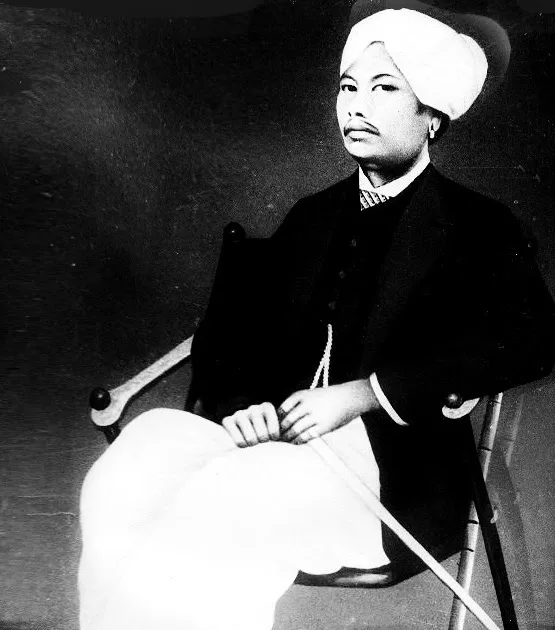
This war was fought to defend the sovereignty of Manipur against British colonial encroachment.
Asked in SSC CGL 2025
Practice (1)
Q992Who among the following was the key leader of the Khongjom War (1891) against British annexation of Manipur?
Show answer
Correct answer: A — Tikendrajit Singh commanded the Manipuri army and was later executed.
Answer: (A)The Anglo-Manipur War of 1891 ended in a British victory, and Khongjom was its last battle. Manipur's army was commanded by its Senapati, Tikendrajit Singh.
He was captured and hanged by the British on 13 August 1891, and Manipur became a princely state under British paramountcy → option (a).
Why the others are wrong(b)Rani Gaidinliu led resistance against the British in Naga regions post-1930s.: Rani Gaidinliu was born in 1915, long after 1891. She joined the Heraka movement as a girl and was arrested by the British in 1932.(c)U Kiang Nangbah led uprisings in Jaintia Hills against colonial intrusion.: U Kiang Nangbah led resistance in the Jaintia Hills and was hanged by the British at Jowai on 30 December 1862, nearly three decades before Khongjom.(d)Veer Surendra Sai resisted the British in Sambalpur for over four decades.: Veer Surendra Sai fought the British in Sambalpur, Odisha, from 1827 and died a prisoner in Asirgarh fort in 1884, seven years before the Khongjom War. -
1028
Peer Ali Khan, a courageous bookbinder from Patna, organized the 1857 revolt in Bihar and was publicly executed by British authorities.
His martyrdom remains a powerful symbol of anti-colonial resistance in eastern India.
Asked in SSC CGL 2025 (23 Sep, Shift 1)
Practice (1)
Q993Peer Ali Khan was a prominent figure in the 1857 Revolt who organized rebels and challenged British rule in which major city of Bihar?
Show answer
Correct answer: B — Patna
Answer: (B)Peer Ali Khan was a bookbinder in Patna who secretly passed leaflets and coded messages to the rebels. He played a leading role in organising the revolt there in July 1857.
The Commissioner of Patna, William Tayler, had him hanged in public on 7 July 1857 → option (b).
Why the others are wrong(a)Gaya: Gaya is not where Peer Ali worked or rose. His bookbinding trade, his part in the revolt and his execution were all in Patna.(c)Bhagalpur: Bhagalpur is not where Peer Ali worked or rose. He was a bookbinder in Patna, and it was Patna's Commissioner, William Tayler, who had him hanged.(d)Muzaffarpur: Muzaffarpur is remembered for a later event, the 1908 bomb attack by Khudiram Bose and Prafulla Chaki. Peer Ali's revolt was in Patna in 1857. -
1029
The Government of India Act 1919 introduced a bicameral legislature at the Centre, consisting of the Council of State and the Central Legislative Assembly.
This reform marked a significant expansion of Indian representation in the central law-making body.
Asked in SSC CGL 2025 (21 Sep, Shift 3)
Practice (1)
Q994Fill in the blank:<br>The Government of India Act 1919 created a bicameral central legislature with the Council of State and the ____.
Show answer
Correct answer: A — Central Legislative Assembly
Answer: (A)The Government of India Act 1919 made the central legislature bicameral. Its upper house was the Council of State and its lower house the Legislative Assembly, usually called the Central Legislative Assembly.
It was the first time the central legislature had two houses → option (a).
Why the others are wrong(b)Imperial Council: The Imperial Legislative Council was the older, single-chamber central legislature that the 1919 Act replaced with two houses. It came before, not alongside, the Council of State.(c)Council of Princes: There was a Chamber of Princes (Narendra Mandal), a separate consultative forum for princely rulers that first met in 1921. It was not a house of the central legislature.(d)Chamber of Deputies: Chamber of Deputies is the name of lower houses abroad, such as Italy's. No legislature of British India carried that name. -
1030
To advise the Secretary of State. (What was the role of the India Council established by the Government of India Act, 1858?)
Asked in SSC CGL 2025 (24 Sep, Shift 2)
Practice (1)
Q995What was the role of the India Council established by the Government of India Act, 1858?
Show answer
Correct answer: B — To advise the Secretary of State
Answer: (B)The Government of India Act, 1858 moved the rule of India from the East India Company to the Crown. A new Secretary of State for India, a British cabinet minister, took over the powers of the Company's Court of Directors.
To assist him the Act created a 15-member Council of India, an advisory body → option (b).
Why the others are wrong(a)To control trade with India: The Company's trade had ended long before 1858: the Charter Act of 1833 closed its commercial business. The Council advised on governing India, not on trade.(c)To represent Indian opinion in Britain: Its members were British, sitting in London. No Indian was appointed until 1907, when Lord Morley named Krishna Govinda Gupta and Syed Hussain Bilgrami.(d)To review court judgments: Appeals from Indian courts went to the Judicial Committee of the Privy Council in London. The Council of India advised the Secretary of State and did not sit as a court. -
1031
Tribal (Adivasi) communities. (Thakkar Bapa was a dedicated social worker and freedom fighter primarily known for his lifelong efforts towards the upli)
Asked in SSC CGL 2025 (24 Sep, Shift 2)
Practice (1)
Q996Thakkar Bapa was a dedicated social worker and freedom fighter primarily known for his lifelong efforts towards the upliftment and welfare of which section of Indian society?
Show answer
Correct answer: C — Tribal (Adivasi) communities
Answer: (C)Amritlal Vithaldas Thakkar, known as Thakkar Bapa, founded the Bhil Seva Mandal in 1922 to work among the Bhil tribe.
In the Constituent Assembly he chaired the sub-committee on Excluded and Partially Excluded Areas (other than Assam), which dealt with tribal areas → option (c).
Why the others are wrong(a)Women: The Bhil Seva Mandal he founded served the Bhils, and the Harijan Sevak Sangh he served as general secretary worked among Dalits. Women's welfare is not his cause.(b)Children: Children were not his focus. He is remembered for tribal welfare, from the Bhil Seva Mandal to the Constituent Assembly's excluded-areas sub-committee.(d)Industrial workers: His work was among tribal communities, such as the Bhils of Gujarat, and among Dalits. Organising mill workers is not what he is known for. -
1032
Sidhu and Kanhu Murmu led the 1855 Santhal Rebellion against British and zamindar exploitation.
They mobilized ten thousand Santhals on June 30, 1855.
Asked in SSC CGL 2025 (24 Sep, Shift 2)
Practice (1)
Q997Which of the following best describes the role and personality traits of Shaheed Kanhu and Sidhu Murmu during the Santhal Rebellion of 1855?
Show answer
Correct answer: A — Visionary tribal leaders who united the Santhal community to resist exploitation with courage and strategic acumen.
Answer: (A)On 30 June 1855 the brothers Sidhu and Kanhu Murmu gathered about ten thousand Santhals and called them to drive out the zamindars, moneylenders and the British who exploited them.
They organised and led the rising themselves, and the British put it down only under martial law. United, courageous leadership against exploitation is what option (a) describes.
Why the others are wrong(b)Passive intermediaries who negotiated peace treaties between the British and Santhals without resorting to conflict.: They did not negotiate a peace. They raised an armed revolt, which ended only when the British declared martial law and captured the leaders.(c)Religious preachers who inspired rebellion solely through spiritual teachings without active participation in battles.: They did claim a divine call, from Thakur Bonga, the Santhal great spirit, but they did not stop at preaching. They organised and led the armed rising themselves.(d)Local zamindars who switched allegiance from British rulers to lead a revolt for personal gains.: They were Santhals, not zamindars, and zamindars were among the very people the Hul rose against, alongside moneylenders and the East India Company. -
1033
Pune. (The Chapekar Brothers (Damodar, Balkrishna, and Vasudeo) are remembered for assassinating a British official in response)
Asked in SSC CGL 2025 (23 Sep, Shift 3)
Practice (1)
Q998The Chapekar Brothers (Damodar, Balkrishna, and Vasudeo) are remembered for assassinating a British official in response to injustices during the plague epidemic in which Indian city?
Show answer
Correct answer: C — Pune
Answer: (C)Plague struck Pune in 1896–97, and a Special Plague Committee headed by W. C. Rand enforced harsh measures there, including searches of homes.
On 22 June 1897, the day Pune celebrated Queen Victoria's Diamond Jubilee, the Chapekar brothers shot Rand on the Ganeshkhind road. He died of his wounds on 3 July 1897 → option (c).
Why the others are wrong(a)Mumbai: Bombay (now Mumbai) was also hit by plague, which is the trap. But Rand's plague committee, and the 22 June 1897 shooting, were in Pune.(b)Delhi: Delhi has no part in this case. The Chapekars, Rand and the 1897 plague measures all belong to Pune, then in the Bombay Presidency.(d)Chennai: Chennai (then Madras) has no part in this case. Rand was shot on the Ganeshkhind road in Pune, where his committee ran the plague measures. -
1034
A is true, but R is false.. (Read the following statements and mark the correct option:<br>Assertion (A): Rani Gaidinliu continued the Heraka movemen)
Asked in SSC CGL 2025 (23 Sep, Shift 3)
Practice (1)
Q999Read the following statements and mark the correct option:<br>Assertion (A): Rani Gaidinliu continued the Heraka movement after the death of Jadonang.<br>Reason (R): She aimed to convert the movement into a mass literacy campaign among Nagas.
Show answer
Correct answer: C — A is true, but R is false.
Answer: (C)A is true. The British hanged Haipou Jadonang in Imphal on 29 August 1931, and Gaidinliu emerged as his spiritual and political heir, carrying the Heraka movement on.
R is false. Heraka revived the tribal religion of the Zeliangrong Nagas and defied British rule, for instance by urging people not to pay taxes. It was not a literacy campaign → option (c).
Why the others are wrong(a)Both A and R are true, and R is the correct explanation of A.: R is false, so it cannot explain A. Gaidinliu continued Heraka as a religious revival and a revolt against British rule, not as a literacy drive.(b)Both A and R are true, but R is not the correct explanation of A.: R is false, so 'both true' fails. Heraka's aims were religious revival and resistance to British rule, including refusal to pay taxes.(d)A is false, but R is true.: A is true. Gaidinliu led the Heraka movement after Jadonang's execution in 1931. She was arrested in October 1932 and stayed in prison until 1947. -
1035
Morarji Desai. (The rolling plan concept was introduced during which Prime Minister's tenure?)
Asked in SSC CGL 2025 (23 Sep, Shift 3)
Practice (1)
Q1000The rolling plan concept was introduced during which Prime Minister's tenure?
Show answer
Correct answer: C — Morarji Desai
Answer: (C)The Janata Party government of Morarji Desai, Prime Minister from 1977 to 1979, ended the Fifth Five Year Plan a year early, in 1978.
In its place it launched the Rolling Plan from 1978. When Indira Gandhi returned to power in 1980, the Rolling Plan was dropped and a fresh Sixth Plan (1980–85) began → option (c).
Why the others are wrong(a)Jawaharlal Nehru: Nehru died in 1964, fourteen years before the Rolling Plan began. His governments ran the First and Second Plans and launched the Third.(b)Indira Gandhi: Indira Gandhi ended the Rolling Plan, replacing it with the 1980–85 Sixth Plan. Her earlier tenure is linked with the plan holiday of 1966–69, not the rolling plan.(d)Rajiv Gandhi: Rajiv Gandhi became Prime Minister in 1984, after the Rolling Plan was over. The Seventh Plan (1985–90) ran under him. -
1036
The ruler was free to employ any European (French, Portuguese, etc.) as long as they were not in active conflict with the British.. (Regarding the 'Subsidiary Alliance' system introduced by Lord Wellesley (1798–1805), which of the following st)
Asked in SSC CGL 2025
Practice (1)
Q1001Regarding the 'Subsidiary Alliance' system introduced by Lord Wellesley (1798–1805), which of the following statements is INCORRECT?
Show answer
Correct answer: A — The ruler was free to employ any European (French, Portuguese, etc.) as long as they were not in active conflict with the British.
Answer: (A)The stem asks for the INCORRECT statement, and (a) reverses one of the alliance's terms.
A subsidiary ally had to expel all other Europeans from his state and could not employ them in his civil or military service. There was no exception for Europeans at peace with the British, so the ruler was not free to hire them at all.
Why the others are wrong(b)If the ruler failed to make payments for the maintenance of the British force, a portion of his territory was ceded as a penalty.: A genuine term, so not the answer. NCERT's Class 8 history text says that if a ruler failed to pay for the subsidiary forces, part of his territory was taken as penalty. Awadh lost over half its territory this way in 1801.(c)The Indian ruler was required to disband his own military and maintain a permanent British contingent within his territory.: A genuine term. Under the alliance, NCERT says, Indian rulers were not allowed independent armed forces. The Company protected them instead, and they paid for the subsidiary forces it maintained.(d)The British promised not to interfere in the internal administrative affairs of the allied state.: True of the treaty, so not the answer. Internal administration formally stayed with the ruler. In practice the Company's Residents interfered, trying to decide successions and appointments, but the question asks about the terms. -
1037
_____ was the residence of the Mughal emperors of India for nearly 200 years until 1857. — Red Fort
-
1038
Who among the following was appointed as the first Municipal Commissioner of Bombay in 1865? — rthur Crawford
-
1039
The Uttar Pradesh cabinet approved a proposal to name a zoological garden at ________ after the freedom fighter and revolutionary Ashfaqullah Khan. — Gorakhpur
-
1040
In which of the following years was the first cotton textile mill established in Bombay? — 1854