
🏺 History इतिहास
1077 exam-ready facts · 1001 MCQs
-
961
The Uprising of Khurda in 1817 took place in the region of Odisha.
The Khurda uprising is also known as the Paika rebellion.
Asked in SSC CGL 2024 (13 Sep, Shift 1)
Practice (1)
Q926In which of the following areas did the Uprising of Khurda in 1817 take place?
Show answer
Correct answer: D — Odisha
Answer: (D)
The Paika rebellion (Khurda uprising, 1817) took place in Odisha. -
962
The Indian National Army (INA) was first formed in Singapore.
Subhas Chandra Bose later took over its leadership in Southeast Asia.
Asked in SSC CGL 2024 (13 Sep, Shift 2)
Practice (1)
Q927Indian National Army was formed in which of the following countries?
Show answer
Correct answer: D — Singapore
Answer: (D)
The INA was first formed in 1942 in Singapore (Mohan Singh) and revived by Subhas Chandra Bose in 1943. -
963
Robert Clive commissioned James Rennell to prepare the map of Hindustan.
James Rennell became the Surveyor General of Bengal in 1767.
Asked in SSC CGL 2024 (13 Sep, Shift 2)
Practice (1)
Q928Who asked James Rennel to prepare the map of Hindustan?
Show answer
Correct answer: B — Robert Clive
Answer: (B)
Robert Clive asked James Rennell to prepare the maps of Hindustan (Rennell became Surveyor General of Bengal in 1767). -
964
Mahatma Gandhi was born in the year 1869 in Porbandar.
His birthday is celebrated globally as the International Day of Non-Violence.
Asked in SSC CGL 2024 (13 Sep, Shift 2)
Practice (1)
Q929The birth anniversary of Mahatma Gandhi is celebrated as the national festival of India.<br>In which of the following years was Gandhi ji born?
Show answer
Correct answer: A — 1869
Answer: (A)
Mahatma Gandhi was born on 2 October 1869 in Porbandar. -
965
The Sanskrit College (Hindu College) was established in Benaras in the year 1791.
Jonathan Duncan founded this institution to study Hindu law and philosophy.
Asked in SSC CGL 2024 (13 Sep, Shift 3)
Practice (1)
Q930Where was the Hindu College established in the year 1791?
Show answer
Correct answer: A — Benaras
Answer: (A)
Jonathan Duncan founded the Sanskrit (Hindu) College at Benaras in 1791. -
966
The Gandhi-Irwin Pact was signed in the year 1931.
This pact led to the suspension of the Civil Disobedience Movement.
Asked in SSC CGL 2024 (13 Sep, Shift 3)
Practice (1)
Q931In which year was the Gandhi-Irwin Pact signed?
Show answer
Correct answer: C — 1931
Answer: (C)
The Gandhi–Irwin Pact was signed on 5 March 1931. -
967
Subhas Chandra Bose founded the 'Tiger Legion' or 'Free India Legion' in Germany.
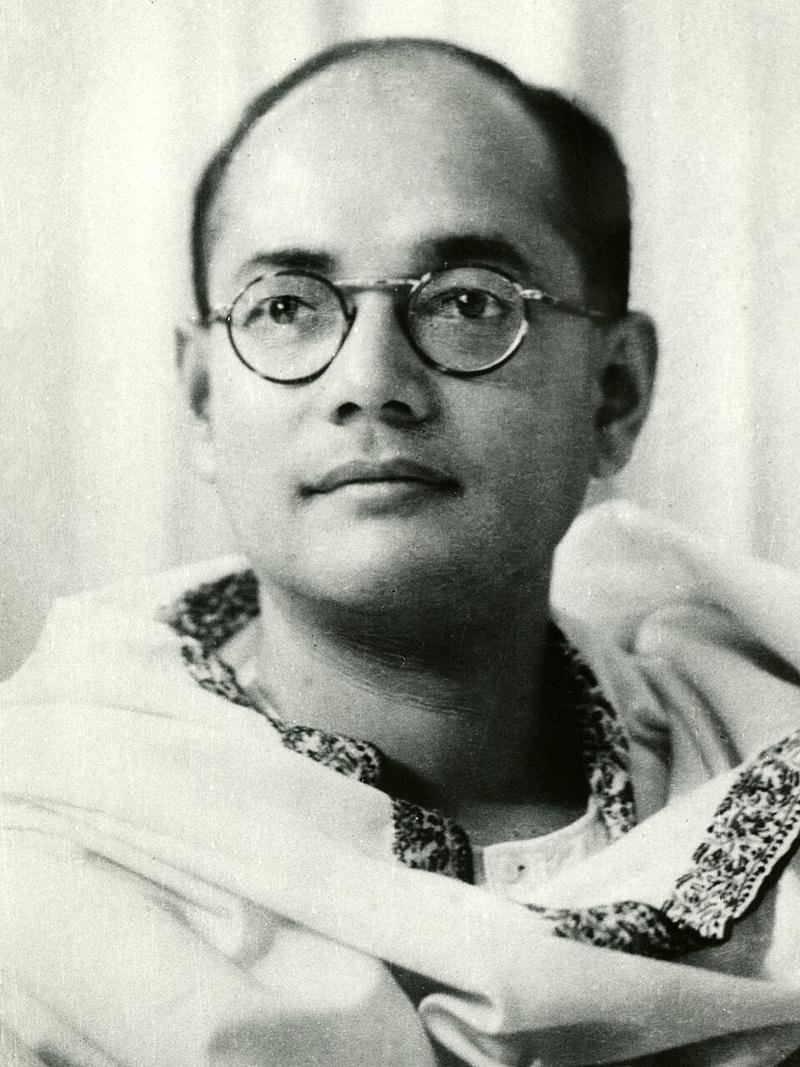
It consisted of Indian prisoners of war captured by Axis forces.
Asked in SSC CGL 2023
Practice (1)
Q932Who among the following was the founder of ‘Tiger Legion' or ‘Free India Legion'?
Show answer
Correct answer: B — Subhas Chandra Bose
Answer: (B)
Subhas Chandra Bose founded the Free India Legion (Tiger Legion) in Germany. -
968
The Ryotwari system of revenue collection introduced by the British was based on the Ricardian theory of rent.
Thomas Munro was a key figure behind the introduction of the Ryotwari system.
Asked in SSC CGL 2023 (21 Jul, Shift 2)
Practice (1)
Q933Ryotwari system of revenue collection in India, introduced by the British, was based on the _______.
Show answer
Correct answer: B — Ricardian theory of rent
Answer: (B)
The Ryotwari system (Munro) was based on Ricardo's theory of rent. -
969
Subhas Chandra Bose founded the All India Forward Bloc in 1939 after resigning from the Congress Presidentship.
The Forward Bloc was established as a faction within the Indian National Congress.
Asked in SSC CGL 2023 (21 Jul, Shift 3)
Practice (1)
Q934The All India Forward Bloc was founded by in 1939 after resigning from the Congress Presidentship.
Show answer
Correct answer: D — Subhash Chandra Bose
Answer: (D)
Subhas Chandra Bose founded the All India Forward Bloc in 1939. -
970
Wood’s Dispatch of 1854 primarily dealt with the subject of education in British India.
It is often referred to as the 'Magna Carta of English Education in India'.
Asked in SSC CGL 2024 (17 Sep, Shift 1)
Practice (1)
Q935Wood’s Dispatch of 1854 primarily dealt with which of the following subject matters?
Show answer
Correct answer: A — Education
Answer: (A)
Wood’s Despatch (1854), the ‘Magna Carta of English education in India’, dealt with education. -
971
The British Parliament passed the Indian High Courts Act in the year 1861.
This act led to the establishment of High Courts in Calcutta, Bombay, and Madras.
Asked in SSC CGL 2024 (17 Sep, Shift 1)
Practice (1)
Q936British Parliament introduced Indian High Courts Act in which year?
Show answer
Correct answer: C — 1861
Answer: (C)
The Indian High Courts Act was passed in 1861. -
972
Dr B.R. Ambedkar formed the Samata Sainik Dal in 1927 to promote social equality and protect the rights of marginalized communities.
Samata Sainik Dal was founded as a crucial social organization by Dr B.R. Ambedkar.
Asked in SSC CGL 2024 (17 Sep, Shift 2)
Practice (1)
Q937Samata Sainik Dal was formed in 1927 by whom among the following personalities?
Show answer
Correct answer: D — BR Ambedkar
Answer: (D)
Dr B.R. Ambedkar formed the Samata Sainik Dal in 1927. -
973
Raja Rammohun Roy founded the Atmiya Sabha in 1814 in Calcutta to propagate monotheistic ideals and campaign against social evils.
Atmiya Sabha was an early reform association established by Raja Rammohun Roy.
Asked in SSC CGL 2024 (17 Sep, Shift 3)
Practice (1)
Q938Who among the following founded the Atmiya Sabha in 1814?
Show answer
Correct answer: D — Raja Rammohun Roy
Answer: (D)
Raja Rammohun Roy founded the Atmiya Sabha in 1814 (Calcutta). -
974
Mahatma Gandhi was the sole representative of the Indian National Congress at the Second Round Table Conference held in London in 1931.
Gandhi attended the Second Round Table Conference following the Gandhi-Irwin Pact.
Asked in SSC CGL 2024 (17 Sep, Shift 3)
Practice (1)
Q939In the second Round Table Conference, Mahatma Gandhi represented which of the following parties?
Show answer
Correct answer: C — Indian National Congress
Answer: (C)
Gandhi was the sole representative of the INC at the Second Round Table Conference (1931). -
975
Sidhu and Kanhu Murmu were the prominent leaders of the Santhal Rebellion, which took place in 1855-56 against British and landlord oppression.
The Santhal rebellion was a major tribal uprising in eastern India.
Asked in SSC CGL 2024 (18 Sep, Shift 1)
Practice (1)
Q940Sido and Kanhu were leaders of which of the following tribal rebellions?
Show answer
Correct answer: B — Santhal Rebellion
Answer: (B)
Sidhu and Kanhu Murmu led the Santhal rebellion (1855–56). -
976
Raja Ram Mohan Roy founded the Brahmo Samaj in Calcutta in 1828 to promote reform and purify Hindu religion from idol worship.
Brahmo Samaj played a pivotal role in the Bengal Renaissance.
Asked in SSC CGL 2024 (18 Sep, Shift 1)
Practice (1)
Q941Who founded the Brahmo Samaj in Calcutta in 1828?
Show answer
Correct answer: B — Ram Mohan Roy
Answer: (B)
Raja Ram Mohan Roy founded the Brahmo Samaj in 1828. -
977
Jayaprakash Narayan, a prominent freedom fighter and political leader, was popularly known by the title 'Lok Nayak'.
Jayaprakash Narayan led the Total Revolution movement in India during the 1970s.
Asked in SSC CGL 2024 (18 Sep, Shift 2)
Practice (1)
Q942Which Indian political leader was called as Lok Nayak?
Show answer
Correct answer: B — Jai Prakash Narayan
Answer: (B)
Jayaprakash Narayan was called Lok Nayak. -
978
Lord Cornwallis introduced the Daroga system in 1792 to strengthen police administration at the local level in British India.
The Daroga system placed local police stations under an Indian officer called a daroga.
Asked in SSC CGL 2024 (18 Sep, Shift 2)
Practice (1)
Q943The Daroga system in 1792 was introduced by whom among the following Governor- Generals in India?
Show answer
Correct answer: B — Lord Cornwallis
Answer: (B)
Lord Cornwallis introduced the Daroga system in 1792. -
979
The Government of India Act 1935 introduced provincial autonomy and abolished dyarchy in the provinces, establishing responsible government.
This Act formed the basis for much of the current Indian Constitution.
Asked in SSC CGL 2024 (18 Sep, Shift 3)
Practice (1)
Q944Which of the following Acts introduced ‘provincial autonomy’ by discontinuing the application of dyarchy?
Show answer
Correct answer: D — Government of India Act, 1935
Answer: (D)
The Government of India Act, 1935 introduced provincial autonomy and ended dyarchy in the provinces. -
980
The Singh Sabha Movement was founded in Amritsar in 1873 to revive the true teachings of Sikhism and promote modern education among Sikhs.
Singh Sabha was instrumental in the socio-religious awakening of the Sikh community.
Asked in SSC CGL 2024 (18 Sep, Shift 3)
Practice (1)
Q945Which of the following Sikh reform movements was started in 1873 in Amritsar?
Show answer
Correct answer: A — Singh Sabha Movement
Answer: (A)
The Singh Sabha Movement began in Amritsar in 1873.