
🏺 History इतिहास
1077 exam-ready facts · 1001 MCQs
-
941
Surya Sen, popularly known as Masterda, successfully led the daring Chittagong Armoury Raid in April 1930.
The revolutionaries aimed to raid the auxiliary forces armoury and paralyze British administrative control.
Asked in SSC CGL 2024 (9 Sep, Shift 2)
Practice (1)
Q906Under the leadership of which of the following revolutionaries was Chittagong Armoury Raid conducted?
Show answer
Correct answer: B — Surya Sen
Answer: (B)
The Chittagong Armoury Raid (April 1930) was led by Surya Sen (Masterda). -
942
The Government of India Act 1858 transferred the governance of India directly from the East India Company to the British Crown.
This major administrative overhaul followed the suppression of the Indian Revolt of 1857.
Asked in SSC CGL 2024 (9 Sep, Shift 3)
Practice (1)
Q907Under which of the following Acts was the power to rule India, transferred from the English East India Company to the British Crown?
Show answer
Correct answer: C — Government of India Act 1858
Answer: (C)
The Government of India Act, 1858, passed after the Revolt of 1857, transferred rule from the East India Company to the British Crown. -
943
Mahatma Gandhi led the Champaran Satyagraha in 1917, which was his very first satyagraha movement in India.
He went to Champaran upon the invitation of Rajkumar Shukla to look into the problems of indigo farmers.
Asked in SSC CGL 2024 (10 Sep, Shift 1)
Practice (1)
Q908Which of the following places is related to Gandhi’s Satyagraha of the year 1917?
Show answer
Correct answer: A — Champaran
Answer: (A)
Champaran (1917) was Gandhi’s first Satyagraha in India. -
944
Tarabai Shinde authored the groundbreaking 1882 feminist treatise 'Stree Purush Tulana' comparing men and women.
The book heavily critiqued the patriarchal societal norms and gender inequality prevalent in 19th-century India.
Asked in SSC CGL 2024 (10 Sep, Shift 2)
Practice (1)
Q909Which of the following social reformers of 19th century India was the author of ‘Stree Purush Tulana’?
Show answer
Correct answer: B — Tarabai Shinde
Answer: (B)
‘Stree Purush Tulana’ (1882) was written by Tarabai Shinde. -
945
Jawaharlal Nehru authored 'The Discovery of India', making the pairing with Subhas Chandra Bose incorrect.
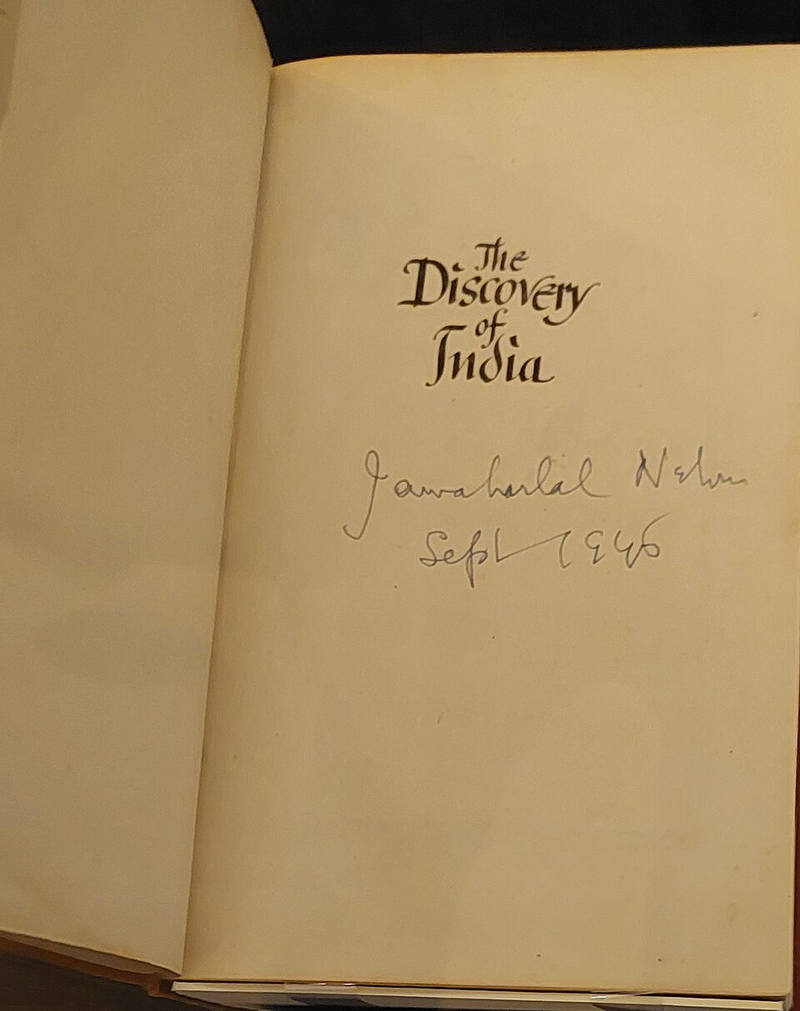
He wrote this famous book during his imprisonment at Ahmednagar Fort between 1942 and 1945.
Asked in SSC CGL 2024
Practice (1)
Q910Which of the following books is INCORRECTLY paired with its respective author?
Show answer
Correct answer: D — The Discovery of India – Subhash Chandra Bose
Answer: (D)
‘The Discovery of India’ was written by Jawaharlal Nehru, not Subhas Chandra Bose. -
946
Clement Attlee's Labour Party won the 1945 United Kingdom general election after the Second World War.
This new government played a crucial role in negotiating and granting independence to India in 1947.
Asked in SSC CGL 2024 (11 Sep, Shift 1)
Practice (1)
Q911Which party formed the government in Britain in the year 1945?
Show answer
Correct answer: A — Labour Party
Answer: (A)
Clement Attlee’s Labour Party won the 1945 UK general election. -
947
Lokmanya Tilak and Annie Besant successfully established the Home Rule League movement in India in 1916.
The movement was organized into two separate leagues to avoid friction and effectively cover different regions.
Asked in SSC CGL 2024 (11 Sep, Shift 1)
Practice (1)
Q912Which of the following organisations, divided into two branches, was established by Lokmanya Bal Gangadhar Tilak and Annie Besant?
Show answer
Correct answer: B — Home Rule League
Answer: (B)
The Home Rule movement (1916) had two leagues, led by Tilak and by Annie Besant. -
948
The Battle of Plassey fought in 1757 is widely regarded as the formal beginning of British imperial rule in India.
Robert Clive defeated Siraj-ud-Daulah in this battle, establishing East India Company's political dominance in Bengal.
Asked in SSC CGL 2024 (11 Sep, Shift 2)
Practice (1)
Q913Which of the following battles is considered the formal beginning of the British Raj in India?
Show answer
Correct answer: C — Battle of Plassey
Answer: (C)
The Battle of Plassey (1757) is considered the formal beginning of British rule in India. -
949
Lord Wellesley devised the Subsidiary Alliance system to expand British political paramountcy across Indian states.
Under this treaty, Indian rulers had to maintain British troops at their own cost within their territories.
Asked in SSC CGL 2024 (9 Sep, Shift 3)
Practice (1)
Q914Who among the following devised the system of ‘Subsidiary Alliance’?
Show answer
Correct answer: B — Lord Wellesley
Answer: (B)
The Subsidiary Alliance system was devised by Lord Wellesley (1798). -
950
Lord William Bentinck enacted Regulation XVII in 1829, legally abolishing the practice of Sati with Raja Ram Mohan Roy's help.
This progressive social legislation declared the practice of burning widows alive as illegal in British India.
Asked in SSC CGL 2024 (10 Sep, Shift 1)
Practice (1)
Q915Which Governor-General of British India helped Raja Ram Mohan Roy legally abolish the sati practice?
Show answer
Correct answer: B — Lord William Bentinck
Answer: (B)
Lord William Bentinck abolished Sati by Regulation XVII of 1829. -
951
Mahatma Gandhi led the Champaran peasant movement in 1917 against oppressive European indigo cultivation systems.
The tinkathia system forced peasants to cultivate indigo on 3/20th of their total land holdings.
Asked in SSC CGL 2024 (11 Sep, Shift 2)
Practice (1)
Q916In which of the following cities did Mahatma Gandhi lead the peasant movement against the imposed indigo cultivation by the British planters?
Show answer
Correct answer: D — Champaran
Answer: (D)
The Champaran Satyagraha (1917) was against forced indigo cultivation. -
952
Subhas Chandra Bose authored the notable historical book titled ‘The Indian Struggle’.
Subhas Chandra Bose was a prominent leader of the Indian independence movement.
Asked in SSC CGL 2024 (10 Sep, Shift 2)
Practice (1)
Q917Who among the following freedom fighters of India is the author of the book, ‘The Indian Struggle’?
Show answer
Correct answer: D — Subhas Chandra Bose
Answer: (D)
‘The Indian Struggle’ was written by Subhas Chandra Bose. -
953
The Chauri Chaura incident took place in the United Provinces in February 1922.
The Chauri Chaura incident led to the suspension of the Non-Cooperation Movement by Mahatma Gandhi.
Asked in SSC CGL 2024 (11 Sep, Shift 3)
Practice (1)
Q918Which of the following events took place in the United Provinces in February, 1922?
Show answer
Correct answer: A — Chauri Chaura
Answer: (A)
The Chauri Chaura incident (Gorakhpur, United Provinces) took place on 4–5 February 1922. -
954
The Asiatic Society of Bengal was founded by Sir William Jones in British India.
Sir William Jones established the Asiatic Society in 1784 to promote Oriental studies.
Asked in SSC CGL 2024 (12 Sep, Shift 1)
Practice (1)
Q919Match the following institutes with their respective founders in British India.<br><table border='1'><tr><th>Institutes</th><th>Their respective founders</th></tr><tr><td>a. Asiatic Society of Bengal</td><td>i. Warren Hastings</td></tr><tr><td>b. Sanskrit College of Benaras</td><td>ii. Lord Wellesley</td></tr><tr><td>c. Fort William College</td><td>iii. Jonathan Duncan</td></tr><tr><td>d. Calcutta Madrasa</td><td>iv. Sir William Jones</td></tr></table>
Show answer
Correct answer: B — a-iv, b-iii, c-ii, d-i
Answer: (B)
Asiatic Society (1784) – William Jones; Sanskrit College Benaras (1791) – Jonathan Duncan; Fort William College (1800) – Wellesley; Calcutta Madrasa (1781) – Warren Hastings. -
955
Soldiers at Meerut began their march toward Delhi on 10 May 1857 during the Sepoy Mutiny.
This march marked the symbolic beginning of the Great Revolt of 1857.
Asked in SSC CGL 2024 (12 Sep, Shift 1)
Practice (1)
Q920With reference to Sepoy Mutiny of 1857, on which of the following dates did the soldiers at Meerut start their journey to Delhi?
Show answer
Correct answer: B — 10 May
Answer: (B)
The Meerut sepoys revolted on 10 May 1857 and marched to Delhi. -
956
Rabindranath Tagore established his school at Shantiniketan in the year 1901.
Shantiniketan later evolved into the Visva-Bharati University.
Asked in SSC CGL 2024 (12 Sep, Shift 2)
Practice (1)
Q921Who established Shantiniketan and when?
Show answer
Correct answer: C — Ravindranath Tagore, 1901
Answer: (C)
Rabindranath Tagore started his school (Brahmacharyashram) at Shantiniketan in 1901; it grew into Visva-Bharati. -
957
Chittaranjan Das is widely known by the honorific title ‘Deshbandhu’.
Chittaranjan Das was a leading figure in the Swaraj Party.
Asked in SSC CGL 2024 (12 Sep, Shift 2)
Practice (1)
Q922Who among the following freedom fighters is known as ‘Deshbandhu’?
Show answer
Correct answer: B — Chittaranjan Das
Answer: (B)
Chittaranjan Das was called ‘Deshbandhu’. -
958
Swami Vivekananda is primarily connected to the World’s Parliament of Religions held in Chicago in 1893.
His famous speech began with the words 'Sisters and brothers of America'.
Asked in SSC CGL 2024 (12 Sep, Shift 3)
Practice (1)
Q923Who among the following is primarily connected to the World’s Parliament of Religions convened in Chicago, 1893?
Show answer
Correct answer: B — Swami Vivekananda
Answer: (B)
Swami Vivekananda addressed the World’s Parliament of Religions, Chicago, 1893. -
959
Lord Irwin served as the Viceroy of India when Mahatma Gandhi initiated the Dandi March on 12 March 1930.
The Dandi March was a major non-violent protest against the British salt monopoly.
Asked in SSC CGL 2024 (12 Sep, Shift 3)
Practice (1)
Q924Who was the Viceroy of India when Mahatma Gandhi started Dandi March on 12 March 1930?
Show answer
Correct answer: C — Lord Irwin
Answer: (C)
Lord Irwin (1926–31) was Viceroy during the Dandi March (12 March 1930). -
960
Lord Dalhousie devised the Doctrine of Lapse as an annexation policy for British expansion in India.
Satara was the first princely state annexed under the Doctrine of Lapse.
Asked in SSC CGL 2024 (13 Sep, Shift 1)
Practice (1)
Q925The Doctrine of Lapse was an annexation policy devised by which of the following Governor-Generals of India?
Show answer
Correct answer: B — Lord Dalhousie
Answer: (B)
Lord Dalhousie devised the Doctrine of Lapse.