
🏺 History इतिहास
1077 exam-ready facts · 1001 MCQs
-
461
Kanishka was a great patron of Buddhism and convened the Fourth Buddhist Council in Kashmir.
The Fourth Buddhist Council marked the division of Buddhism into Mahayana and Hinayana sects.
Asked in SSC CGL 2023 (25 Jul, Shift 4)
Practice (1)
Q427Which Kushana ruler was famous in history as a great patron of Buddhism and organised the fourth Buddhist Council?
Show answer
Correct answer: C — Kanishka
Answer: (C)
Kanishka was a great patron of Buddhism and convened the Fourth Buddhist Council in Kashmir. -
462
The Aligarh Movement was started by Sir Syed Ahmed Khan in the 19th century.
It aimed to modernize the education and social outlook of Indian Muslims.
Asked in SSC CGL 2018
Practice (1)
Q428The Aligarh Movement was started by ______.
Show answer
Correct answer: D — ['4', 'Syed Ahmed Khan']
Answer: (D)
The correct option is (D). -
463
The Harshacharita is a biography of Harshavardhana, composed in Sanskrit by Banabhatta.
Banabhatta was a prominent Sanskrit scholar and poet in the court of King Harsha.
Asked in SSC CGL 2020 (4 Mar, Shift 1)
Practice (1)
Q429The Harshacharita is a biography of Harshavardhana, the ruler of Kannauj, composed in Sanskrit by his court poet, _______.
Show answer
Correct answer: C — Banabhatta
Answer: (C)
Banabhatta wrote the Harshacharita. -
464
Iron Age is so named because during this time iron mostly replaced bronze in implements and weapons.
Iron provided superior strength and durability compared to bronze, transforming ancient warfare and agriculture.
Asked in SSC CGL 2023 (27 Jul, Shift 2)
Practice (1)
Q430Iron age is so named because during this time iron mostly replaced _________ in implements and weapons, beginning in the Middle East and South-eastern Europe.
Show answer
Correct answer: C — bronze
Answer: (C)Iron Age is so named because during this time iron mostly replaced bronze in implements and weapons, beginning in the Middle East and South-eastern Europe. This transition significantly improved the durability and effectiveness of tools and weapons due to iron's superior strength and abundance compared to bronze.
-
465
Wajid Ali Shah was the last Nawab of Awadh, ruling until the annexation of the state by the British in 1856.
Awadh was annexed by the British under the pretext of misgovernance.
Asked in SSC CGL 2018
Practice (1)
Q431Who among the following was the last Nawab of Awadh?
Show answer
Correct answer: C — ['3', 'Wajid Ali Shah']
Answer: (C)
The correct option is (C). -
466
Mehrunnisa, known as Nur Jahan, was the wife of Emperor Jahangir.
She held immense political influence and power during Jahangir's reign.
Asked in SSC CGL 2020 (6 Mar, Shift 1)
Practice (1)
Q432Mehrunnisa who was known as Nur Jahan was the wife of ______.
Show answer
Correct answer: A — Jahangir
Answer: (A)
Nur Jahan was the wife of Emperor Jahangir. -
467
Buland Darwaza is located in Fatehpur Sikri and is not a part of the Qutub Complex.
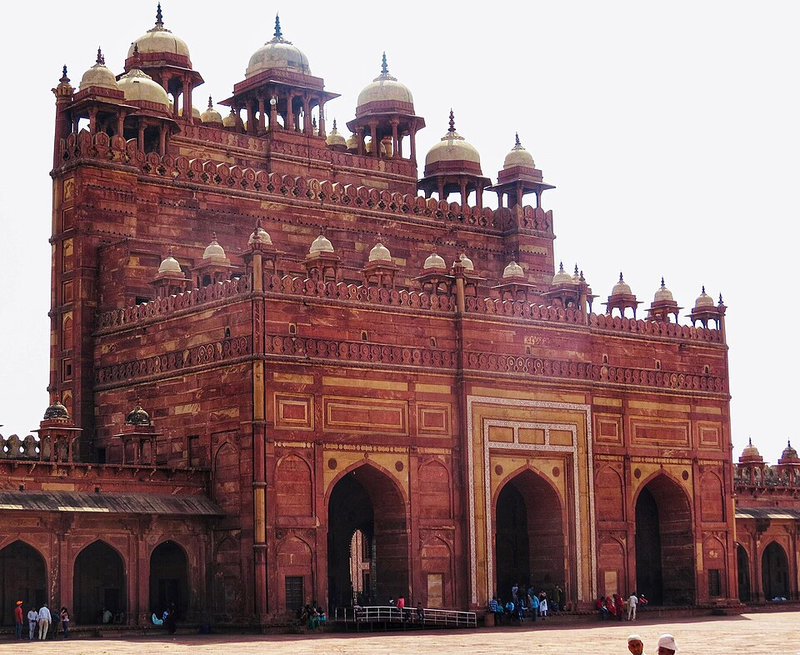
It was built by Akbar to commemorate his victory over Gujarat.
Asked in SSC CGL 2019
Practice (1)
Q433Which of the following monuments is NOT a part of the Qutub Complex?
Show answer
Correct answer: A — Buland Darwaza
Answer: (A)
Buland Darwaza is at Fatehpur Sikri; the others are in the Qutub complex, Delhi. -
468
The Mauryan pillar capital found at Sarnath is popularly known as the Lion Capital.
The Lion Capital of Sarnath features four Asiatic lions standing back to back, symbolizing power and courage.
Asked in SSC CGL 2023 (27 Jul, Shift 3)
Practice (1)
Q434The Mauryan pillar capital found at ________ is popularly known as the Lion Capital.
Show answer
Correct answer: D — Sarnath
Answer: (D)The Mauryan pillar capital found at Sarnath is popularly known as the Lion Capital.
The Lion Capital of Sarnath is a sculpture that originally topped a column erected by the Mauryan emperor Ashoka in Sarnath, now in the Indian state of Uttar Pradesh.
This sculpture is of great historical and cultural significance. It features four Asiatic lions standing back to back, symbolizing power, courage, confidence, and pride. Below the lions rests a circular base featuring smaller sculptures of a horse, an elephant, a bull, and a lion separated by wheels (Chakras), which symbolize the spread of Dharma (law).
The Lion Capital is a masterful example of Mauryan art and is now recognized as the national emblem of India. The wheel (Chakra) from the base of the Lion Capital is also depicted in the center of the Indian national flag.
-
469
The Opium Wars were fought between the British and China in the 19th century over trade and sovereignty.
These wars marked the start of the unequal treaties era in China.
Asked in SSC CGL 2018
Practice (1)
Q435Opium wars were fought between the British and ______.
Show answer
Correct answer: A — ['1', 'China']
Answer: (A)
The correct option is (A). -
470
Tipu Sultan and the British East India Company signed the Treaty of Mangalore in 1784, ending the Second Anglo-Mysore War.
The treaty restored conquered territories to their respective owners.
Asked in SSC CGL 2018
Practice (1)
Q436Tipu Sultan and British East India Company signed the Treaty of Mangalore in the year<br>______.
Show answer
Correct answer: C — ['3', '1764']
Answer: (C)
The correct option is (C). -
471
Chauth and Sardeshmukhi were taxes associated with the revenue system of the Marathas.
Chauth was a 25% tax collected from neighboring territories to avoid Maratha raids.
Asked in SSC CGL 2020 (6 Mar, Shift 2)
Practice (1)
Q437Which of the following pairs is associated with the taxation system of the Marathas?
Show answer
Correct answer: A — Chauth and Sardeshmukhi
Answer: (A)
Chauth and Sardeshmukhi were Maratha levies. -
472
Hiuen Tsang visited India during the reign of Harsha and was present at his assembly at Prayag.
Hiuen Tsang was a famous Chinese Buddhist monk who travelled extensively across India.
Asked in SSC CGL 2023
Practice (1)
Q438According to which of the following foreign travellers did Dhruvasena II attend Harsha’s assembly at Prayag (Allahabad)?
Show answer
Correct answer: B — Hiuen Tsang
Answer: (B)
Hiuen Tsang, the famous Chinese traveller, visited India during the reign of Harsha and was present at his assembly at Prayag (Allahabad). Therefore, the correct answer is Option 2: 'Hiuen Tsang'. -
473
The Junagadh rock inscription records the achievements of the Shaka ruler Rudradaman I, including the repair of the Sudarshana lake.
Sudarshana lake was originally constructed during the reign of the Maurya dynasty and later repaired by Rudradaman.
Asked in SSC CGL 2024 (9 Sep, Shift 1)
Practice (1)
Q439Details about Sudarshana lake is given in a rock inscription at Girnar (Junagarh), which was composed to record the achievements of the Shaka ruler:
Show answer
Correct answer: B — Rudradaman I
Answer: (B)
The Junagadh (Girnar) rock inscription records the achievements of the Shaka ruler Rudradaman I, including the repair of the Sudarshana lake. -
474
The Battle of Chausa in 1539 was fought between Humayun and Sher Shah Suri.
Sher Shah Suri emerged victorious in this battle against the Mughal emperor.
Asked in SSC CGL 2020 (6 Mar, Shift 2)
Practice (1)
Q440The Battle of Chausa was fought between Humayun and ______.
Show answer
Correct answer: A — Sher Shah Suri
Answer: (A)
At Chausa (1539), Sher Shah Suri defeated Humayun. -
475
Rabindranath Tagore was associated with the founding of Dartington Hall School.
Dartington Hall School was founded in England by Leonard and Dorothy Elmhirst, influenced by Tagore's educational ideals.
Asked in SSC CGL 2018
Practice (1)
Q441Which of the following Indians was one of the founders of Dartington Hall School in<br>Japan?
Show answer
Correct answer: D — ['4', 'Rabindranath Tagore']
Answer: (D)
The correct option is (D). -
476
Rudradaman I's Junagadh inscription is the first long royal inscription of early India composed in chaste Sanskrit.
The inscription dated around 150 CE provides valuable historical insights into the Western Satraps.
Asked in SSC CGL 2024 (9 Sep, Shift 2)
Practice (1)
Q442Which of the following inscriptions of Rudradaman happened to be the first royal inscription of early India composed in chaste Sanskrit?
Show answer
Correct answer: D — Girnar
Answer: (D)
Rudradaman I's Junagadh (Girnar) inscription (c. 150 CE) is the first long royal inscription in chaste Sanskrit. -
477
The Battle of Khanwa between Babur and Rana Sanga took place in the year 1527.
Babur used artillery effectively to defeat the Rajput forces in this battle.
Asked in SSC CGL 2020 (7 Mar, Shift 2)
Practice (1)
Q443In which year did the battle of Khanua (Khanwa) take place between Babur and the Rajput forces led by Rana Sanga?
Show answer
Correct answer: A — 1527
Answer: (A)
Babur defeated Rana Sanga at Khanwa in 1527. -
478
The Battle of Saragarhi was fought on 12 September 1897 between the British Indian Army and Afghan tribesmen.
It is remembered as one of history's greatest last stands.
Asked in SSC CGL 2018
Practice (1)
Q444In which year was the Battle of Saragarhi fought?
Show answer
Correct answer: A — ['1', '1897']
Answer: (A)
The correct option is (A). -
479
The Council of Ministers assisting Chhatrapati Shivaji Maharaj was known as the Ashta Pradhan.
Each of the eight ministers held specific administrative responsibilities in the state.
Asked in SSC CGL 2020 (7 Mar, Shift 1)
Practice (1)
Q445The Council of Ministers during the time of Shivaji Maharaj was known as:
Show answer
Correct answer: A — Ashta Pradhan
Answer: (A)
Shivaji's council of eight ministers was the Ashta Pradhan. -
480
Nikolai Bulganin was the first Soviet prime minister to visit independent India in 1955.
His visit marked the beginning of warm diplomatic ties between India and the Soviet Union.
Asked in SSC CGL 2018
Practice (1)
Q446Who was the first Russian prime minister to visit independent India?
Show answer
Correct answer: D — ['4', 'Nikolai Bulganin']
Answer: (D)
The correct option is (D).