
🏺 Ancient India प्राचीन भारत
198 exam-ready facts · 198 MCQs
-
61
Gupta ruler Samudragupta was famously termed the 'Napoleon of India' by historian V.A. Smith due to his extensive military conquests.
Samudragupta's campaigns are detailed on the Allahabad Pillar inscription.
Asked in SSC CGL 2021 (16 Aug, Shift 3)
Practice (1)
Q61Who among the following rulers is called the ‘Napolean of India’?
Show answer
Correct answer: D — Samudragupta
Answer: (D)
Historian V. A. Smith called Samudragupta the "Napoleon of India" for his conquests. -
62
The four fundamental objectives of life (Purusharthas) in Vedic philosophy are Dharma, Artha, Kama, and Moksha, excluding Siddhi.
Purusharthas guide human life towards ultimate liberation.
Asked in SSC CGL 2021 (17 Aug, Shift 1)
Practice (1)
Q62The Vedic view of an individual and his relation to society is determined by four objectives of life. Which of the following is NOT one of these objectives?
Show answer
Correct answer: C — Siddhi
Answer: (C)
The four purusharthas are Dharma, Artha, Kama and Moksha. Siddhi is not one of them. -
63
Mahavira, referred to in Pali literature as Nigantha Nataputta, established Jainism as a major ancient religion.
Mahavira was the 24th Tirthankara of Jainism.
Asked in SSC CGL 2021 (17 Aug, Shift 3)
Practice (1)
Q63Mahavira, who was known in Pali literature as Nigantha Nataputta, founded a religion called ______.
Show answer
Correct answer: D — Jainism
Answer: (D)
Mahavira (Nigantha Nataputta) is associated with Jainism. -
64
The primary compilations or collections of Vedic hymns are formally known as Samhitas.
There are four primary Samhitas: Rigveda, Samaveda, Yajurveda, and Atharvaveda.
Asked in SSC CGL 2021 (18 Aug, Shift 1)
Practice (1)
Q64The main collections of Vedic hymns are called ______.
Show answer
Correct answer: C — Samhita
Answer: (C)
The main collections of Vedic hymns are called Samhitas. -
65
Chandragupta Maurya orchestrated a successful revolt against the Nanda dynasty and overthrew their rule to establish the Mauryan Empire.
Chanakya mentored Chandragupta Maurya during this transition.
Asked in SSC CGL 2021 (18 Aug, Shift 1)
Practice (1)
Q65Chandragupta led a revolt against the ______ and overthrew them.
Show answer
Correct answer: A — Nandas
Answer: (A)
Chandragupta Maurya overthrew the Nanda dynasty. -
66
The important archaeological and Painted Grey Ware site of Atranjikhera is situated in the Etah district of Uttar Pradesh.
Iron artifacts were discovered at Atranjikhera dating back to early periods.
Asked in SSC CGL 2021 (18 Aug, Shift 2)
Practice (1)
Q66The archaeological site of Atranjikhera is located in ______.
Show answer
Correct answer: D — Uttar Pradesh
Answer: (D)
Atranjikhera is in Etah district, Uttar Pradesh. -
67
The ecclesiastical rules and codes of discipline formulated for the Buddhist monastic order are compiled in the Vinaya Pitaka.
Vinaya Pitaka is one of the three main baskets of the Tripitaka.
Asked in SSC CGL 2021 (18 Aug, Shift 2)
Practice (1)
Q67The rules made for the ______ were written down in a book called ‘Vinaya Pitaka’.
Show answer
Correct answer: D — Buddhist sangha
Answer: (D)
The Vinaya Pitaka contains the rules for the Buddhist sangha. -
68
Gautama Buddha delivered his first profound discourse on the Four Noble Truths, known as Dharmachakra Pravartana, at Sarnath.
Sarnath is near the holy city of Varanasi.
Asked in SSC CGL 2021 (20 Aug, Shift 1)
Practice (1)
Q68At which of the following places did Lord Buddha give his first sermon on the Four Noble Truths?
Show answer
Correct answer: C — Sarnath
Answer: (C)
Buddha gave his first sermon at Sarnath (Dharmachakra Pravartana). -
69
The pioneering archaeologist Alexander Cunningham published a comprehensive compilation of Ashokan inscriptions in 1877 under Corpus Inscriptionum Indicarum.
Cunningham served as the first head of the ASI.
Asked in SSC CGL 2021 (20 Aug, Shift 2)
Practice (1)
Q69Who among the following published a set of Ashokan inscriptions in the year 1877?
Show answer
Correct answer: D — Alexander Cunningham
Answer: (D)
Alexander Cunningham published the Corpus Inscriptionum Indicarum (Ashokan inscriptions) in 1877. -
70
Specialized criminal courts designated as 'Kantakasodhana', meant for eradicating thorns of society, functioned during the Mauryan Empire.
Details of Kantakasodhana are found in Kautilya's Arthashastra.
Asked in SSC CGL 2021 (20 Aug, Shift 1)
Practice (1)
Q70A type of court called 'Kantakasodhana' was prevalent in the ______ Empire.
Show answer
Correct answer: B — Mauryan
Answer: (B)
Kantakasodhana courts (criminal courts) existed in the Mauryan Empire (Arthashastra). -
71
Gautama Buddha attained supreme spiritual enlightenment under the sacred Bodhi tree at Bodh Gaya in Bihar.
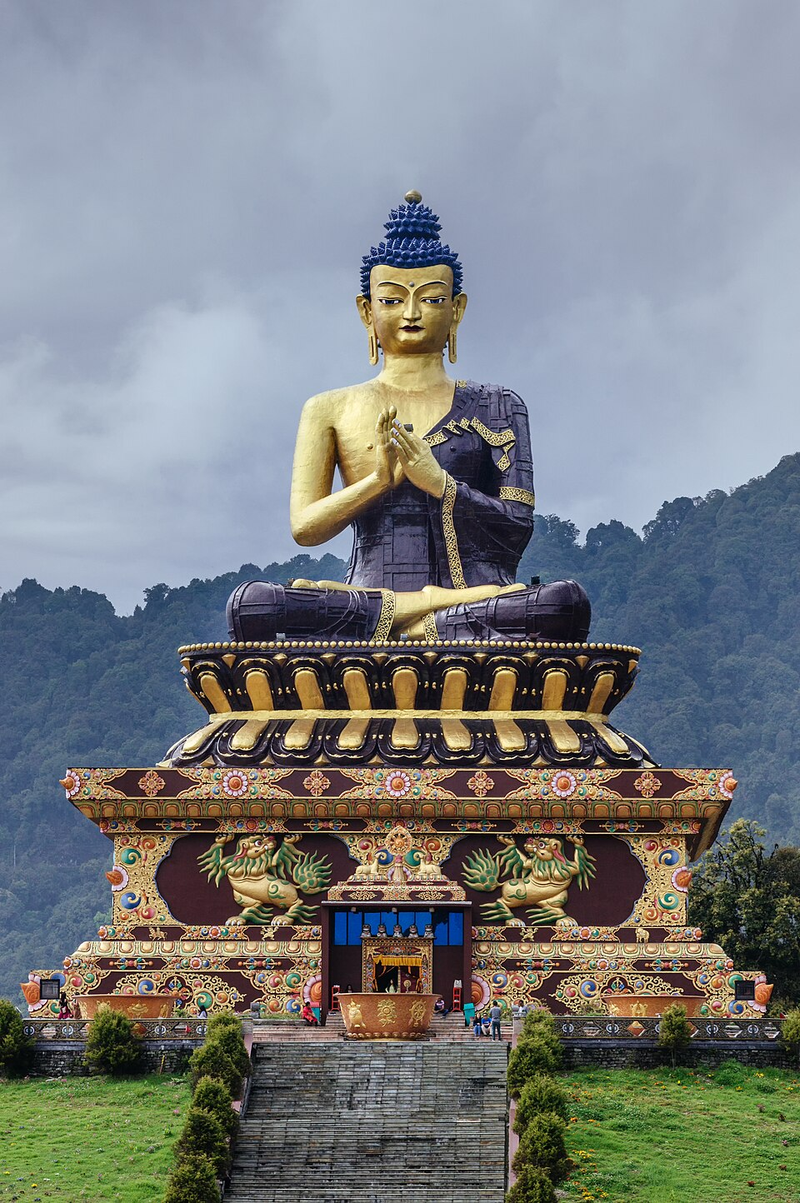
The Mahabodhi Temple marks this sacred site.
Asked in SSC CGL 2020
Practice (1)
Q71At which of the following places did Lord Buddha attain enlightenment?
Show answer
Correct answer: A — Bodh Gaya
Answer: (A)
Buddha attained enlightenment at Bodh Gaya. -
72
The monumental ancient treatise on Sanskrit grammar, titled 'Ashtadhyayi', was authored by the legendary grammarian Panini.
Panini's Ashtadhyayi dates back to around the 4th to 6th century BCE.
Asked in SSC CGL 2021 (20 Aug, Shift 3)
Practice (1)
Q72Which of the following books was written by Panini?
Show answer
Correct answer: D — Ashtadhyayi
Answer: (D)
Panini wrote the Ashtadhyayi, a Sanskrit grammar. -
73
Sir Alexander Cunningham served as the first Director-General of the Archaeological Survey of India (ASI) established in 1861.
ASI is responsible for archaeological research and preservation of cultural monuments in India.
Asked in SSC CGL 2021 (20 Aug, Shift 3)
Practice (1)
Q73Who was the first Director-General of Archaeological Survey of India?
Show answer
Correct answer: B — Alexander Cunningham
Answer: (B)
Alexander Cunningham was the first Director-General of ASI. -
74
The Third Buddhist Council was convened under the royal patronage of Emperor Ashoka around 250 BCE at Pataliputra.
Moggaliputta Tissa presided over the Third Buddhist Council.
Asked in SSC CGL 2021 (23 Aug, Shift 1)
Practice (1)
Q74One of the major events of Ashoka’s reign was the convening of the ______ Buddhist Sangha (council) in 250 BCE in the capital Pataliputra.
Show answer
Correct answer: A — Third
Answer: (A)
The Third Buddhist Council was held at Pataliputra under Ashoka (presided by Moggaliputta Tissa). -
75
According to Ashoka’s Rock Edict XIII, he waged war on Kalinga eight years after his coronation.
Rock Edict XIII provides a detailed account of the Kalinga War and its profound impact on Ashoka.
Asked in SSC CGL 2021 (23 Aug, Shift 1)
Practice (1)
Q75According to Ashokan edicts, how many years after becoming the king did Ashoka wage war on Kalinga?
Show answer
Correct answer: C — Eight
Answer: (C)
Ashoka’s Rock Edict XIII says he conquered Kalinga eight years after his coronation. -
76
Gautamiputra Satakarni was the greatest ruler of the Satavahana dynasty.
He revived the Satavahana power and defeated the Saka ruler Nahapana.
Asked in SSC CGL 2021 (23 Aug, Shift 3)
Practice (1)
Q76Gautamiputra Satakarni was a ______ ruler.
Show answer
Correct answer: D — Satavahana
Answer: (D)
Gautamiputra Satakarni was the greatest Satavahana ruler.
Hence, the answer is option (D). -
77
James Prinsep was the first scholar to decipher the Brahmi script of Ashokan edicts in 1837.
His decipherment unlocked the historical significance of inscriptions scattered across the Indian subcontinent.
Asked in SSC CGL 2021 (23 Aug, Shift 2)
Practice (1)
Q77Who among the following was the first scholar to decipher the Ashokan edicts?
Show answer
Correct answer: B — James Prinsep
Answer: (B)
James Prinsep deciphered the Brahmi script of Ashokan edicts in 1837. -
78
Tamralipti (modern Tamluk in West Bengal) was a major ancient Indian port city.
It served as a prominent maritime trade hub connecting India with Southeast Asia and Sri Lanka.
Asked in SSC CGL 2021
Practice (1)
Q78______ was an important port city in ancient India.
Show answer
Correct answer: A — Tamralipti
Answer: (A)
Tamralipti (modern Tamluk, West Bengal) was a major port of ancient India. -
79
Harishena, the court poet of Samudragupta, composed the Allahabad Prashasti.
This Sanskrit inscription is engraved on the Ashokan pillar at Prayagraj (Allahabad).
Asked in SSC CGL 2021 (24 Aug, Shift 3)
Practice (1)
Q79Who wrote Samudragupta's prashasti (a eulogy written in the form of poetry or prose, usually by court poets) at Allahabad?
Show answer
Correct answer: B — Harishena
Answer: (B)
Harishena wrote the Allahabad Prashasti of Samudragupta.
Hence, the answer is option (B). -
80
The Battle of the Hydaspes in 326 BCE was fought between Alexander the Great and King Porus.
This historic battle took place on the banks of the Jhelum River in Punjab.
Asked in SSC CGL 2021
Practice (1)
Q80Which two kings fought in the Battle of Hydaspes?
Show answer
Correct answer: B — Alexander and Porus
Answer: (B)
The Battle of the Hydaspes (Jhelum), 326 BCE, was fought between Alexander and Porus.