
🪐 Universe, Earth & Atmosphere ब्रह्मांड, पृथ्वी व वायुमंडल
77 exam-ready facts · 77 MCQs
-
21
Lines of longitude converge at the poles, but at the equator, 1 degree of longitude is approximately equal to 111 kilometers.
This distance decreases as you move from the equator towards the poles.
Asked in SSC CGL 2017 (11 Aug, Shift 2)
Practice (1)
Q21A difference between 2 longitudes at equator is nearby equivalent to _____ km.
Show answer
Correct answer: B — 111
Answer: (B)
1° of longitude at the equator ≈ 111 km. -
22
The Mohorovičić discontinuity, or Moho, is the boundary between the Earth's crust and the mantle.
It was discovered by Andrija Mohorovičić in 1909 using seismic waves.
Asked in SSC CGL 2017 (12 Aug, Shift 1)
Practice (1)
Q22The boundary between Earth's crust and mantle is _____.
Show answer
Correct answer: A — Moho discontinuity
Answer: (A)
The Moho discontinuity separates the crust and the mantle. -
23
Venus is often called Earth's twin because of its similar size, mass, and proximity to the Sun compared to other planets.
Despite this, Venus has a runaway greenhouse effect making it the hottest planet.
Asked in SSC CGL 2017 (12 Aug, Shift 2)
Practice (1)
Q23Which of the following planet is also known as 'Earth's twin'?
Show answer
Correct answer: B — Venus
Answer: (B)
Venus is called Earth's twin (similar size and mass). -
24
The epicentre is the point on the Earth's surface directly above the hypocentre or focus of an earthquake.
Seismic waves are strongest and cause the most damage at the epicentre.
Asked in SSC CGL 2017 (19 Aug, Shift 1)
Practice (1)
Q24The place on the earth's surface above the focus is called the<br>__________.
Show answer
Correct answer: C — epicentre
Answer: (C)
The point on the surface above the focus is the epicentre. -
25
William Herschel discovered the planet Uranus in 1781 using a telescope.
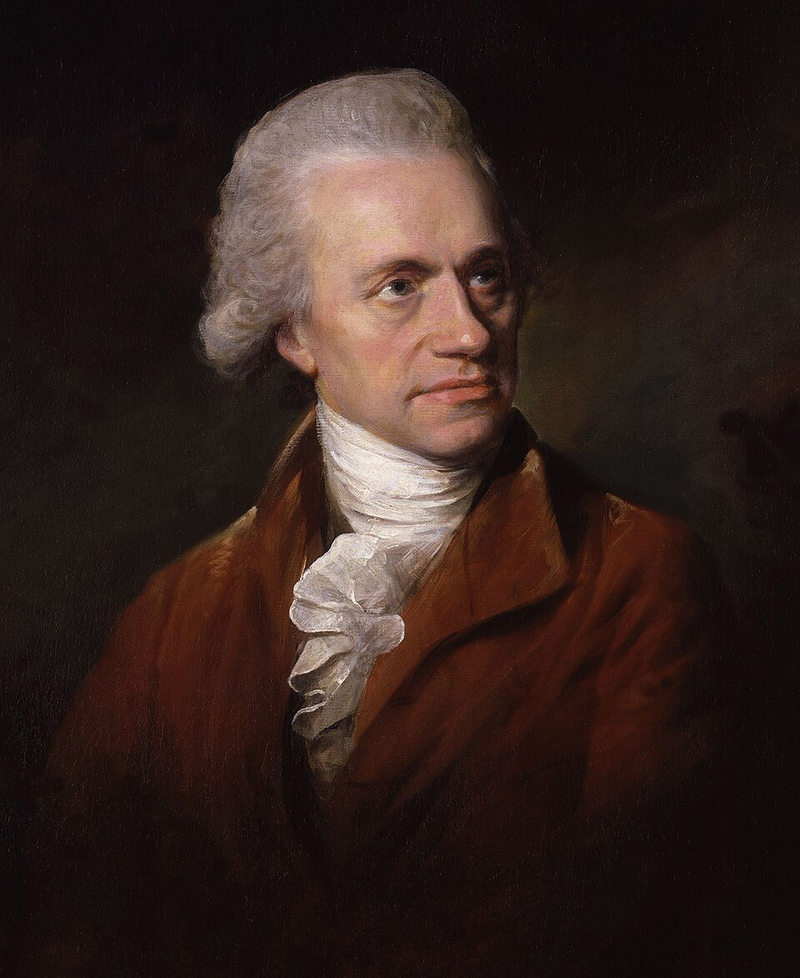
Uranus is the seventh planet from the Sun and has a unique sideways tilt.
Asked in SSC CGL 2017
Practice (1)
Q25Who discovered Uranus?
Show answer
Correct answer: C — William Herschel
Answer: (C)
William Herschel discovered Uranus (1781). -
26
The oceanic crust mainly consists of silica and magnesium, commonly referred to as SIMA.
Oceanic crust forms the floors of the world's oceans and is denser than continental crust.
Asked in SSC CGL 2017 (19 Aug, Shift 2)
Practice (1)
Q26The oceanic crust mainly consists of silica and __________.
Show answer
Correct answer: A — magnesium
Answer: (A)
Oceanic crust (SIMA) is made mainly of silica and magnesium. -
27
Tsunamis are giant sea waves primarily caused by underwater volcanic activity or seismic earthquakes.
These massive waves can travel across entire ocean basins at high speeds.
Asked in SSC CGL 2018
Practice (1)
Q27Tsunami is caused by ______.
Show answer
Correct answer: C — ['3', 'underwater volcanic activity']
Answer: (C)
The correct option is (C). -
28
Proxima Centauri is the closest known star system to the Sun, located about 4.25 light-years away.
It is a red dwarf star located in the southern constellation of Centaurus.
Asked in SSC CGL 2018
Practice (1)
Q28Which of the following stars is nearest to the sun?
Show answer
Correct answer: C — ['3', 'Proxima Centauri']
Answer: (C)
The correct option is (C). -
29
Rigel is the brightest star in the Orion Constellation, despite being designated as Beta Orionis.
Rigel is a blue-white supergiant star shining brightly in the winter night sky.
Asked in SSC CGL 2018
Practice (1)
Q29Which one of the following is the brightest star in the Orion Constellation?
Show answer
Correct answer: A — ['1', 'Rigel']
Answer: (A)
The correct option is (A). -
30
A Blood Moon occurs during a total lunar eclipse when Earth blocks direct sunlight from reaching the Moon.
The Moon glows with a reddish hue due to Rayleigh scattering of sunlight through Earth's atmosphere.
Asked in SSC CGL 2018
Practice (1)
Q30The term 'Blood Moon' is used to refer to ______.
Show answer
Correct answer: D — ['4', 'Lunar Eclipse']
Answer: (D)
The correct option is (D). -
31
Hydrogen makes up about 70% to 73% of the Sun's total mass, powering its nuclear fusion.
Helium is the second most abundant element in the Sun, accounting for most of the remaining mass.
Asked in SSC CGL 2018
Practice (1)
Q31About 70% of the sun is made up of ______.
Show answer
Correct answer: A — ['1', 'Hydrogen']
Answer: (A)
The correct option is (A). -
32
Oxygen is the most abundant chemical element by mass in the Earth's crust.
Silicon is the second most abundant element in the Earth's crust.
Asked in SSC CGL 2018
Practice (1)
Q32Identify the element that is most prolific in the crust of the earth.
Show answer
Correct answer: D — ['4', 'Oxygen']
Answer: (D)
The correct option is (D). -
33
The Orion constellation is also known as the Hunter due to its prominent stellar pattern resembling a mythological figure.
It is one of the most recognizable and prominent constellations in the night sky.
Asked in SSC CGL 2018
Practice (1)
Q33What is the other name for 'Orion' Constellation?
Show answer
Correct answer: C — ['3', 'Hunter']
Answer: (C)
The correct option is (C). -
34
Hydra is the largest of the 88 modern constellations recognized by the International Astronomical Union.
Despite its massive area, it contains only one bright star, Alphard.
Asked in SSC CGL 2018
Practice (1)
Q34Which one of the following is the largest recognised constellation?
Show answer
Correct answer: C — ['3', 'Hydra']
Answer: (C)
The correct option is (C). -
35
Venus is the hottest planet in the solar system due to a runaway greenhouse effect caused by its thick carbon dioxide atmosphere.
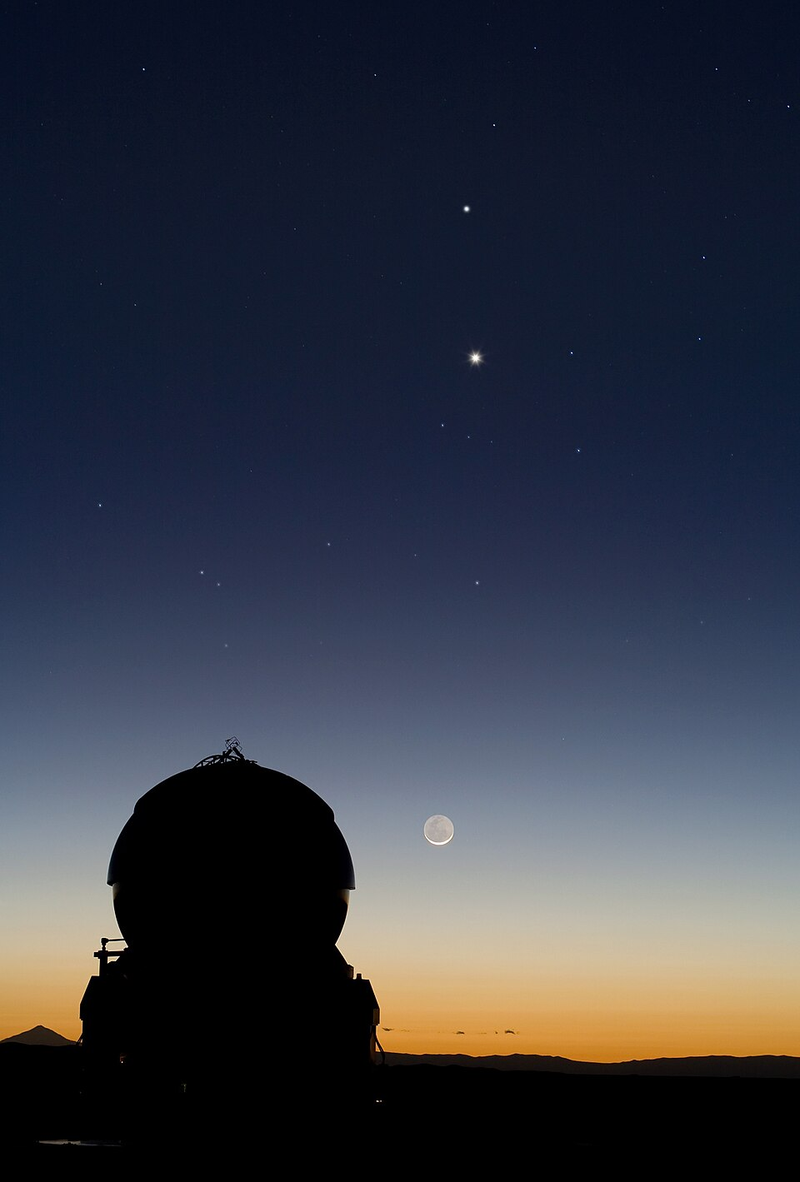
Surface temperatures on Venus can exceed 450 degrees Celsius.
Asked in SSC CGL 2018
Practice (1)
Q35_____ is the hottest planet in the solar system.
Show answer
Correct answer: A — ['1', 'Venus']
Answer: (A)
The correct option is (A). -
36
The approximate diameter of the Sun is about 109 times the diameter of planet Earth.
This massive size allows the Sun to contain about 99.8% of all mass in the solar system.
Asked in SSC CGL 2018
Practice (1)
Q36The approximate diameter of the sun is _____ times the diameter of Earth.
Show answer
Correct answer: A — ['1', '146']
Answer: (A)
The correct option is (A). -
37
Celestial bodies are natural objects found in the universe, including stars, planets, moons, and asteroids.
Everything visible in the night sky outside Earth's atmosphere belongs to this category.
Asked in SSC CGL 2020 (3 Mar, Shift 2)
Practice (1)
Q37What name is given to the luminous bodies that shine in the night sky?
Show answer
Correct answer: A — Celestial bodies
Answer: (A)
The objects that shine in the night sky, such as stars, planets and the Moon, are called celestial bodies. -
38
Jupiter is the fifth planet from the Sun, located directly between Mars and Saturn in the solar system.
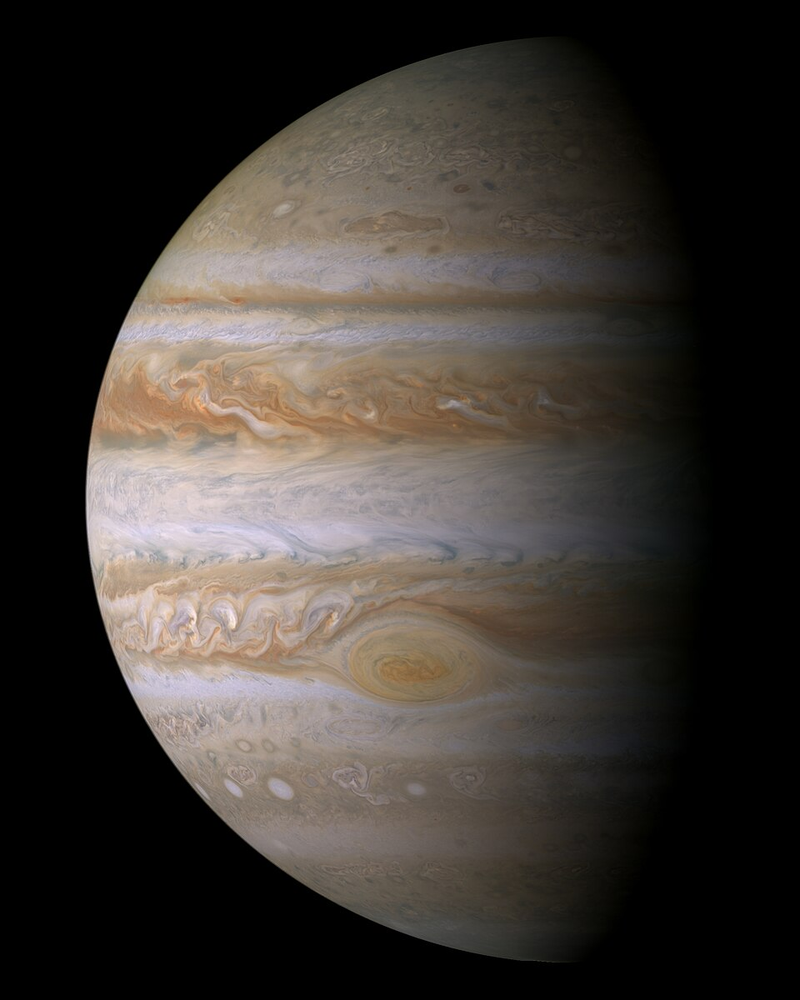
Jupiter is the largest planet in our solar system, known for its Great Red Spot.
Asked in SSC CGL 2019
Practice (1)
Q38In the sequence of planets in the solar system, which planet comes in between Mars and Saturn?
Show answer
Correct answer: D — Jupiter
Answer: (D)
Order: Mercury, Venus, Earth, Mars, Jupiter, Saturn. -
39
Edwin Hubble formulated Hubble's Law, providing foundational observational evidence for the Big Bang theory.
His observations showed that distant galaxies are moving away from us, proving the universe is expanding.
Asked in SSC CGL 2020 (4 Mar, Shift 3)
Practice (1)
Q39The American scientist Edwin Hubble's name is associated with which of these theories?
Show answer
Correct answer: D — The Big Bang Theory
Answer: (D)
Hubble's discovery of the expanding universe supports the Big Bang theory. -
40
Venus, when appearing brightly as the morning star, has historically been referred to as Lucifer.
The name comes from Latin, meaning 'bringer of light' or the morning star.
Asked in SSC CGL 2020 (3 Mar, Shift 3)
Practice (1)
Q40Lucifer is another name for the planet ________.
Show answer
Correct answer: C — Venus
Answer: (C)
Venus as the morning star is called Lucifer.