
🎭 Art & Culture कला और संस्कृति
801 exam-ready facts · 758 MCQs
-
761
The Garia Carnival is conducted and performed under the guidance and instructions of an Ochai, who acts as the priest.
Garia Puja is a festival of Tripura's tribal communities in honour of Garia , the deity of livestock and wealth. The Tripura government's Department of Information and Cultural Affairs puts it in the questio…
Asked in SSC CGL 2025 (23 Sep, Shift 1)
Practice (1)
Q737The Garia Carnival is conducted according to the guidance of which figure?
Show answer
Correct answer: A — Ochai
Answer: (A)Garia Puja is a festival of Tripura's tribal communities in honour of Garia, the deity of livestock and wealth.
The Tripura government's Department of Information and Cultural Affairs puts it in the question's own words: 'The performance of the Garia Carnival is in agreement to the Ochai instructions.' The Ochai is the priest → option (a).
Why the others are wrong(b)Lama: Lama is a title in Tibetan Buddhism for a realised teacher of the Dharma. Garia Puja is a tribal rite of Tripura, and its guide is the Ochai.(c)Ojha: Ojha is a near-spelling trap. In some usage the word means a shaman or traditional healer, but Tripura's account of Garia Puja names the Ochai.(d)Dolo: Dolo is not the title Tripura's own account of the festival uses. That account names the Ochai as the one whose instructions the carnival follows. -
762
Colonial India's Gothic Revival buildings featured pointed arches and ribbed vaults, which were characteristic elements of medieval European Gothic architecture.
Assertion true. Colonial India's Gothic Revival buildings, such as Mumbai's Chhatrapati Shivaji Maharaj Terminus, took their forms from medieval Gothic, pointed arch included. Reason false. Pointed arches an…
Asked in SSC CGL 2025 (23 Sep, Shift 1)
Practice (1)
Q738Read the below statements marked as Assertion (A) and Reason (R). Mark the correct options:<br>Assertion (A): Gothic Revival buildings in colonial India often employed pointed arches and ribbed vaults.<br>Reason(R): These elements were unknown in traditional European cathedrals.
Show answer
Correct answer: C — A is true, but R is false.
Answer: (C)Assertion true. Colonial India's Gothic Revival buildings, such as Mumbai's Chhatrapati Shivaji Maharaj Terminus, took their forms from medieval Gothic, pointed arch included.
Reason false. Pointed arches and rib vaults were not unknown to European cathedrals. They are the defining features of medieval Gothic, which is exactly what a revival brings back → option (c).
Why the others are wrong(a)Both A and R are true, and R is the correct explanation of A.: R is false, so it cannot explain A. Pointed arches and rib vaults were the hallmarks of medieval European cathedrals, not elements unknown to them.(b)Both A and R are true, but R is not the correct explanation of A.: This needs R to be true, and it is not. The Gothic Revival used these elements precisely because medieval cathedrals had used them first.(d)A is false, but R is true.: A is true, not false. Colonial Gothic Revival, seen in Mumbai's Victorian Gothic buildings, borrowed the pointed arch and vaulting of medieval Gothic. -
763
Dangi Nritya is a traditional folk dance performed by the Dangi Adivasis of the Dang district in south Gujarat as a group dance.
Statement 1 is right: Dangi Nritya is the folk dance of the Dangi Adivasis of the Dang district in south Gujarat. Statement 2 is wrong: it is a group dance , not a solo. Men and women join hands in a chain and move in…
Asked in SSC CGL 2025 (20 Sep, Shift 1)
Practice (1)
Q739Consider the statements about Dangi:<br>1. Performed by Dangi Adivasis of Dang district, Gujarat.<br>2. The dance is a solo narrative mimicking farm tools.<br>Which is/are correct?
Show answer
Correct answer: A — Only 1 correct
Answer: (A)Statement 1 is right: Dangi Nritya is the folk dance of the Dangi Adivasis of the Dang district in south Gujarat.
Statement 2 is wrong: it is a group dance, not a solo. Men and women join hands in a chain and move in serpentine patterns with one dancer leading, and the dance can build a human pyramid. Only statement 1 → option (a).
Why the others are wrong(b)Only 2 correct: Only 2 keeps the wrong statement and drops the right one. Dangi is danced by men and women together in a chain, not by a single narrator.(c)Both 1 & 2 correct: Both fails on statement 2. A dance performed by a chain of joined dancers, which can build into a human pyramid, is not a solo.(d)Neither 1 nor 2 correct: Neither fails on statement 1. The dance does belong to the Dangi Adivasis of Gujarat's Dang district, exactly as the statement says. -
764
The first recorded origin of the Bonalu festival in Hyderabad is historically traced back to a severe plague outbreak in the year 1813.
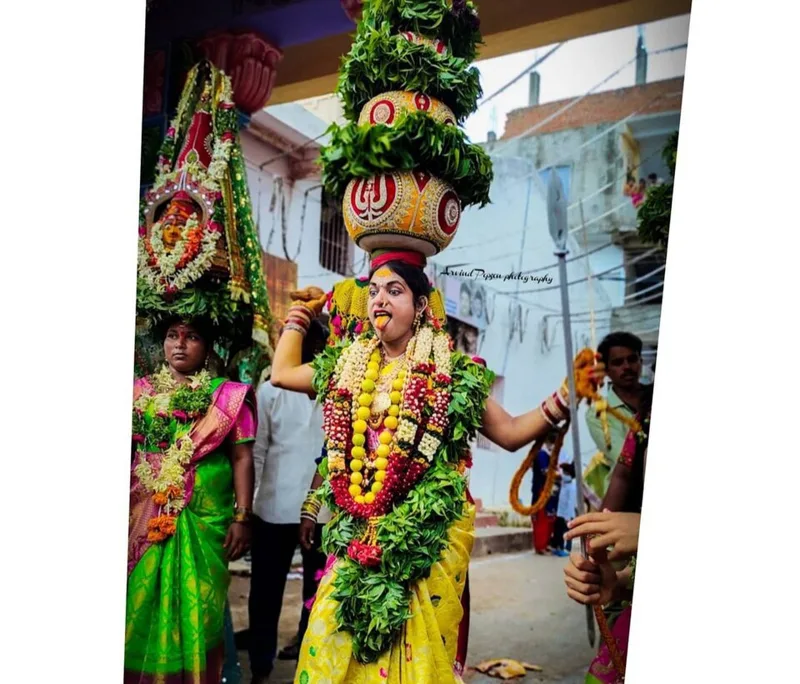
The Telangana government's Hyderabad district account dates the festival's history to 1813 , when plague broke out in Hyderabad and Secunderabad and killed thousands. A military battalion from Hyderabad post…
Asked in SSC CGL 2025 (21 Sep, Shift 1)
Practice (1)
Q740The first recorded origin of Bonalu festival is traced back to which disease outbreak in Hyderabad?
Show answer
Correct answer: C — Plague
Answer: (C)The Telangana government's Hyderabad district account dates the festival's history to 1813, when plague broke out in Hyderabad and Secunderabad and killed thousands.
A military battalion from Hyderabad posted at Ujjain prayed to the goddess Mahankali there and vowed to install her idol if the epidemic ended. On its return it did so, offering Bonalu → option (c).
Why the others are wrong(a)Smallpox: Smallpox does not appear in the Bonalu origin story. Neither the plague account nor the cholera version some sources give mentions it.(b)Cholera: Cholera is the near miss. Some published accounts call the 1813 epidemic cholera, but the Telangana government's Hyderabad district page calls it plague, and the key follows that.(d)Malaria: Malaria is not part of the story. The festival's origin is tied to a sudden epidemic in 1813 that killed thousands, and the account names plague. -
765
Chittorgarh Fort contains iconic structures like the Vijay Stambha and Kirti Stambha, nineteen main temples, and its first hill fort was established in the 5th century.
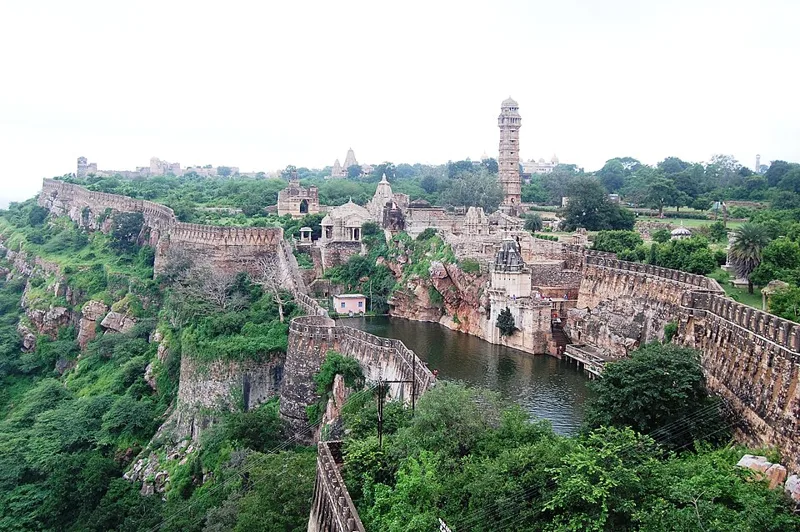
All three statements match the documented history of the fort. Statement 1 : the Vijay Stambha (Tower of Victory) and the Kirti Stambha (Tower of Fame) both stand inside Chittorgarh Fort. Statement 2 : the fort's…
Asked in SSC CGL 2025 (21 Sep, Shift 1)
Practice (1)
Q741Consider the following statements about Chittorgarh Fort:<br>1. The fort features iconic structures like the Vijay Stambha and Kirti Stambha.<br>2. The fort complex includes nineteen main temples.<br>3. Its main entrance was established in the 5th century.<br>Which of the statements given above is/are correct?
Show answer
Correct answer: D — 1, 2 and 3
Answer: (D)All three statements match the documented history of the fort.
Statement 1: the Vijay Stambha (Tower of Victory) and the Kirti Stambha (Tower of Fame) both stand inside Chittorgarh Fort.
Statement 2: the fort's 65 historic structures include four palaces and 19 large temples.
Statement 3: the first hill fort, with one main entrance, was established in the 5th century and fortified until the 12th. So 1, 2 and 3 → option (d).
Why the others are wrong(a)1 and 2 only: 1 and 2 only drops statement 3. The fort's documented history begins with a 5th-century hill fort that had one main entrance, which is what statement 3 describes.(b)2 and 3 only: 2 and 3 only drops statement 1, yet both the Vijay Stambha and the Kirti Stambha stand inside Chittorgarh Fort.(c)1 and 3 only: 1 and 3 only drops statement 2. Descriptions of the fort count 19 large temples among its 65 historic structures. -
766
Kalbelia folk songs and dances of Rajasthan feature female costumes of black swirling skirts with mirror-embroidery and were inscribed in the UNESCO Intangible Cultural Heritage list in 2010.
Statement 1 holds. UNESCO describes Kalbelia women dancing in flowing black skirts , in garments richly embroidered with small mirrors and silver thread. Statement 2 holds. UNESCO inscribed Kalbelia folk songs and dan…
Asked in SSC CGL 2025 (23 Sep, Shift 1)
Practice (1)
Q742Consider the statements about Kalbelia :<br>1. Female costumes are black swirling skirts richly mirror-embroidered.<br>2. It entered UNESCO Representative List in 2010.<br>Which is/are correct?
Show answer
Correct answer: C — Both 1 & 2 correct
Answer: (C)Statement 1 holds. UNESCO describes Kalbelia women dancing in flowing black skirts, in garments richly embroidered with small mirrors and silver thread.
Statement 2 holds. UNESCO inscribed Kalbelia folk songs and dances of Rajasthan on its Representative List of the Intangible Cultural Heritage of Humanity in 2010.
Both statements are correct → option (c).
Why the others are wrong(a)Only 1 correct: Statement 2 is also true. Kalbelia entered UNESCO's Representative List of the Intangible Cultural Heritage of Humanity in 2010, so 'only 1' drops a correct statement.(b)Only 2 correct: Statement 1 is also true. UNESCO itself describes the dancers' flowing black skirts and garments richly embroidered with small mirrors, so 'only 2' drops a correct statement.(d)Neither 1 nor 2 correct: Both statements match UNESCO's own description, the black mirror-embroidered costume and the 2010 inscription, so 'neither' rejects two correct statements. -
767
The Sun Temple at Modhera in Gujarat features a notable architectural stepped tank known as the Suryakunda.
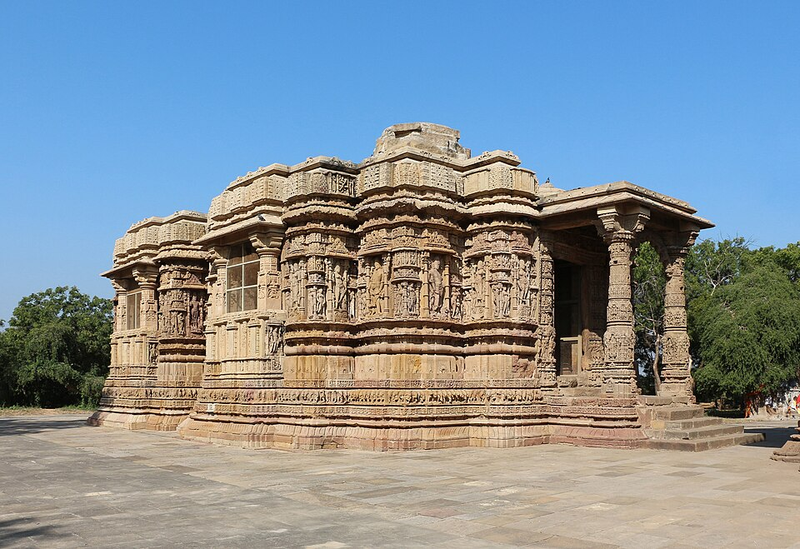
The Sun Temple at Modhera, in Gujarat's Mehsana district, has three parts: the Gudhamandapa (shrine hall), the Sabhamandapa (assembly hall) and the Kunda , a reservoir. That kund, called Suryakunda or Ramakunda, …
Asked in SSC CGL 2025 (23 Sep, Shift 3)
Practice (1)
Q743What is a key architectural feature of the Sun Temple at Modhera?
Show answer
Correct answer: C — Stepped tank
Answer: (C)The Sun Temple at Modhera, in Gujarat's Mehsana district, has three parts: the Gudhamandapa (shrine hall), the Sabhamandapa (assembly hall) and the Kunda, a reservoir.
That kund, called Suryakunda or Ramakunda, is a rectangular tank lined with steps down to the water: a stepped tank → option (c).
Why the others are wrong(a)Gopuram: A gopuram is the monumental gateway tower of a Dravida temple, as at Madurai's Meenakshi Temple. Modhera is a western Indian temple in the Maru-Gurjara style, and its signature is the tank.(b)Garuda pillar: A Garuda pillar is a column crowned by Garuda, Vishnu's mount, like the Heliodorus pillar at Besnagar, dedicated to Vasudeva. Modhera's temple is to Surya, the Sun.(d)Vimana: Vimana is the Dravida name for the tower over the sanctum. Modhera is a Nagara-family temple, where that tower is a shikhara, and its original shikhara no longer survives. -
768
Phool Dei is a traditional spring folk festival marked by floral and rice offerings, primarily observed in the hill state of Uttarakhand.
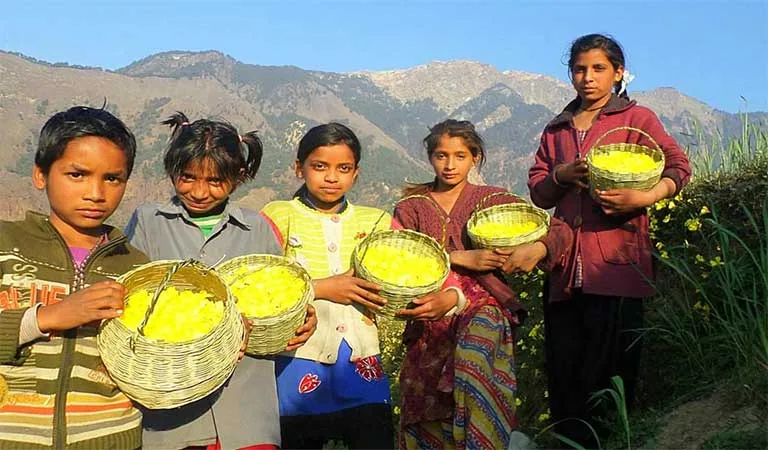
Phool Dei (printed 'Phuldei') is a folk festival of Uttarakhand that welcomes spring on the first day of the Hindu month of Chaitra . Children go from house to house with plates of rice, jaggery and flowers …
Asked in SSC CGL 2025 (23 Sep, Shift 3)
Practice (1)
Q744The traditional folk festival 'Phuldei', marked by floral offerings and cultural rituals, is primarily observed in which Indian state?
Show answer
Correct answer: C — Uttarakhand
Answer: (C)Phool Dei (printed 'Phuldei') is a folk festival of Uttarakhand that welcomes spring on the first day of the Hindu month of Chaitra.
Children go from house to house with plates of rice, jaggery and flowers, and place flowers and rice on each doorstep: the floral offering in the stem → option (c).
Why the others are wrong(a)Himachal Pradesh: Himachal Pradesh is the neighbouring hill state, with its own festivals such as Kullu Dussehra. Phool Dei belongs to Uttarakhand's hill villages.(b)Jammu and Kashmir: The spring new year of Jammu and Kashmir's Kashmiri Pandits is Navreh. Phool Dei is an Uttarakhand festival.(d)Assam: Assam greets spring with Bohag (Rongali) Bihu in April. Phool Dei is a Himalayan festival of Uttarakhand. -
769
The ceremonial procession of Lord Dharnath during Shravan in the Dhar district of Madhya Pradesh is locally called Chhabina.
The Dhar district administration's festival page describes it: in Shravan , the palki (palanquin) procession of Lord Shiva as Dharnath goes round Dhar city, and it is 'also called as Chhabina by the locals&#…
Asked in SSC CGL 2025 (21 Sep, Shift 3)
Practice (1)
Q745Fill in the blank:<br>The ceremonial procession of Lord Dharnath in Dhar district of Madhya Pradesh is locally referred to as a _____.
Show answer
Correct answer: B — Chhabina
Answer: (B)The Dhar district administration's festival page describes it: in Shravan, the palki (palanquin) procession of Lord Shiva as Dharnath goes round Dhar city, and it is 'also called as Chhabina by the locals'.
That local name is what the blank asks for → option (b).
Why the others are wrong(a)Jhanki: A jhanki is a tableau, a staged scene carried or driven in a procession. It is one part of a procession, not the local name for Dharnath's.(c)Rath: A rath is a chariot, the vehicle of a rath yatra. Dharnath travels in a palki, a palanquin, and his procession's local name is Chhabina.(d)Sawari: Sawari means a deity's ride or procession, and the Dhar page uses the word in passing. But the name it gives as the locals' own is Chhabina. -
770
Thoda is a martial art and dance form of Himachal Pradesh that combines archery and music, traditionally performed by the Thakur community (Rajputs).
Thoda is a martial tradition of Himachal Pradesh that combines archery, dance and music. Two teams, the pasha and the saatha , shoot blunt arrows at each other's legs. One account of the game places it among the …
Asked in SSC CGL 2025 (21 Sep, Shift 3)
Practice (1)
Q746Fill in the Blank:<br>Thoda is performed mostly by _____ community.
Show answer
Correct answer: A — Rajputs
Answer: (A)Thoda is a martial tradition of Himachal Pradesh that combines archery, dance and music. Two teams, the pasha and the saatha, shoot blunt arrows at each other's legs.
One account of the game places it among the Khasas of Shimla, Solan and Sirmaur, and says the players usually belong to the region's Thakur community. Thakur is a title widely used by Rajputs, which is the reading the key takes: option (a).
Why the others are wrong(b)Brahmins: Thoda is a warrior's game, a mock battle between teams who see themselves as descendants of the Pandavas and Kauravas. One account names Thakur players, not the priestly Brahmins.(c)Jats: One account of Thoda describes its players as the Thakur community of the Shimla, Solan and Sirmaur hills. The Jats are not the community it names.(d)Ahirs: The Ahirs are not the community one account of Thoda names. It describes Thakur players from the Himachal hills in a mock battle between Pandava and Kaurava sides. -
771
The evolution of temple architecture in India, ranging from Gupta shrines to Khajuraho temples, reflects the continuous interaction of religion and regional styles (Nagara and Dravida).
NCERT's An Introduction to Indian Art (Class 11) traces the temple from modest Gupta-period shrines at Sanchi and Udaigiri to the Chandela temples of Khajuraho, built in the tenth century. It also describes two b…
Asked in SSC CGL 2025
Practice (1)
Q747Which historical process is best reflected by the evolution of temple architecture in India?
Show answer
Correct answer: B — Continuous interaction of religion and regional styles
Answer: (B)NCERT's An Introduction to Indian Art (Class 11) traces the temple from modest Gupta-period shrines at Sanchi and Udaigiri to the Chandela temples of Khajuraho, built in the tenth century.
It also describes two broad regional orders: Nagara in the north and Dravida in the south.That is gradual change shaped by religion and region together, which is option (b).
Why the others are wrong(a)Decline of indigenous art: Temple building grew grander, not weaker. NCERT calls the Kailashnath temple at Ellora the culmination of at least a millennium-long tradition in rock-cut architecture.(c)Sudden cultural change: The change was gradual, not sudden. NCERT says temples grew more complex by adding projecting walls and niches without breaking away from the fundamental plan of the shrine.(d)Foreign architectural dominance: Outside influence was absorbed, not dominant. NCERT says Kashmir took a strong Gandhara influence by the fifth century CE, which then mixed with Gupta and post-Gupta traditions brought from Sarnath, Mathura and elsewhere. -
772
Navroz (Nowruz) is the Persian New Year celebrated on the Spring Equinox (March 21), introduced in the Delhi Sultanate by Ghiyasuddin Balban.
Navroz (Nowruz) is the Persian New Year, marking the start of spring at the vernal equinox , on 21 March (or 20 March). For its arrival in India, Delhi Sultanate history credits Ghiyasuddin Balban (r. 1266–1287). He m…
Asked in SSC CGL 2025
Practice (1)
Q748Which of the following statements regarding 'Navroz' (Nowruz) is correct?
Show answer
Correct answer: D — It is the Persian New Year celebrated on the Spring Equinox, introduced in India by Ghiyasuddin Balban.
Answer: (D)Navroz (Nowruz) is the Persian New Year, marking the start of spring at the vernal equinox, on 21 March (or 20 March).
For its arrival in India, Delhi Sultanate history credits Ghiyasuddin Balban (r. 1266–1287). He modelled his court on Persian kingship and also brought in the court customs of sijda (prostration) and paibos (kissing the sultan's feet).
Why the others are wrong(a)It is a lunar-based festival celebrated exclusively by the Buddhist community in the Himalayan belt.: Navroz is fixed by the spring equinox, a solar event, so it is not a lunar festival. Its roots are Persian and, the UN notes, go back over 3,000 years, not to Himalayan Buddhism.(b)It marks the start of the harvest season in Southern India and is dedicated to the Sun God.: That describes a harvest festival dedicated to the Sun God, such as Pongal in Tamil Nadu. Navroz is a new-year festival that marks the arrival of spring.(c)It is a monsoon festival commemorating the victory of Good over Evil in the Mughal courts.: Navroz falls at the spring equinox in March, not in the monsoon. Balban of the Delhi Sultanate is credited with introducing it, long before the Mughals, so it did not begin in Mughal courts. -
773
Dr. Bhupen Hazarika, the legendary singer and lyricist from Assam, is famously known as the 'Bard of Brahmaputra' and was awarded the Bharat Ratna in 2019.
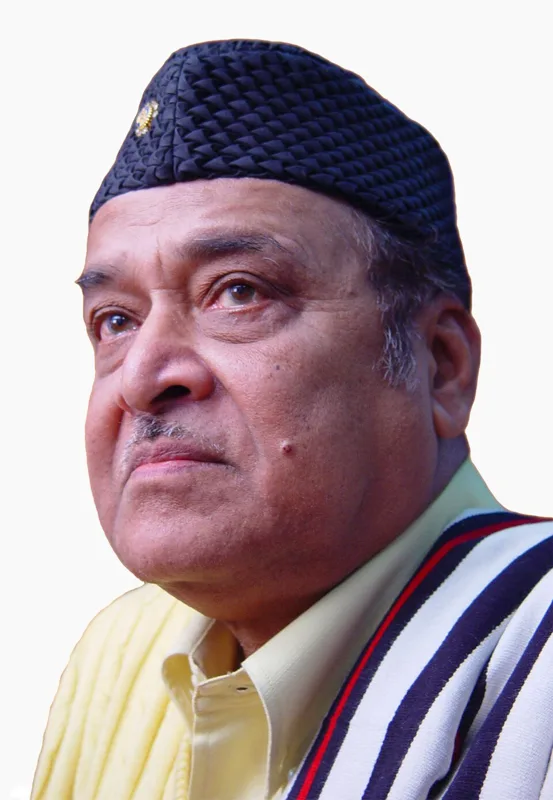
Bhupen Hazarika, the singer and lyricist from Assam, is known as the Bard of the Brahmaputra . A bard is a poet-singer, and the Brahmaputra is the great river of his home state. He is also popularly called Sudhakantha…
Asked in SSC CGL 2025
Practice (1)
Q749Dr. Bhupen Hazarika is famously known by which of the following titles, reflecting his deep connection to the geography and spirit of Assam?
Show answer
Correct answer: A — Bard of Brahmaputra
Answer: (A)Bhupen Hazarika, the singer and lyricist from Assam, is known as the Bard of the Brahmaputra. A bard is a poet-singer, and the Brahmaputra is the great river of his home state.
He is also popularly called Sudhakantha. He was awarded the Bharat Ratna posthumously in 2019.
Why the others are wrong(b)Son of Brahmaputra: A near-miss built on the right river. His epithet uses Bard, a poet-singer, which is what Hazarika was. 'Son of Brahmaputra' drops the word that carries the meaning.(c)Kala Guru of Assam: Kalaguru, meaning 'master of the arts', is what the people of Assam call Bishnu Prasad Rabha, a different Assamese cultural figure, not Hazarika.(d)Voice of Brahmaputra: Another near-miss. The epithet is Bard of the Brahmaputra, and his other popular title is Sudhakantha. 'Voice of Brahmaputra' is neither. -
774
The Karma festival in Chhattisgarh is celebrated on Bhadra Ekadashi in honour of the Karam tree, traditionally associated with the timki drum.
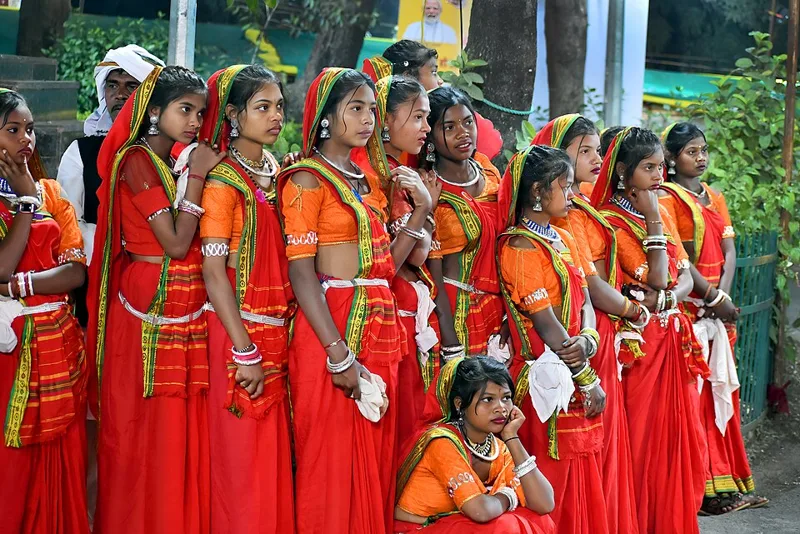
Statement 1 matches the festival. Karma (Karam) falls on the Ekadashi of the bright fortnight of Bhado , when a Karam branch is worshipped, and Chhattisgarh is among the states that keep it. The key rejects statement …
Asked in SSC CGL 2025 (24 Sep, Shift 2)
Practice (1)
Q750Consider the statements about Karma:<br>1. The ritual honours the Karam tree on Bhadra Ekadashi in Chhattisgarh.<br>2. The drum most associated is the Madal.<br>Which is/are correct?
Show answer
Correct answer: A — Only 1 correct
Answer: (A)Statement 1 matches the festival. Karma (Karam) falls on the Ekadashi of the bright fortnight of Bhado, when a Karam branch is worshipped, and Chhattisgarh is among the states that keep it.
The key rejects statement 2. Accounts of the Karma dance name the timki as its main drum, and the madal is best known as Nepal's folk drum → option (a).
Why the others are wrong(b)Only 2 correct: Statement 1 is sound: Karma is kept on Bhado Shukla Ekadashi in honour of the Karam tree, and Chhattisgarh observes it. An option that drops statement 1 cannot be right.(c)Both 1 & 2 correct: The key does not accept statement 2. Accounts of the Karma dance name the timki as its main drum. The madal is best known as Nepal's national instrument, though some Adivasi groups play it too.(d)Neither 1 nor 2 correct: Statement 1 holds. The Ekadashi of Bhado's bright fortnight and the Karam-tree worship are exactly what it says, and Chhattisgarh is among the states that keep the festival. -
775
The book 'The Elephant Paradigm: India Wrestles with Change' (2002) was authored by former corporate leader and writer Gurcharan Das.
The Elephant Paradigm: India Wrestles with Change (2002) is by Gurcharan Das , the former CEO of Procter & Gamble India. Das published it two years after India Unbound (2000) → option (c). Why the others are wrong…
Asked in SSC CGL 2025 (23 Sep, Shift 3)
Practice (1)
Q751Who is the author of the book The Elephant Paradigm'?
Show answer
Correct answer: C — Gurcharan Das
Answer: (C)The Elephant Paradigm: India Wrestles with Change (2002) is by Gurcharan Das, the former CEO of Procter & Gamble India.
Das published it two years after India Unbound (2000) → option (c).
Why the others are wrong(a)Nandan Nilekani: Nandan Nilekani, Infosys co-founder and first chairman of UIDAI, wrote Imagining India and co-wrote Rebooting India with Viral Shah.(b)Raghuram Rajan: Raghuram Rajan, RBI Governor from 2013 to 2016, wrote Fault Lines and The Third Pillar.(d)Shashi Tharoor: The near-miss. Shashi Tharoor wrote The Elephant, the Tiger, and the Cell Phone (2007): an elephant in the title, but a different book. -
776
The book 'The Tatas: How a Family Built a Business and a Nation' by Girish Kuber and Vikrant Pande highlights the Tata family's pivotal role in building Indian industry and society.
The book's full title is The Tatas: How a Family Built a Business and a Nation , by Girish Kuber, whom the paper prints as Girīśa Kubera. A family that built a business and a nation is a family with a role in Ind…
Asked in SSC CGL 2025 (23 Sep, Shift 3)
Practice (1)
Q752What is the central theme of the book 'The Tatas' by Girīśa Kubera and Vikrant Pande?
Show answer
Correct answer: C — The Tata family’s role in building Indian industry and society
Answer: (C)The book's full title is The Tatas: How a Family Built a Business and a Nation, by Girish Kuber, whom the paper prints as Girīśa Kubera.
A family that built a business and a nation is a family with a role in Indian industry and society → option (c).
Why the others are wrong(a)The Tata family's growth in early modern India: Early modern India conventionally means roughly the 16th to 18th centuries. The Tata story begins in the late 19th century, so the option puts it in the wrong period.(b)The influence of Tata family on India’s industrial policies: Industrial policy is the government's side of the story. The subtitle is about what the family built, a business and a nation, not about shaping state policy.(d)A fictional narrative about Tata family's business empire’s moral conflicts: The book is non-fiction, a history of a real family and its companies. A fictional narrative does not fit a title that promises how a family built a business. -
777
The Sun Temple at Konark, Odisha, is architecturally designed as a monumental chariot of Surya with 12 pairs of wheels drawn by seven horses.
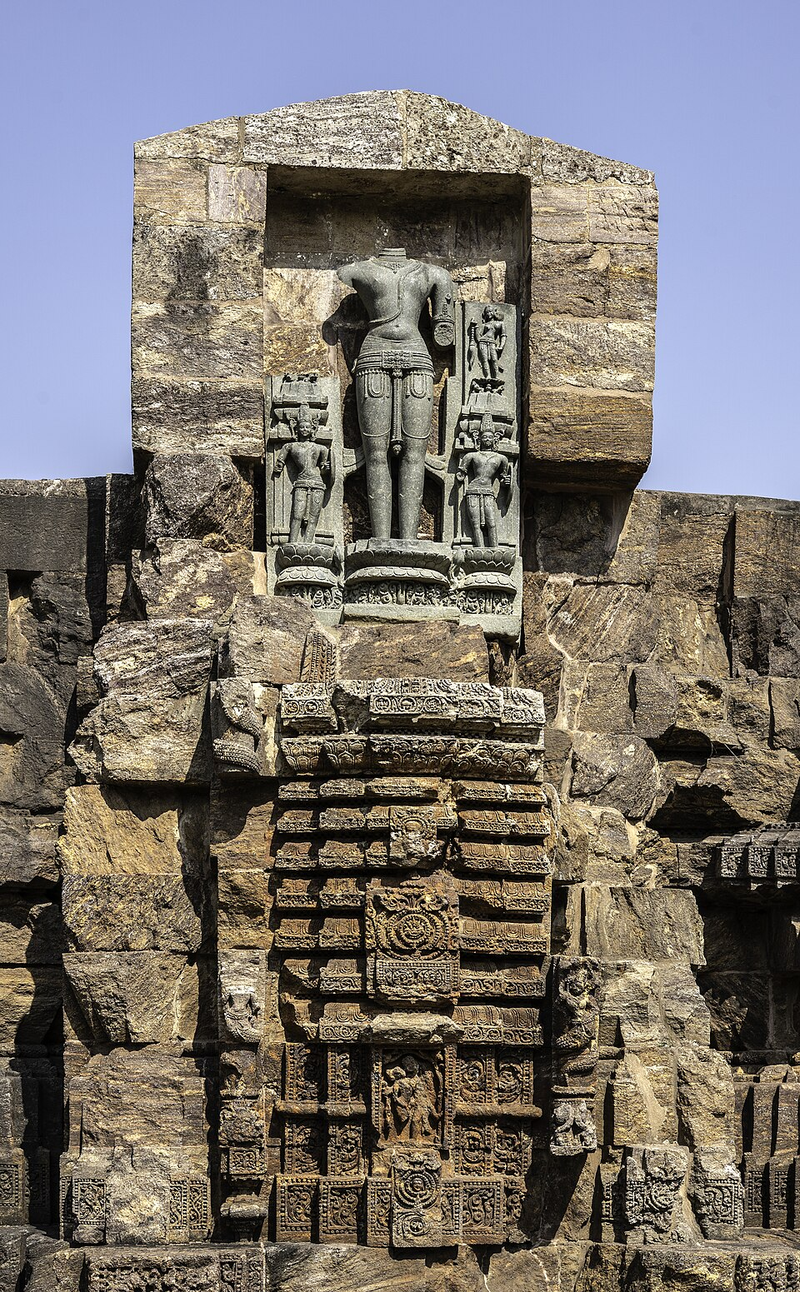
The Sun Temple at Konark , in Odisha, is carved as the chariot of Surya, the Sun god. UNESCO's statement of Outstanding Universal Value describes it as a chariot with twelve pairs of wheels drawn by seven horses…
Asked in SSC CGL 2025 (24 Sep, Shift 2)
Practice (1)
Q753The Sun Temple at Konark looks like a big chariot. How many horses does it have?
Show answer
Correct answer: D — 7
Answer: (D)The Sun Temple at Konark, in Odisha, is carved as the chariot of Surya, the Sun god.
UNESCO's statement of Outstanding Universal Value describes it as a chariot with twelve pairs of wheels drawn by seven horses → option (d).
Why the others are wrong(a)5: Five is two short. UNESCO's Outstanding Universal Value statement gives the chariot seven horses.(b)6: Six is one short. UNESCO's Outstanding Universal Value statement gives seven, the number that draws Surya's chariot in Hindu tradition. Its short site description says six; the key follows seven.(c)8: Eight is one too many. Konark's horses number seven. The number that comes in pairs is its wheels: twelve pairs, 24 in all. -
778
The Mathura school of art originated from an indigenous sculptural tradition, where early Buddha images were significantly influenced by local Yaksha figures and carved in red sandstone.
The Mathura school grew out of an indigenous sculptural tradition. Its early Buddha images are modelled on the older Yaksha figures, the large nature-spirit statues of the region. NCERT sets this against Gandhara, who…
Asked in SSC CGL 2025 (24 Sep, Shift 2)
Practice (1)
Q754Which of the following best characterizes the Mathura school of Buddhist art and architecture?
Show answer
Correct answer: C — Indigenous features with Yaksha influence
Answer: (C)The Mathura school grew out of an indigenous sculptural tradition. Its early Buddha images are modelled on the older Yaksha figures, the large nature-spirit statues of the region.
NCERT sets this against Gandhara, whose Buddha has Hellenistic features. Indigenous features with Yaksha influence → option (c).
Why the others are wrong(a)Use of sandstone and floral arches: Half true. Mathura did carve in red sandstone, but a material is not a style, and floral arches are no signature of the school.(b)Hellenistic drapery and realism: Hellenistic drapery and realism describe Gandhara, the Greco-Buddhist school of the north-west, whose Buddha wears heavy Greco-Roman robes. Mathura's idiom is the indigenous one.(d)Predominantly wooden monastery design: Mathura's legacy is stone sculpture, Buddhist, Jain and Hindu images in red sandstone, not timber monasteries. -
779
Announced in the Union Budget 2025-26, the Gyan Bharatam Mission aims at preserving, digitizing, and disseminating India's vast manuscript heritage across libraries and institutions.
The mission was announced in the Union Budget 2025–26 . The Budget speech frames it as the survey, documentation and conservation of India's manuscript heritage, with academic institutions, museums, libraries and…
Asked in SSC CGL 2025
Practice (1)
Q755What constitutes the primary objective of the Gyan Bharatam Mission?
Show answer
Correct answer: D — Preserving, digitizing, and disseminating India's manuscript heritage
Answer: (D)The mission was announced in the Union Budget 2025–26. The Budget speech frames it as the survey, documentation and conservation of India's manuscript heritage, with academic institutions, museums, libraries and private collectors, covering more than 1 crore manuscripts.
The same paragraph adds a National Digital Repository of Indian knowledge systems for sharing. Preserve, digitise, disseminate → option (d).
Why the others are wrong(a)Promoting Indian languages globally: The mission's object is manuscripts, not promoting languages abroad. The Budget line speaks of surveying, documenting and conserving manuscript heritage.(b)Developing new libraries across India: Libraries are partners, named with museums, academic institutions and private collectors. The work is on manuscripts in existing collections, not new library buildings.(c)Translating classical texts into modern languages: Translation is not the stated aim. The Budget line lists survey, documentation and conservation, plus a digital repository for sharing what is found. -
780
The 57-foot monolithic statue of Bahubali (Gommateshwara) at Shravanabelagola, Karnataka, was commissioned by Chamundaraya around 983 CE; the Mahamastakabhisheka is held every 12 years.
Practice (1)
Q756Which place has the giant Gommateshwara (Bahubali) statue?
Show answer
Correct answer: C — Shravanabelagola
It is in Karnataka and was commissioned by Chamundaraya.