
🎭 Art & Culture कला और संस्कृति
801 exam-ready facts · 758 MCQs
-
661
The registered office and headquarters of the Sangeet Natak Akademi is located in New Delhi.
Sangeet Natak Akademi is headquartered in New Delhi
Asked in SSC CGL 2024 (25 Sep, Shift 3)
Practice (1)
Q637The registered office of the Sangeet Natak Akademi is at:
Show answer
Correct answer: D — New Delhi
Answer: (D)
Sangeet Natak Akademi is headquartered in New Delhi. -
662
The ‘Lokranjan’ festival, held at Khajuraho, celebrates the folk and tribal culture of Madhya Pradesh.
Lokranjan is held at Khajuraho, Madhya Pradesh
Asked in SSC CGL 2024 (26 Sep, Shift 1)
Practice (1)
Q638The ‘Lokranjan’ festival celebrates the folk and tribal culture of which Indian state?
Show answer
Correct answer: C — Madhya Pradesh
Answer: (C)
Lokranjan is held at Khajuraho, Madhya Pradesh. -
663
Renowned playback singer Asha Bhosle was honoured with the Nightingale of Asia Award in 1987.
Asha Bhosle received the Nightingale of Asia award in 1987
Asked in SSC CGL 2024 (26 Sep, Shift 1)
Practice (1)
Q639Which playback singer was honoured with the Nightingale of Asia Award in 1987?
Show answer
Correct answer: D — Asha Bhosle
Answer: (D)
Asha Bhosle received the Nightingale of Asia award in 1987. -
664
Arvind Parikh is a distinguished Padma Bhushan awardee who plays the sitar.
Arvind Parikh is a sitar maestro
Asked in SSC CGL 2024 (26 Sep, Shift 1)
Practice (1)
Q640Arvind Parikh, a Padma Bhushan awardee, plays which of the following musical instruments?
Show answer
Correct answer: C — Sitar
Answer: (C)
Arvind Parikh is a sitar maestro. -
665
Kuki dance is a traditional folk dance predominantly performed in the state of Nagaland.
Kuki dance is performed in Nagaland (official key)
Asked in SSC CGL 2024 (26 Sep, Shift 1)
Practice (1)
Q641‘Kuki dance’ is a folk dance of India that is predominantly performed in _________.
Show answer
Correct answer: A — Nagaland
Answer: (A)
Kuki dance is performed in Nagaland (official key). -
666
Fugdi is a traditional Goan folk dance performed by women during religious and cultural festivals.
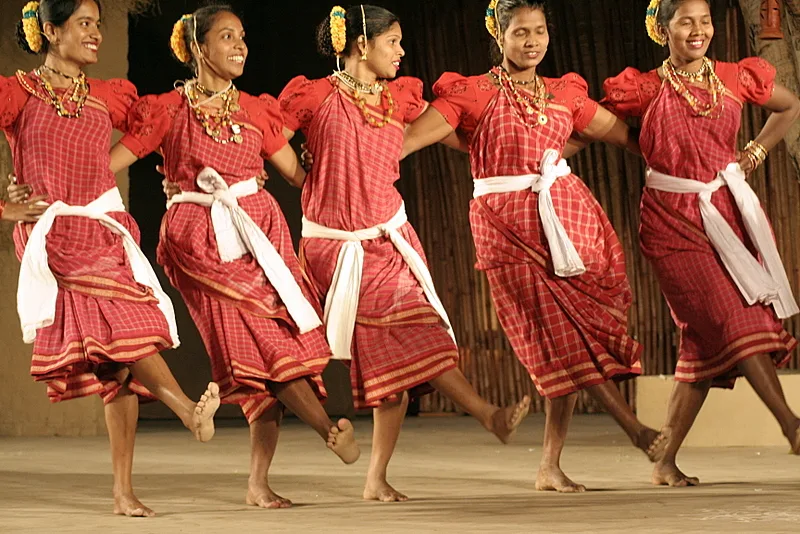
Fugdi is a folk dance performed by women in Goa (and the Konkan region)
Asked in SSC CGL 2024 (26 Sep, Shift 2)
Practice (1)
Q642Fugdi dance is associated with which of the following states?
Show answer
Correct answer: B — Goa
Answer: (B)
Fugdi is a folk dance performed by women in Goa (and the Konkan region). -
667
Umayalpuram K. Sivaraman is a renowned Carnatic classical maestro who plays the mridangam.
Umayalpuram K. Sivaraman is a renowned Carnatic mridangam maestro (Padma Vibhushan 2010)
Asked in SSC CGL 2024 (26 Sep, Shift 2)
Practice (1)
Q643Umayalpuram K Sivaraman is an eminent musician associated with which of the following musical instruments?
Show answer
Correct answer: C — Mridangam
Answer: (C)
Umayalpuram K. Sivaraman is a renowned Carnatic mridangam maestro (Padma Vibhushan 2010). -
668
Rottela Panduga (Roti Festival) is celebrated annually at the Bara Shaheed Dargah in Nellore, Andhra Pradesh.
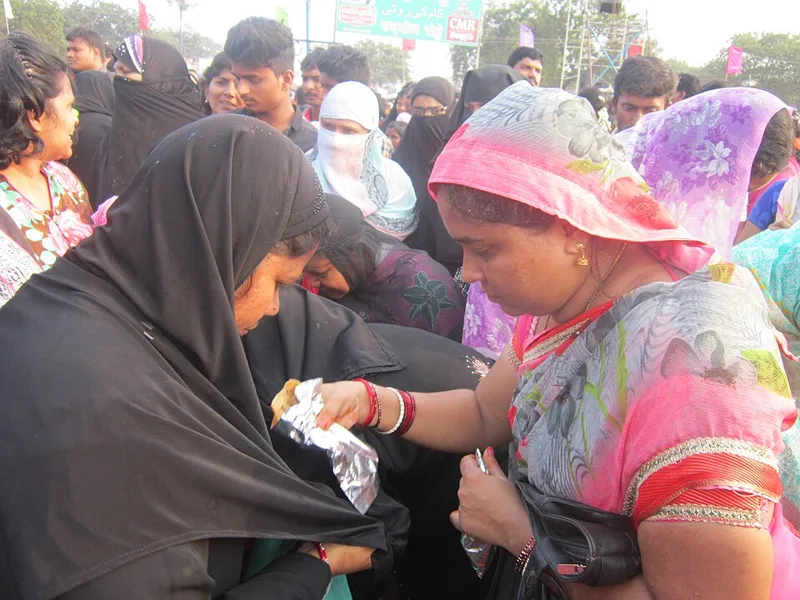
Rottela Panduga is celebrated at the Bara Shaheed Dargah in Nellore, Andhra Pradesh
Asked in SSC CGL 2024 (26 Sep, Shift 2)
Practice (1)
Q644Rottela Panduga or the Roti Festival is celebrated in which Indian state?
Show answer
Correct answer: B — Andhra Pradesh
Answer: (B)
Rottela Panduga is celebrated at the Bara Shaheed Dargah in Nellore, Andhra Pradesh. -
669
Legendary singer and composer from Assam, Bhupen Hazarika, was posthumously awarded the Bharat Ratna in 2019.
Bhupen Hazarika was awarded the Bharat Ratna posthumously in 2019
Asked in SSC CGL 2024 (26 Sep, Shift 2)
Practice (1)
Q645Which singer from Assam was posthumously awarded the Bharat Ratna in 2019?
Show answer
Correct answer: D — Bhupen Hazarika
Answer: (D)
Bhupen Hazarika was awarded the Bharat Ratna posthumously in 2019. -
670
Yakshagana is a traditional theater and folk dance form originating from the state of Karnataka, known for its elaborate costumes and vigorous dance movements.
Yakshagana is from Karnataka
Asked in SSC CGL 2024 (26 Sep, Shift 3)
Practice (1)
Q646Yakshagan is a folk dance of which of the following states?
Show answer
Correct answer: D — Karnataka
Answer: (D)
Yakshagana is from Karnataka. -
671
Vishu is a major traditional spring festival celebrated primarily in the Indian states of Kerala and Tamil Nadu, marking the Malayalam New Year.
Vishu is celebrated in Kerala and Tamil Nadu (official key)
Asked in SSC CGL 2024 (26 Sep, Shift 3)
Practice (1)
Q647Vishu festival is celebrated in which of the following states?
Show answer
Correct answer: D — Kerala And Tamil Nadu
Answer: (D)
Vishu is celebrated in Kerala and Tamil Nadu (official key). -
672
The rock-cut Elephanta Caves are predominantly dedicated to Shaivite themes and are renowned for their sculptural depth and dramatic interplay of light and shadow.
NCERT's Class XI textbook An Introduction to Indian Art says the Elephanta Caves are dominated by the Shaivite faith, and that their sculptures show slenderness in the body with stark light and dark effects. That…
Asked in SSC CGL 2025 (12 Sep, Shift 1)
Practice (1)
Q648Which of the following features distinguishes the Elephanta Caves from other rock-cut sites of early India?
Show answer
Correct answer: B — The caves focus on Shaivite themes and feature sculptural depth through light and shadow.
Answer: (B)NCERT's Class XI textbook An Introduction to Indian Art says the Elephanta Caves are dominated by the Shaivite faith, and that their sculptures show slenderness in the body with stark light and dark effects.
That is option (b) in other words: Shiva themes, and depth carved out of light and shadow. The showpiece, per UNESCO, is the 7-metre Sadashiva at the entrance of Cave 1, showing three aspects of Shiva.
Why the others are wrong(a)They are primarily Buddhist caves with large stupas.: Elephanta's great caves are Hindu and centre on Shiva. UNESCO does record buried stupas on the eastern side of a hillock there, but the Buddhist chaitya halls NCERT lists are at Ajanta, Pitalkhora and Bhaja.(c)They contain a mix of Jain and Vaishnavite depictions in pillar halls.: The Jain strand belongs to Ellora, which NCERT describes as having Buddhist, Brahmanical and Jain caves. The Elephanta reliefs UNESCO names, from Sadashiva and Nataraja to Ardhanarishwara and Gangadhara, are all forms of Shiva.(d)The caves are entirely monolithic structures from the Mauryan period.: The date is wrong. UNESCO places the caves at about the mid-5th to 6th centuries AD, long after the Mauryas. NCERT's Mauryan example is the Lomus Rishi cave in the Barabar hills of Bihar. -
673
During the Goncha Festival of Bastar, participants use bamboo mock guns called 'Tupki' to shoot Goncha fruit as harmless bullets, a tradition started by Chalukya rulers.
Statement 1 holds: the Ministry of Tourism's festival listing describes bamboo Tupkis used as mock guns to shoot Goncha fruit as harmless bullets. Statement 2 holds: tradition credits the chariot to King Purushot…
Asked in SSC CGL 2025 (12 Sep, Shift 1)
Practice (1)
Q649Read the statements about the Goncha Festival of Bastar:<br>1.) Tupki, a mock gun made of bamboo, uses Goncha fruit as bullets.<br>2.) The chariot procession was started by Chalukya rulers.<br>3.) Rath Yatra begins on Ashadh Shukla Dashmi and ends on Dutiya.<br>Which of the above statements are correct?
Show answer
Correct answer: A — Only 1 and 2
Answer: (A)Statement 1 holds: the Ministry of Tourism's festival listing describes bamboo Tupkis used as mock guns to shoot Goncha fruit as harmless bullets.
Statement 2 holds: tradition credits the chariot to King Purushottam Dev of Bastar's Kakatiya/Chalukya house, who brought it back from Puri.
Statement 3 reverses the calendar. Goncha keeps time with Puri's Rath Yatra, which sets out on Ashadha Shukla Dwitiya and returns on Dashami. So 1 and 2 stand.
Why the others are wrong(b)Only 2 and 3: It keeps the false statement 3, which puts the start on Dashami and the end on Dwitiya, and it drops statement 1, the Tupki mock battle fought with Goncha fruit.(c)Only 1 and 3: It throws out a true statement and keeps a false one. Statement 2 is right about Bastar's Kakatiya/Chalukya kings, and statement 3 has the Ashadha dates reversed.(d)1, 2 and 3 are correct: Statement 3 fails, so all three cannot be correct. Puri's Rath Yatra, which Bastar follows, sets out on the second day of Ashadha's bright fortnight, not the tenth. -
674
In Carnatic music, a laghu consisting of five beats is classified as 'Khanda' jaati, which forms a part of the Suladi Sapta Tala system.
In the Suladi Sapta Tala system, a tala's jaati is fixed by how many beats its laghu carries. The five jaatis run Tishra 3, Chaturashra 4, Khanda 5 , Mishra 7 and Sankeerna 9. A laghu of five beats is therefore K…
Asked in SSC CGL 2025 (12 Sep, Shift 1)
Practice (1)
Q650Fill in the blanks:<br>In Carnatic music, a laghu with five beats is known as ____ jaati.
Show answer
Correct answer: C — Khanda
Answer: (C)In the Suladi Sapta Tala system, a tala's jaati is fixed by how many beats its laghu carries.
The five jaatis run Tishra 3, Chaturashra 4, Khanda 5, Mishra 7 and Sankeerna 9.
A laghu of five beats is therefore Khanda jaati.
Why the others are wrong(a)Tishra: Tishra jaati gives the laghu 3 beats. Tishra-jaati Eka tala, at 3 aksharas, is the shortest of the 35 talas.(b)Chaturashra: Chaturashra jaati gives 4 beats. It is the laghu of Adi tala, Chaturashra-jaati Triputa, which counts 4 + 2 + 2 = 8.(d)Mishra: Mishra jaati gives 7 beats, not 5. Seven sits between Khanda's 5 and Sankeerna's 9. -
675
Cheraw is a traditional and vibrant bamboo dance of Mizoram, performed by stepping in and out of rhythmic intersecting long bamboo poles.
Cheraw is the bamboo dance of Mizoram . Men sit facing each other and rhythmically tap and strike together pairs of long bamboo poles , while women step in and out between them. It is the main dance of Chapchar Kut ,…
Asked in SSC CGL 2025 (12 Sep, Shift 1)
Practice (1)
Q651Cheraw, the bamboo dance performed using crossed bamboo sticks, is a folk dance of which state?
Show answer
Correct answer: A — Mizoram
Answer: (A)Cheraw is the bamboo dance of Mizoram.
Men sit facing each other and rhythmically tap and strike together pairs of long bamboo poles, while women step in and out between them.
It is the main dance of Chapchar Kut, the Mizo spring festival held when the bamboo felled for jhum cultivation is left to dry.
Why the others are wrong(b)Meghalaya: Cheraw is not from Meghalaya. That state's Garo people celebrate Wangala, a post-harvest thanksgiving to the sun god also known as the Hundred Drums festival.(c)Arunachal Pradesh: Arunachal Pradesh is known for masked dances such as Bardo Chham of its Himalayan Buddhist tribes, which shows good triumphing over evil. The bamboo-pole Cheraw is Mizo.(d)Sikkim: Sikkim's folk dances include Chu-Faat, keyed to Sikkim at 23 Sep 2024, 16:00, GA Q.8. Cheraw belongs to Mizoram, not Sikkim. -
676
Pandit Ram Narayan was a legendary Indian musician renowned as a pioneer in popularizing the Sarangi as a solo concert instrument.
Pt. Ram Narayan was a sarangi maestro
Asked in SSC CGL 2024 (26 Sep, Shift 3)
Practice (1)
Q652Pandit Ram Narayan was associated with which of the following musical instruments?
Show answer
Correct answer: A — Sarangi
Answer: (A)
Pt. Ram Narayan was a sarangi maestro. -
677
In the evolution of Indian classical music, ragas evolved from ancient jatis, and the comprehensive 72-mela melakarta system was established by Venkatamakhi.
Both halves hold. In the ancient texts the jati was the technical mode, and raga grew out of it into a fuller idea that also takes in the listener's experience. The 72-mela scheme belongs to Venkatamakhi , a 17th…
Asked in SSC CGL 2025 (12 Sep, Shift 2)
Practice (1)
Q653Which of the following correctly reflects the evolution of Indian classical music?
Show answer
Correct answer: D — Ragas evolved from jatis; 72-mela was by Venkatamakhi
Answer: (D)Both halves hold. In the ancient texts the jati was the technical mode, and raga grew out of it into a fuller idea that also takes in the listener's experience.
The 72-mela scheme belongs to Venkatamakhi, a 17th-century musicologist, who set it out in his Chaturdandi Prakashika. It is the basis of the melakarta system of Carnatic music → option (d).
Why the others are wrong(a)Jatis evolved from ragas as per ancient texts: This reverses the order. The jati is the older concept of the ancient texts, and raga developed out of it, not the other way round.(b)72-mela system was given by Bharata in 13th century: Both parts are wrong. Bharata's Natya Shastra is dated to between 200 BCE and 200 CE, and the 72-mela scheme is Venkatamakhi's, from the 17th century.(c)Folk music originally used mela and grama scales: Grama and mela are terms of the theory texts, not of folk practice. The Natya Shastra discusses gramas as scales, and mela classification belongs to later treatises, such as Ramamatya's (c. 1550) and Venkatamakhi's. -
678
Bharatanatyam is the oldest among the major Indian classical dances based on historical references, followed in sequence by Kathak, Manipuri, and Mohiniyattam.
All four options open with Bharatanatyam , so the key's work is in the last three places: Kathak, Manipuri, Mohiniyattam . Kathak takes its name from katha, story, and its line from the kathakas, storytellers nam…
Asked in SSC CGL 2025 (12 Sep, Shift 3)
Practice (1)
Q654Arrange the following classical dances in chronological order of earliest historical references (oldest to newest):<br>1. Bharatanatyam<br>2. Mohiniyattam<br>3. Kathak<br>4. Manipuri
Show answer
Correct answer: C — 1 - 3 - 4 - 2
Answer: (C)All four options open with Bharatanatyam, so the key's work is in the last three places: Kathak, Manipuri, Mohiniyattam.
Kathak takes its name from katha, story, and its line from the kathakas, storytellers named in the Mahabharata.
The order holds if Manipuri is dated from Lai Haraoba, the Meitei ritual dance it grew out of. Mohiniyattam comes last: its name is first recorded in the Vyavaharamala, a Kerala text of the 16th-17th century. That is option (c).
Why the others are wrong(a)1 - 3 - 2 - 4: This swaps the last two, putting Mohiniyattam before Manipuri. The key reads Manipuri from its Lai Haraoba roots, which places it ahead of Mohiniyattam's first named mention.(b)1 - 2 - 4 - 3: This puts Kathak last. Its storytelling line runs back to the kathakas of the Mahabharata, far earlier than the 16th-17th-century text that first names Mohiniyattam.(d)1 - 4 - 3 - 2: This puts Manipuri before Kathak. The kathakas Kathak traces itself to are named in the Mahabharata, while Manipuri's early history rests largely on Meitei oral tradition. -
679
Phamsana temple architecture features roofs constructed with several slabs that gently slope upwards on a straight incline to meet at a single central point.
NCERT's Class XI text An Introduction to Indian Art describes phamsana buildings as broader and shorter than latina ones, with roofs of several slabs that gently rise to a single point over the centre. It adds th…
Asked in SSC CGL 2025 (12 Sep, Shift 3)
Practice (1)
Q655Which of the following pairs is correctly matched with the shape of its roof?
Show answer
Correct answer: B — Phamsana — slabs rising to a point, straight incline
Answer: (B)NCERT's Class XI text An Introduction to Indian Art describes phamsana buildings as broader and shorter than latina ones, with roofs of several slabs that gently rise to a single point over the centre.
It adds that phamsana roofs do not curve inward but slope upwards on a straight incline. That is option (b), phrase for phrase.
Why the others are wrong(a)Latina — rectangular, wagon-shaped: Rectangular and wagon-shaped describes the valabhi, not the latina. NCERT calls valabhi buildings wagon-vaulted, their rounded roof edge recalling bullock-drawn wagons.(c)Valabhi — tall, curving inward sharply: Tall and curving inward describes the latina, whose walls curve or slope inward to a point. The valabhi is a rectangular building with a vaulted roof.(d)Latina — low and broad with stepped roofing: Low and broad is the phamsana's profile. NCERT describes the latina as square at the base and sharply rising, like a tall tower. -
680
The Pongtu Festival of Arunachal Pradesh is celebrated by the Tutsa tribe before millet harvesting by offering prayers to the supreme god Rangkhothak.
The Changlang district administration's page on Pongtu says the festival is celebrated before the harvesting of millet. It is observed by offering prayers to the supreme God Rangkhothak , for a bumper harvest, pr…
Asked in SSC CGL 2025 (12 Sep, Shift 3)
Practice (1)
Q656The Pongtu Festival, celebrated by the Tutsa tribe of Arunachal Pradesh, is primarily observed to seek blessings from which deity before millet harvesting?
Show answer
Correct answer: B — Rangkhothak
Answer: (B)The Changlang district administration's page on Pongtu says the festival is celebrated before the harvesting of millet.
It is observed by offering prayers to the supreme God Rangkhothak, for a bumper harvest, prosperity and protection from natural calamities and epidemics. That is the deity the stem asks for, option (b).
Why the others are wrong(a)Donyi-Polo: Donyi-Polo, meaning Sun-Moon, names the revivalist faith of the Tani groups of Arunachal Pradesh, such as the Adi. It is not the Tutsa deity addressed at Pongtu.(c)Rangfraa: Rangfraa is described as the Tangsa and Tutsa word for God, and names a faith promoted by a society based in Changlang. The district's account of Pongtu uses Rangkhothak, and that is the name the key takes.(d)Nyegi-Nyapa: Nyegi-Nyapa does not appear in the district's account of Pongtu, which names Rangkhothak as the deity the prayers are offered to.