
🔬 General Science सामान्य विज्ञान
1407 exam-ready facts · 1382 MCQs
-
1081
Henry Chandler Cowles is famous for his pioneering ecological studies of plant succession in Indiana Dunes in 1896.
His work laid foundational principles for the study of ecological succession.
Asked in SSC CGL 2023 (27 Jul, Shift 2)
Practice (1)
Q1081Which ecologist is famous for studying plant life in the Indiana Dunes in 1896?
Show answer
Correct answer: C — Henry Chandler Cowles
Answer: (C)The ecologist famous for studying plant life in the Indiana Dunes in 1896 is Henry Chandler Cowles.
Cowles is known for his pioneering work in ecological succession, specifically in the Indiana Dunes. He recognized that the plant communities in the dunes were arranged in a predictable pattern, with different species dominating at different distances from the Lake Michigan shoreline. He observed that as you move inland from the constantly shifting dunes, the vegetation changes, with pioneer species like beachgrass giving way to more complex communities like forests. This succession was driven by factors like soil development, moisture availability, and competition between plant species.
Cowles' research in the Indiana Dunes was groundbreaking because it demonstrated how ecological communities change over time in response to environmental factors. His work laid the foundation for the study of ecological succession, a fundamental concept in ecology.
-
1082
The SI unit of electric charge is the coulomb.
One coulomb is equal to the charge of approximately 6.24 × 10¹⁸ electrons.
Asked in SSC CGL 2022
Practice (1)
Q1082The SI unit of electric charge is a ______.
Show answer
Correct answer: A — coulomb
Answer: (A)
The SI unit of electric charge is the coulomb (1 C = 1 A × 1 s). -
1083
As per BIS (IS-10500:2012), the maximum permissible limit of turbidity in potable water is 5 NTU.
The acceptable limit without alternative sources is 1 NTU, while 5 NTU is the maximum permissible limit.
Asked in SSC CGL 2021
Practice (1)
Q1083What is the maximum permissible limit of turbidity in potable water as per the Bureau of Indian Standards (BIS)(IS -10500 : 2012)?
Show answer
Correct answer: B — 5 NTU
Answer: (B)
IS 10500: turbidity acceptable 1 NTU, permissible 5 NTU. -
1084
When water flows into guard cells, they become turgid, causing stomatal pores to open.
Turgor pressure increase changes the shape of the kidney-shaped guard cells.
Asked in SSC CGL 2023 (27 Jul, Shift 3)
Practice (1)
Q1084What happens to the guard cells when water flows into them?
Show answer
Correct answer: B — Stomatal pores open.
Answer: (B)When water flows into the guard cells, the stomatal pores open.
Guard cells are specialized cells located on the leaf epidermis that control the opening and closing of stomata (pores). Here’s the detailed process:
Turgor Pressure Increase: When water enters the guard cells, they become turgid (swollen) due to the increased turgor pressure.
Guard Cell Shape Change: The guard cells, which have a unique kidney or bean shape, change shape as they become turgid. This change in shape causes the stomatal pore between them to open.
Gas Exchange Facilitation: The opening of stomatal pores facilitates the exchange of gases, allowing carbon dioxide to enter for photosynthesis and oxygen and water vapor to leave.
Thus, when water flows into them, the guard cells become turgid and cause the stomatal pores to open.
Option 2: Stomatal pores open is correct.
-
1085
Beryllium is an alkaline earth metal that characteristically forms covalent compounds due to its high polarizing power.
Due to its small size and high charge-to-radius ratio, its bonds have significant covalent character.
Asked in SSC CGL 2021
Practice (1)
Q1085Which of the following is a property of Beryllium?
Show answer
Correct answer: D — Forms covalent compounds
Answer: (D)
Beryllium is anomalous and forms covalent compounds. -
1086
An object has uniform motion if its velocity remains constant over time.
In uniform motion, equal displacements occur in equal time intervals.
Asked in SSC CGL 2022
Practice (1)
Q1086Motion of an object is ______ if its velocity is constant.
Show answer
Correct answer: D — uniform
Answer: (D)
Constant velocity means equal displacements in equal intervals in a fixed direction, i.e. uniform motion. -
1087
Monoecious plants possess both male and female reproductive organs on the same individual plant.
This condition ensures both androecium and gynoecium are present together.
Asked in SSC CGL 2024 (9 Sep, Shift 1)
Practice (1)
Q1087Which of the following statements best defines the monoecious?
Show answer
Correct answer: C — A flower with both androecium and gynoecium
Answer: (C)
Monoecious refers to having both male (androecium) and female (gynoecium) reproductive organs on the same plant; among the options, the one with both androecium and gynoecium is correct. -
1088
Disinfectants used in water treatment kill harmful microbes but do not remove dissolved minerals.
Filtration and disinfection target pathogens, whereas dissolved minerals require methods like RO.
Asked in SSC CGL 2021
Practice (1)
Q1088In order to get clean drinking water disinfectant is used after filtration. Disinfectant, however, is NOT used for removing:
Show answer
Correct answer: C — minerals
Answer: (C)
Disinfectants kill microbes; they do not remove dissolved minerals. -
1089
The numerical value of a physical quantity represents its magnitude.
Magnitude describes the size or quantity of a physical property.
Asked in SSC CGL 2022
Practice (1)
Q1089What is the numerical value of a physical quantity?
Show answer
Correct answer: D — Magnitude
Answer: (D)
The numerical value of a physical quantity is its magnitude. -
1090
Euplectella is a sponge belonging to Porifera that exhibits a cellular grade of organisation.
Cellular grade means cells work relatively independently without forming true tissues.
Asked in SSC CGL 2024 (9 Sep, Shift 1)
Practice (1)
Q1090Which of the following pairs is INCORRECT regarding the grade of organisation and its example?
Show answer
Correct answer: D — Tissue-organ grade organisation - Euplectella
Answer: (D)
Euplectella is a sponge with cellular grade of organisation, not tissue-organ grade. -
1091
The slope of a distance-time graph represents the speed of an object.
A steeper slope on a distance-time graph indicates a higher speed.
Asked in SSC CGL 2022
Practice (1)
Q1091______ - time graph shows speed of an object.
Show answer
Correct answer: B — Distance
Answer: (B)
The slope of a distance-time graph gives speed. -
1092
Titania is not a disinfection by-product, whereas bromate, chlorate, and chlorite are formed in water treatment.
Disinfection by-products occur when disinfectants react with natural organic matter in water.
Asked in SSC CGL 2021
Practice (1)
Q1092As per WHO (World Health Organization), which of the following is NOT an example of disinfection by-products formed at traditional drinking water treatment plants?
Show answer
Correct answer: A — Titania
Answer: (A)
Bromate, chlorate and chlorite are disinfection by-products; titania is not. -
1093
The commercial unit of electrical energy is the kilowatt-hour (kWh).
One kilowatt-hour is commonly known as one 'unit' of electricity.
Asked in SSC CGL 2022
Practice (1)
Q1093What is the commercial unit of electric energy?
Show answer
Correct answer: C — Kilowatt hour
Answer: (C)
The commercial unit of electrical energy is the kilowatt hour (kWh), i.e. one "unit". -
1094
An ecosystem functions as the structural and functional unit of nature where organisms interact with their environment.
It includes both biotic living components and abiotic physical factors.
Asked in SSC CGL 2024 (9 Sep, Shift 2)
Practice (1)
Q1094Which of the following can be represented as a functional unit of nature?
Show answer
Correct answer: A — Ecosystem
Answer: (A)
An ecosystem – living organisms interacting with their environment – is the functional unit of nature. -
1095
Zinc is more reactive than copper and can displace it from its salt solutions.
In the reactivity series, metals placed higher displace those placed lower.
Asked in SSC CGL 2022
Practice (1)
Q1095Which of the following element is more reactive than copper?
Show answer
Correct answer: B — Zinc
Answer: (B)
In the reactivity series zinc is above copper, while gold, silver and platinum are below it. -
1096
Tomatoes naturally contain oxalic acid, not formic acid which is found in ant stings.
Formic acid (methanoic acid) is typically associated with stinging insects.
Asked in SSC CGL 2022
Practice (1)
Q1096Which of the following is NOT the correct match?
Show answer
Correct answer: A — The acid present in tomato – Formic acid
Answer: (A)
Tomato mainly contains oxalic acid, not formic acid (formic acid is found in ant stings). The other pairs are correct. -
1097
Birds are classified under the biological class Aves, characterized by feathers and wings.
Members of Aves possess pneumatic bones, beaks, and are endothermic.
Asked in SSC CGL 2024 (10 Sep, Shift 1)
Practice (1)
Q1097Which organisms are classified as Aves?
Show answer
Correct answer: C — Birds
Answer: (C)
Class Aves = birds. -
1098
Galileo Galilei discovered the four largest moons of Jupiter in 1610 using a telescope.
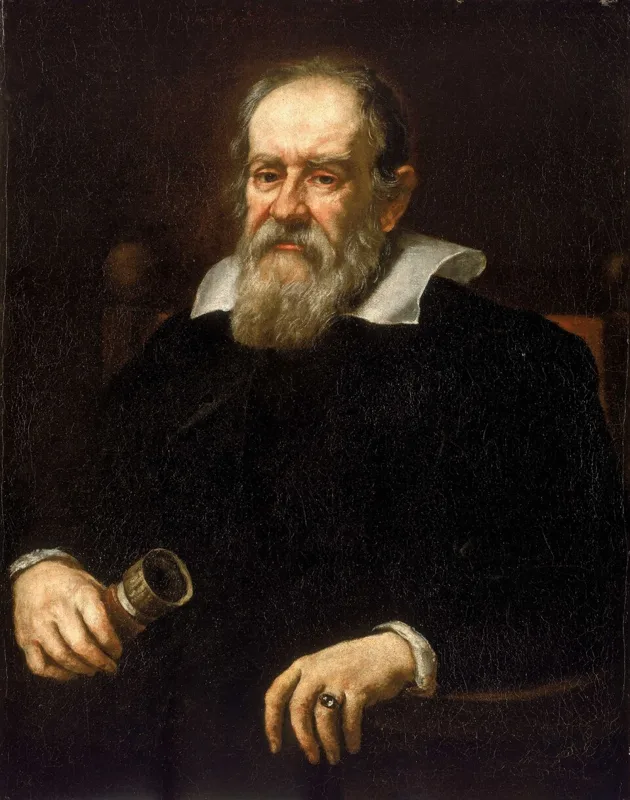
These four moons are known as the Galilean moons: Io, Europa, Ganymede, and Callisto.
Asked in SSC CGL 2022
Practice (1)
Q1098In early 1610, who discovered with his newly invented telescope that Jupiter has four moons?
Show answer
Correct answer: C — Galileo Galilei
Answer: (C)
Galileo discovered Jupiter's four largest moons in January 1610. -
1099
Cumene is an alkylbenzene widely used as a chemical intermediate in the production of phenol.
The cumene process converts benzene into phenol and acetone.
Asked in SSC CGL 2022
Practice (1)
Q1099Name an alkylbenzene widely used as a chemical intermediate in the production of phenol.
Show answer
Correct answer: A — Cumene
Answer: (A)
Cumene (isopropylbenzene) is used to make phenol. -
1100
Chameleons are reptiles, making them cold-blooded animals whose body temperature varies with the environment.
Reptiles lack internal mechanisms to maintain a constant body temperature.
Asked in SSC CGL 2024 (10 Sep, Shift 2)
Practice (1)
Q1100Which of the following options is associated with the class of cold-blooded animals?
Show answer
Correct answer: B — Chameleon
Answer: (B)
The chameleon is a reptile, hence cold-blooded. Pavo (peafowl), Macropus (kangaroo) and Psittacula (parakeet) are warm-blooded.