
🕌 Medieval India मध्यकालीन भारत
340 exam-ready facts · 339 MCQs
-
41
Persian was the official language of the Delhi Sultanate.
Persian was widely used in administration and court records during the Delhi Sultanate.
Asked in SSC CGL 2016 (9 Sep, Shift 3)
Practice (1)
Q41The official language of the Delhi Sultanate was?
Show answer
Correct answer: C — Persian
Answer: (C)
The correct option is (C). -
42
Chachnama records the history of the Arab conquest of Sindh.
Chachnama is an important historical text detailing the early Arab conquest of Sindh.
Asked in SSC CGL 2016 (10 Sep, Shift 3)
Practice (1)
Q42Chachnama records the history of which conquest?
Show answer
Correct answer: C — Arabs
Answer: (C)
The correct option is (C). -
43
Amir Khusro was a famous poet.
Amir Khusro was a Sufi mystic, poet, and scholar associated with the royal courts of Delhi.
Asked in SSC CGL 2016 (11 Sep, Shift 1)
Practice (1)
Q43Amir Khusro was a
Show answer
Correct answer: A — poet
Answer: (A)
The correct option is (A). -
44
Babur was the first to use artillery in warfare in medieval India.
Babur successfully used cannons and artillery in the First Battle of Panipat in 1526.
Asked in SSC CGL 2016 (11 Sep, Shift 2)
Practice (1)
Q44Who among the following was the first to make use of artillery in warfare in medieval India?
Show answer
Correct answer: A — Babur
Answer: (A)
The correct option is (A). -
45
The Vishnu temple at Angkor Wat was built by Suryavarman II.
Angkor Wat in Cambodia is the largest religious monument in the world, built in the 12th century.
Asked in SSC CGL 2016 (11 Sep, Shift 3)
Practice (1)
Q45The famous Vishnu temple at Angkor Wat in Cambodia was built by
Show answer
Correct answer: B — Suryavarman II
Answer: (B)
The correct option is (B). -
46
The Vijay Stambha in Chittorgarh was built by Rana Kumbha.
Rana Kumbha built the Vijay Stambha in 1448 to commemorate his victory over Mahmud Khilji.
Asked in SSC CGL 2017 (8 Aug, Shift 1)
Practice (1)
Q46Who has built the Vijay Stambha (Tower of Victory) in Chittorgarh?
Show answer
Correct answer: B — Rana Kumbha
Answer: (B)
The Vijay Stambha at Chittorgarh was built by Rana Kumbha (c. 1448) to commemorate his victory over Mahmud Khilji of Malwa. -
47
Banabhatta was the court poet of King Harshavardhana.
Banabhatta wrote Harshacharita, a biography of Harshavardhana, and the novel Kadambari.
Asked in SSC CGL 2017 (8 Aug, Shift 3)
Practice (1)
Q47What is the name of the court poet of King Harshavardhana?
Show answer
Correct answer: B — Banabhatta
Answer: (B)
Banabhatta, author of Harshacharita and Kadambari, was Harshavardhana's court poet. -
48
The Konark Sun Temple was built by Narasimhadeva I.
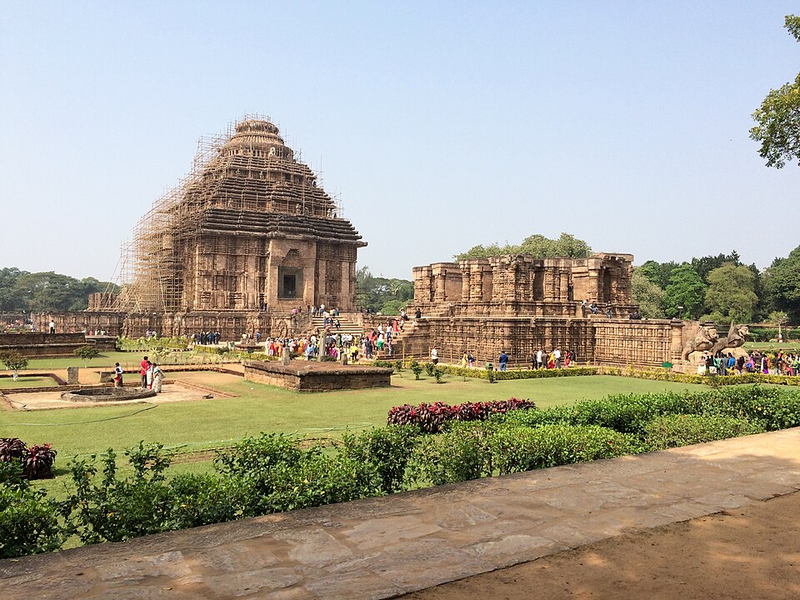
King Narasimhadeva I of the Eastern Ganga dynasty built the Konark Sun Temple in the 13th century.
Asked in SSC CGL 2017
Practice (1)
Q48Who built the Konark''s Sun Temple?
Show answer
Correct answer: B — Narasimhadeva I
Answer: (B)
The Konark Sun Temple was built by King Narasimhadeva I of the Eastern Ganga dynasty in the 13th century. -
49
Todarmal was the revenue minister of Mughal Emperor Akbar.
Raja Todarmal instituted the Zabti system and land revenue reforms during Akbar's reign.
Asked in SSC CGL 2017 (8 Aug, Shift 2)
Practice (1)
Q49Todarmal was the famous revenue minister of which Mughal Emperor?
Show answer
Correct answer: C — Akbar
Answer: (C)
Raja Todarmal was Akbar's finance/revenue minister and devised the Zabti (Dahsala) system. -
50
The second Battle of Tarain was fought between Mohammed Ghori and Prithviraj Chauhan.
The Second Battle of Tarain took place in 1192 and resulted in Ghori's victory.
Asked in SSC CGL 2017 (9 Aug, Shift 3)
Practice (1)
Q50The second Battle of Tarain was fought between __________.
Show answer
Correct answer: D — Mohammed Ghori and Prithviraj Chauhan
Answer: (D)
The Second Battle of Tarain (1192) was fought between Muhammad Ghori and Prithviraj Chauhan. -
51
Mughal Emperor Akbar was illiterate.
Despite being uneducated, Akbar had a great thirst for knowledge and maintained a grand library.
Asked in SSC CGL 2017 (10 Aug, Shift 1)
Practice (1)
Q51Which among the following Mughal Emperor was illiterate?
Show answer
Correct answer: C — Akbar
Answer: (C)
Akbar is regarded as illiterate (he never learnt to read or write). -
52
Guru Tegh Bahadur was the successor of Sikh Guru Har Krishan.
Guru Tegh Bahadur became the ninth Sikh Guru, succeeding Guru Har Krishan in 1665.
Asked in SSC CGL 2017 (10 Aug, Shift 3)
Practice (1)
Q52Who amongst the following was the successor of Sikh Guru Har Krishan?
Show answer
Correct answer: B — Guru Tegh Bahadur
Answer: (B)
Guru Tegh Bahadur succeeded Guru Har Krishan. -
53
Abul Fazl wrote the Akbarnama.
Akbarnama is the official chronicle of the reign of Akbar, written in Persian by Abul Fazl.
Asked in SSC CGL 2017 (11 Aug, Shift 2)
Practice (1)
Q53Who wrote 'Akbarnama'?
Show answer
Correct answer: A — Abul Fazal
Answer: (A)
Abul Fazl wrote the Akbarnama. -
54
Guru Gobind Singh, the tenth Sikh Guru, initiated 'The Khalsa' in 1699 to protect the innocent from religious oppression.
Guru Gobind Singh was also a poet and philosopher.
Asked in SSC CGL 2017 (11 Aug, Shift 2)
Practice (1)
Q54Which Sikh Guru initiated 'The Khalsa'?
Show answer
Correct answer: B — Guru Gobind Singh
Answer: (B)
Guru Gobind Singh founded the Khalsa in 1699. -
55
Emperor Harshavardhana wrote the famous Sanskrit play 'Nagananda', along with other literary works like Ratnavali and Priyadarsika.
Harsha was a patron of art and literature during the 7th century.
Asked in SSC CGL 2017 (12 Aug, Shift 1)
Practice (1)
Q55Which emperor wrote the play 'Nagananda' in Sanskrit language?
Show answer
Correct answer: B — Harshavadhana
Answer: (B)
Harshavardhana wrote Nagananda, Ratnavali and Priyadarsika. -
56
Razia Sultana reigned as the first female emperor of India, ruling the Delhi Sultanate from 1236 to 1240.
She was the daughter of Shams-ud-din Iltutmish.
Asked in SSC CGL 2017 (12 Aug, Shift 2)
Practice (1)
Q56Who was the first female emperor of India?
Show answer
Correct answer: B — Razia Sultana
Answer: (B)
Razia Sultana (1236–40) was the first woman ruler of the Delhi Sultanate. -
57
Queen Didda, noted for her political acumen and administrative skills, ruled over Kashmir between 980 and 1003 AD.
She originally belonged to the Lohara dynasty.
Asked in SSC CGL 2017 (17 Aug, Shift 1)
Practice (1)
Q57The queen with the title Didda ruled over which part of India<br>between 980 - 1003?
Show answer
Correct answer: B — Kashmir
Answer: (B)
Queen Didda ruled Kashmir (980–1003). -
58
The grand Jama Masjid of Delhi was built during the 17th century by the Mughal Emperor Shah Jahan.
It is one of the largest mosques in India.
Asked in SSC CGL 2017 (17 Aug, Shift 1)
Practice (1)
Q58Jama Masjid of Delhi was built in which century?
Show answer
Correct answer: C — 17th
Answer: (C)
Jama Masjid, Delhi was built by Shah Jahan (1650s), in the 17th century. -
59
The Red Fort in Delhi served as the primary imperial residence of the Mughal dynasty emperors.
Construction of the fort began under Shah Jahan in 1638.
Asked in SSC CGL 2017 (17 Aug, Shift 3)
Practice (1)
Q59The Red fort in Delhi was the residence of emperors of which<br>dynasty in the 16th century?
Show answer
Correct answer: D — Mughal
Answer: (D)
The Red Fort was the residence of the Mughal emperors. -
60
The magnificent Jama Masjid of Delhi was commissioned and built by the Mughal Emperor Shah Jahan.
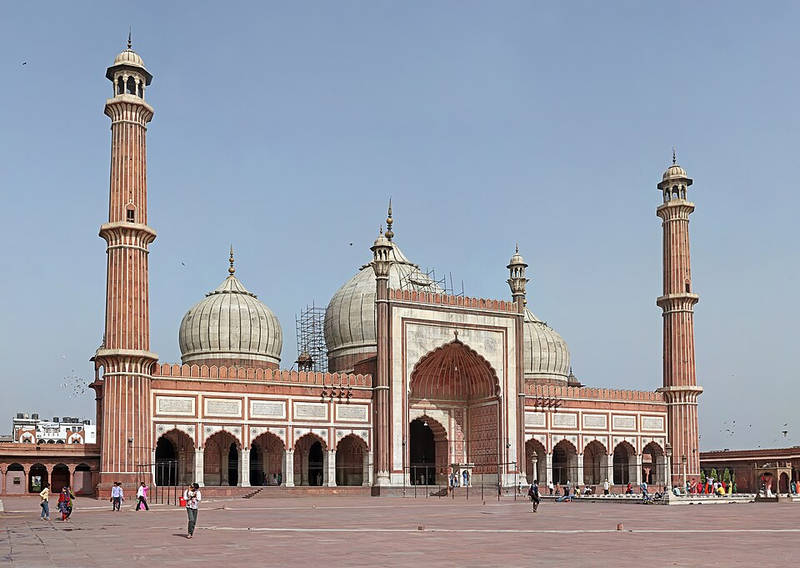
Shah Jahan is also known for building the Taj Mahal.
Asked in SSC CGL 2017
Practice (1)
Q60Jama Masjid of Delhi was built by?
Show answer
Correct answer: D — Shah Jahan
Answer: (D)
Shah Jahan built the Jama Masjid, Delhi.