
🕌 Medieval India मध्यकालीन भारत
340 exam-ready facts · 339 MCQs
-
261
The renowned Sanskrit poet and dramatist Rajashekhara served in the royal court of the Gurjara-Pratihara rulers.
He authored notable literary works such as Karpuramanjari and Kavyamimamsa.
Asked in SSC CGL 2023 (25 Jul, Shift 2)
Practice (1)
Q261The famous poet and dramatist Rajashekhara was the court poet of which of the following Pratihara kings?
Show answer
Correct answer: D — Mahendrapala
Answer: (D)
Rajashekhara was the court poet of the Gurjara-Pratihara kings Mahendrapala I and Mahipala. -
262
Shah Alam II occupied the Mughal throne during the historic Third Battle of Panipat fought in 1761.
This battle took place between the Maratha Empire and the invading forces of Ahmad Shah Abdali.
Asked in SSC CGL 2023 (24 Jul, Shift 4)
Practice (1)
Q262Who was the Mughal emperor during the third battle of Panipat?
Show answer
Correct answer: B — Shah Alam II
Answer: (B)
Shah Alam II was the Mughal emperor at the Third Battle of Panipat (1761). -
263
While historians use the term Vijayanagara Empire, its contemporaries referred to it as Karnataka Samrajyamu.
This native designation reflects the linguistic and regional roots of the southern empire.
Asked in SSC CGL 2023 (25 Jul, Shift 3)
Practice (1)
Q263While historians use the term Vijayanagara Empire and contemporaries of this empire described it as the_______________.
Show answer
Correct answer: B — Karnataka Samrajyamu
Answer: (B)
Contemporaries called the Vijayanagara Empire the Karnataka Samrajyamu. -
264
The Quwwat-ul-Islam mosque, commissioned by Qutb-ud-din Aibak, is located inside the Qutb complex in Delhi.
It is widely considered to be the oldest surviving mosque built by the Delhi Sultans.
Asked in SSC CGL 2023 (27 Jul, Shift 2)
Practice (1)
Q264In which of the following cities is the Quwwat ul-Islam mosque situated?
Show answer
Correct answer: D — Delhi
Answer: (D)The Quwwat-ul-Islam mosque was commissioned by Qutb-ud-din Aibak, the founder of the Delhi Sultanate, in the late twelfth century. It is located within the Qutb complex in Delhi.
Hence, the correct option is (4).
-
265
Basavanna was a 12th-century South Indian philosopher and Bhakti saint who initially served as a minister under the Kalachuris.
He founded the Lingayat sect and promoted social equality through vachanas.
Asked in SSC CGL 2023 (27 Jul, Shift 3)
Practice (1)
Q265Name the Bhakti Saint from South India who was initially a Jaina and a minister in the court of a Chalukya king in the twelfth century.
Show answer
Correct answer: B — Basavanna
Answer: (B)The Bhakti Saint from South India who was initially a Jaina and a minister in the court of a Chalukya king in the twelfth century is Basavanna (Option 2).
Basavanna was a prominent saint and social reformer during the 12th century. He is renowned for his revolutionary ideas and contributions to the Bhakti movement in Karnataka. Originally serving as a minister in the court of King Bijjala I of the Kalachuri dynasty, Basavanna later renounced his ministerial role and Jain faith to become a proponent of the Lingayatism sect within Hinduism. Basavanna's teachings emphasized equality, social justice, and devotion to Lord Shiva, rejecting ritualistic practices and the caste system. His literary works in the form of Vachanas remain significant in Kannada literature and devotional practices.
Thus, Basavanna played a crucial role in shaping the cultural and spiritual landscape of South India during his time.
-
266
The Badshah Nama is the official historical chronicle documenting the reign of Mughal Emperor Shah Jahan.
It was authored in Persian by the court historian Abdul Hamid Lahori.
Asked in SSC CGL 2023
Practice (1)
Q266Who among the following has written the 'Badshah Nama'?
Show answer
Correct answer: B — Abdul Hamid Lahori
Answer: (B)
The correct answer is Abdul Hamid Lahori.
The 'Badshah Nama' (also spelled Padshahnama) is the official chronicle of the reign of Mughal Emperor Shah Jahan, written in Persian by Abdul Hamid Lahori, a court historian patronised by the emperor.
It covers the first two decades of Shah Jahan's rule and is celebrated both as a historical record and for its lavishly illustrated imperial manuscripts.
Note on the other options:
- Babur wrote the Baburnama (Tuzk-i-Baburi), his own autobiography in Chagatai Turkic.
- Inayat Khan authored the Shah Jahan Nama, a separate abridged history of Shah Jahan's reign.
- Abul Fazl wrote the Akbarnama and Ain-i-Akbari, the official chronicles of Emperor Akbar's reign. -
267
Mahendravarman I was a prominent Pallava monarch known for his patronage of rock-cut temple architecture and arts.
He was also a playwright and authored the satirical Sanskrit drama Mattavilasa Prahasana.
Asked in SSC CGL 2024 (9 Sep, Shift 1)
Practice (1)
Q267Mahendravarman I was the ruler of which of the following dynasties?
Show answer
Correct answer: A — Pallava
Answer: (A)
Mahendravarman I (c. 600–630 CE) was a Pallava king. -
268
Malik Kafur led Alauddin Khilji’s successful military expedition against Devagiri in the Deccan region during 1307-08.
This campaign successfully defeated King Ramachandra and established Khilji influence in the south.
Asked in SSC CGL 2024 (9 Sep, Shift 2)
Practice (1)
Q268The first southern campaign of Alauddin Khilji in 1307-08 AD was led to which of the following regions?
Show answer
Correct answer: D — Devagiri
Answer: (D)
Malik Kafur's first southern campaign (1307–08) was against Ramachandra of Devagiri. -
269
Mahabalipuram developed as a major architectural hub featuring monolithic rathas under the Pallava dynasty.
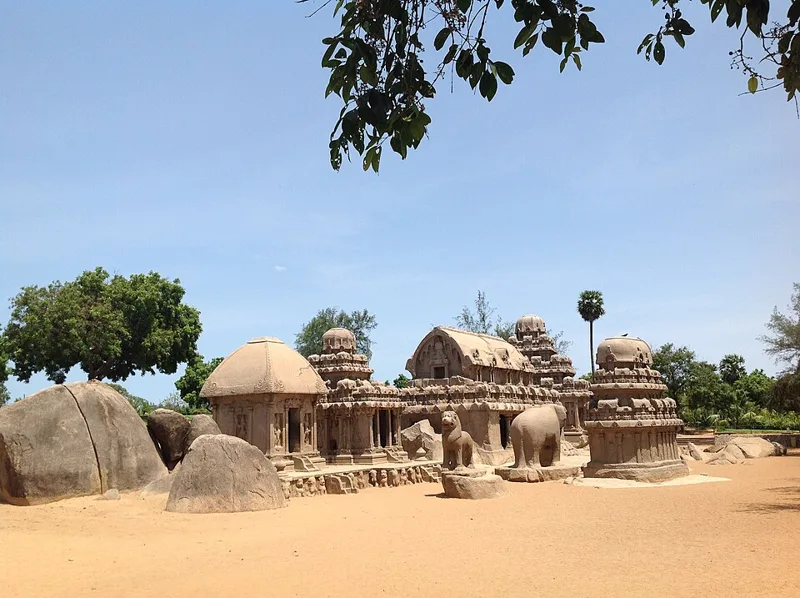
The famous Shore Temple here is a UNESCO World Heritage site reflecting early Dravidian style.
Asked in SSC CGL 2024
Practice (1)
Q269Mahabalipuram emerged as an important centre of temple architecture under which of the following kingdoms of south India?
Show answer
Correct answer: A — Pallava
Answer: (A)
Mahabalipuram’s rathas and Shore Temple were built under the Pallavas. -
270
Sultan Ghiyas-ud-din Balban reorganized the military department known as Diwan-i-Arz to secure the empire.
This department played a crucial role in maintaining internal security and defending against invasions.
Asked in SSC CGL 2024 (10 Sep, Shift 3)
Practice (1)
Q270Which of the following departments of Delhi Sultanate was reorganized by Balban?
Show answer
Correct answer: B — Diwan-i-Arz
Answer: (B)
Balban reorganised the military department, Diwan-i-Arz. -
271
Tansen was a legendary Hindustani classical musician and one of the prized Navratnas in Emperor Akbar's court.
He made immense contributions to North Indian classical music and invented several new ragas.
Asked in SSC CGL 2024 (11 Sep, Shift 1)
Practice (1)
Q271Who among the following was one of the Navratnas of Akbar?
Show answer
Correct answer: D — Tansen
Answer: (D)
Tansen, the musician, was one of Akbar’s Navratnas. -
272
Several important historical Persian chronicles document the political and cultural developments of the Delhi Sultanate.
These texts serve as primary sources for historians studying medieval Indian history.
Asked in SSC CGL 2024 (11 Sep, Shift 1)
Practice (1)
Q272Match the following books with their respective authors.<br><table border='1'><tr><th>Book</th><th>Author</th></tr><tr><td>a) Tajul Ma’asir</td><td>i) Yahya bin Ahmad Sirhindi</td></tr><tr><td>b) Khazain-ul Futuh</td><td>ii) Hasan Nizami</td></tr><tr><td>c) Tarikh-i-Firuzshahi</td><td>iii) Ziauddin Barani</td></tr><tr><td>d) Tarikh-i-Mubarakshahi</td><td>iv) Amir Khusrav</td></tr></table>
Show answer
Correct answer: C — a-ii; b-iv; c-iii; d-i
Answer: (C)
Tajul Ma’asir – Hasan Nizami; Khazain-ul Futuh – Amir Khusrau; Tarikh-i-Firuzshahi – Ziauddin Barani; Tarikh-i-Mubarakshahi – Yahya bin Ahmad Sirhindi. -
273
Silappathikaram is renowned as the earliest epic poem in Tamil literature, composed by the prince-turned-monk Ilango Adigal.
It forms a foundational part of the classical Sangam literature tradition.
Asked in SSC CGL 2024 (9 Sep, Shift 3)
Practice (1)
Q273Silappathikaram (the Jewelled Anklet), the earliest epic poem in Tamil was written in the 5th - 6th Century CE by _________.
Show answer
Correct answer: C — Ilango Adigal
Answer: (C)
Silappathikaram was composed by Ilango Adigal. -
274
Raja Todar Mal served as Akbar's finance and revenue minister, devising the Zabti or Dahsala system.
He revolutionized the Mughal land revenue administration.
Asked in SSC CGL 2024 (9 Sep, Shift 3)
Practice (1)
Q274Who was the revenue minister during the reign of Akbar?
Show answer
Correct answer: A — Todar Mal
Answer: (A)
Raja Todar Mal was Akbar’s finance (revenue) minister and devised the Zabti / Dahsala system. -
275
Akbar was crowned at Kalanaur in the Gurdaspur district of Punjab in February 1556 at the age of 13.
Bairam Khan acted as his regent during this early period.
Asked in SSC CGL 2024 (10 Sep, Shift 1)
Practice (1)
Q275After the death of Humayun, the 13 year-old Akbar was coronated in 1556 at Kalanaur in ________.
Show answer
Correct answer: C — Punjab
Answer: (C)
Akbar was crowned at Kalanaur (Gurdaspur district), Punjab, in February 1556. -
276
Ibrahim Lodi was the last ruler of the Delhi Sultanate and was defeated at Panipat in 1526.
His defeat marked the beginning of the Mughal Empire in India.
Asked in SSC CGL 2024 (11 Sep, Shift 2)
Practice (1)
Q276Who among the following was the last sultan of Delhi sultanate?
Show answer
Correct answer: C — Ibrahim Lodi
Answer: (C)
Ibrahim Lodi, defeated at Panipat in 1526, was the last Delhi Sultan. -
277
Islam emerged as a new religion in Arabia during the 7th century AD.
Prophet Muhammad played the pivotal role in its establishment.
Asked in SSC CGL 2024 (10 Sep, Shift 2)
Practice (1)
Q277In the 7th Century AD, a new religion called Islam was born in _________.
Show answer
Correct answer: D — Arabia
Answer: (D)
Islam arose in Arabia (Mecca) in the 7th century. -
278
Ibn Battuta recorded that the people of Delhi sent abusive letters to Muhammad bin Tughlaq, causing him to shift the capital.
This shift was made from Delhi to Daulatabad.
Asked in SSC CGL 2024 (11 Sep, Shift 3)
Practice (1)
Q278According to which of the following foreign travellers, people of Delhi used to write letters containing abuses to the Sultan, therefore, in order to punish them Sultan decided to shift the capital?
Show answer
Correct answer: C — Ibn Batuta
Answer: (C)
Ibn Battuta wrote that Delhi’s people sent abusive letters to Muhammad bin Tughlaq, prompting the shift of capital. -
279
The magnificent Kailasa temple at Ellora was constructed during the reign of Rashtrakuta king Krishna I.
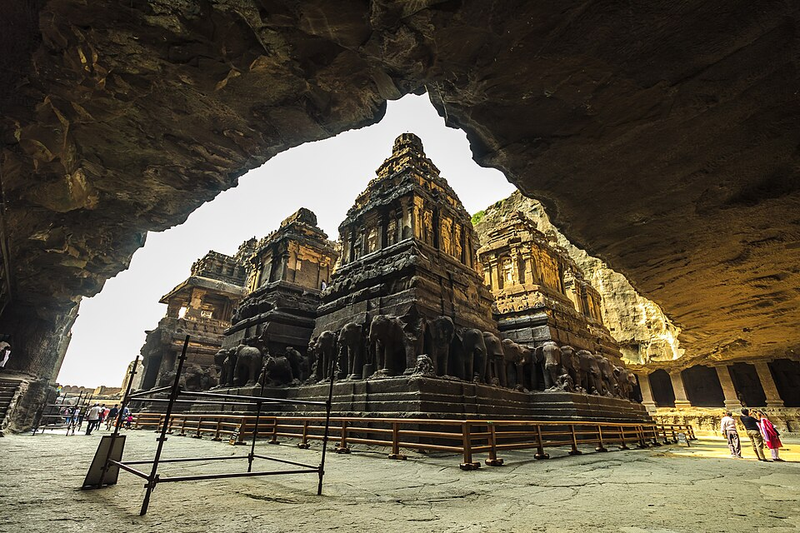
It is located in Cave 16 of the Ellora Caves complex.
Asked in SSC CGL 2024
Practice (1)
Q279The magnificent Kailasa temple at Ellora was built during the reign of which Rashtrakuta king?
Show answer
Correct answer: C — Krishna I
Answer: (C)
The Kailasa temple (Cave 16, Ellora) was built under Rashtrakuta king Krishna I (8th century). -
280
Muhammad of Ghor defeated Jayachandra of the Gahadavala dynasty at the Battle of Chandawar in 1194 AD.
This battle consolidated Ghurid power in northern India.
Asked in SSC CGL 2024 (12 Sep, Shift 3)
Practice (1)
Q280In which of the following battles did Muhammad of Ghor defeat Jayachandra of Gahadavala dynasty in 1194 AD?
Show answer
Correct answer: B — Battle of Chandawar
Answer: (B)
Muhammad Ghori defeated Jaichand of Kannauj at Chandawar in 1194.