
🎭 Art & Culture कला और संस्कृति
801 exam-ready facts · 758 MCQs
-
161
Amrita Sher-Gil was a pioneering and distinguished Hungarian-Indian painter known for her avant-garde works.
Amrita Sher-Gil was a painter; others are dancers
Asked in SSC CGL 2017 (16 Aug, Shift 1)
Practice (1)
Q139Who amidst the following is a distinguished painter?
Show answer
Correct answer: C — Amrita Shergill
Answer: (C)
Amrita Sher-Gil was a painter; others are dancers. -
162
The book title ‘Hot Stage' is listed in official examination keys regarding collections of modern Indian plays addressing contemporary social issues.
It serves as a reference point for thematic literature questions in competitive exams.
Asked in SSC CGL 2025 (12 Sep, Shift 3)
Practice (1)
Q140Which of the following best describes the theme of the book 'Hot Stage'?
Show answer
Correct answer: A — A collection of modern Indian plays on social issues
Answer: (A)SSC's key describes 'Hot Stage' as a collection of modern Indian plays on social issues, and that is option (a), the answer to mark.
Treat it as the key's description rather than a checked fact. The book published under this title, Anita Nair's Hot Stage, is a crime novel, and the other three descriptions do not fit it either.
Why the others are wrong(b)A historical account of India’s independence movement: The book of this name is not about the freedom struggle. Anita Nair's Hot Stage follows a murder investigation in contemporary Bangalore.(c)A novel about ancient Indian mythology: Anita Nair's Hot Stage is a novel, but a crime novel, a police procedural, not a retelling of myth.(d)A travelogue about the Himalayas: The book is set in Bangalore, not the Himalayas, and it is a police procedural, not travel writing. -
163
‘Sahela Re' is a acclaimed Hindi novel written by renowned author Mrinal Pande, capturing the essence of traditional Hindustani music culture.
The story beautifully portrays the generational bonding and musical heritage between mother-daughter singer protagonists.
Asked in SSC CGL 2025 (15 Sep, Shift 1)
Practice (1)
Q141Who wrote the novel Sahela Re?
Show answer
Correct answer: B — Mrinal Pande
Answer: (B)Sahela Re is a Hindi novel by Mrinal Pande. HarperCollins published its English translation, by Priyanka Sarkar.
The novel follows a mother-daughter pair of singers, Hira Bai and Anjali Bai, and the world of Hindustani music they belonged to → option (b).
Why the others are wrong(a)Vasanti Muzumdar: Vasanti Muzumdar is not the novel's author. Sahela Re was written in Hindi by Mrinal Pande, and its English edition credits Priyanka Sarkar as translator.(c)Priyanka Sarkar: Priyanka Sarkar is the novel's English translator, not its author. HarperCollins published her translation of Mrinal Pande's Hindi original.(d)Shubhangi Tiwari: Shubhangi Tiwari is not credited on the novel. Sahela Re is Mrinal Pande's work, written in Hindi and translated into English by Priyanka Sarkar. -
164
The iconic Charminar monument, built in 1591, is located in Hyderabad, Telangana.
Charminar is in Hyderabad
Asked in SSC CGL 2017 (17 Aug, Shift 2)
Practice (1)
Q142In which city of India<br>is Charminar located?
Show answer
Correct answer: D — Hyderabad
Answer: (D)
Charminar is in Hyderabad. -
165
‘Why Bharat Matters' is authored by India's External Affairs Minister S. Jaishankar, focusing on India's evolving global foreign policy and diplomatic stance.
The book analyzes contemporary geopolitical shifts through the lens of India's ancient civilizational values and modern economic resilience.
Asked in SSC CGL 2025 (15 Sep, Shift 2)
Practice (1)
Q143Which of the following best describes the theme of the book Why Bharat Matters?
Show answer
Correct answer: A — India’s economic and cultural importance
Answer: (A)Why Bharat Matters (Rupa, 2024) is External Affairs Minister S. Jaishankar's book on India's foreign policy and its growing role in the world.
It argues from India's cultural values and heritage, drawing on the Ramayana, and from economic choices such as resilient supply chains. India's economic and cultural importance is option (a).
Why the others are wrong(b)Biography of Mahatma Gandhi: It is not a biography. Jaishankar writes about India's foreign policy and global role, and Mahatma Gandhi is not the book's subject.(c)Ancient mythology of India and festival: The Ramayana runs through the book, but as a lens on statecraft and diplomacy. The book is about foreign policy, not mythology or festivals.(d)Fictional rural story and moral values: The book is non-fiction, a sitting minister's argument about India's place in the world. It is not a novel or a village tale with a moral. -
166
The novel 'Darkness at Noon' was authored by Arthur Koestler, and 'The Sound and the Fury' was written by William Faulkner.
'Darkness at Noon' is by Arthur Koestler and 'The Sound and the Fury' by William Faulkner, so 1 and 3 are wrong
Asked in SSC CGL 2017 (17 Aug, Shift 2)
Practice (1)
Q1441. The author of the<br>novel 'Darkness at Noon' is Victor LaValle.<br>2. The author of the novel 'The Great<br>Gatsby' is F. Scott Fitzgerald.<br>3. The author of the novel 'The Sound and the Fury' is L. Ron Hubbard.<br>Which of the statements given above<br>are not correct?
Show answer
Correct answer: C — 1 and 3
Answer: (C)
'Darkness at Noon' is by Arthur Koestler and 'The Sound and the Fury' by William Faulkner, so 1 and 3 are wrong. -
167
The monumental Dhamek Stupa, marking the spot of Buddha's first sermon, is located in Sarnath near Varanasi.
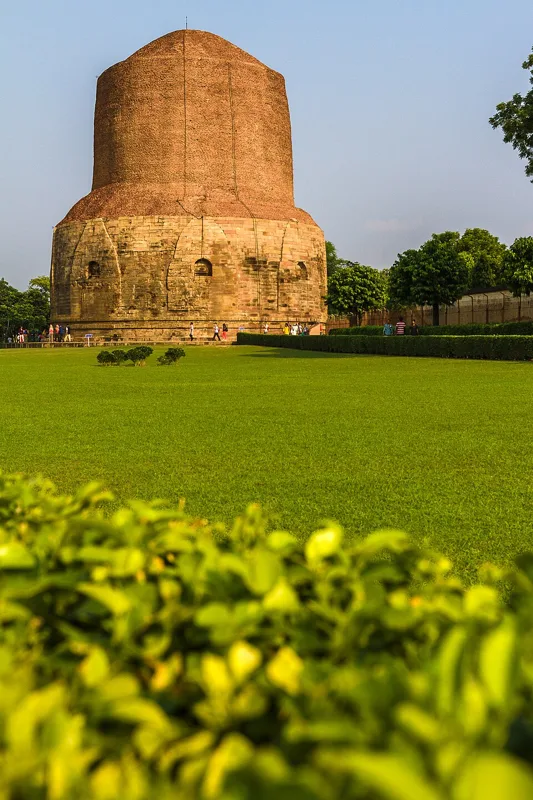
Dhamek Stupa is at Sarnath near Varanasi
Asked in SSC CGL 2017 (18 Aug, Shift 2)
Practice (1)
Q145In which city of India is Dhamek Stupa located?
Show answer
Correct answer: C — Varanasi
Answer: (C)
Dhamek Stupa is at Sarnath near Varanasi. -
168
‘Last Man in Tower' is a celebrated novel by Aravind Adiga that investigates moral dilemmas amid rapid real estate transformation in modern Mumbai.
The plot centers on an old retired schoolteacher who staunchly refuses a lucrative builder's offer to demolish his apartment building.
Asked in SSC CGL 2025 (13 Sep, Shift 2)
Practice (1)
Q146Read the below statements marked as Assertion (A) and Reason (R). Mark the correct options:<br>Assertion (A): Last Man in Tower explores the moral and ethical conflicts faced by residents during rapid urban development and real estate pressures in Mumbai.<br>Reason (R): The novel focuses on the historical evolution of Mumbai’s architecture and its colonial past.
Show answer
Correct answer: C — A is true, but R is false.
Answer: (C)A is true. In Aravind Adiga's 2011 novel Last Man in Tower, a builder offers to buy out an entire Mumbai apartment block. Every resident agrees except Masterji, a retired schoolteacher, and his refusal sets him against the builder and his neighbours.
R is false. The novel is about that buy-out and the choices it forces, not the history of Mumbai's architecture or its colonial past.
Why the others are wrong(a)Both A and R are true, and R is the correct explanation of A.: R is false, so it cannot explain A. The novel centres on a property buy-out and its moral pressure, not on Mumbai's colonial architecture.(b)Both A and R are true, but R is not the correct explanation of A.: Needs R to be true. The novel does not trace the historical evolution of Mumbai's architecture; its subject is a present-day redevelopment deal.(d)A is false, but R is true.: Gets A backwards. The moral conflict of residents under real-estate pressure is exactly what the novel is about. -
169
Humayun's Tomb, a UNESCO World Heritage site showcasing early Mughal architecture, is located in New Delhi.
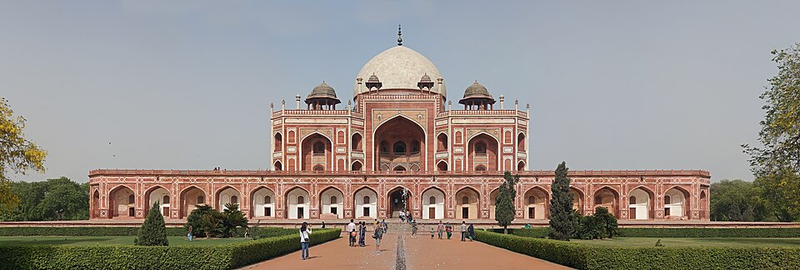
Humayun's Tomb is in New Delhi
Asked in SSC CGL 2017 (18 Aug, Shift 3)
Practice (1)
Q147Where is Humayun's Tomb is located?
Show answer
Correct answer: B — New Delhi
Answer: (B)
Humayun's Tomb is in New Delhi. -
170
‘Arranged Marriage' is the debut collection of short stories by acclaimed author Chitra Banerjee Divakaruni focusing on South Asian immigrant experiences.
The tales deeply examine the cultural conflicts, marital struggles, and identity transformations faced by Indian women abroad.
Asked in SSC CGL 2025 (15 Sep, Shift 3)
Practice (1)
Q148Which of the following best describes 'Arranged Marriage' by Chitra Banerjee Divakaruni?
Show answer
Correct answer: A — Stories exploring immigrant life, cultural identity, and arranged marriage challenges.
Answer: (A)Arranged Marriage is Chitra Banerjee Divakaruni's first collection of stories. Her own site says it focuses on immigrants from India caught between two worlds, women both liberated and trapped by cultural change.
Immigrant life and cultural identity are its stated subject, and the title supplies the third theme → option (a).
Why the others are wrong(b)Historical novel on India’s independence movement.: It is a story collection, not a novel. Divakaruni's Independence (2022) is a novel set during the 1947 partition of India.(c)Fantasy saga blending mythology and politics.: Its stories are realist, about women from India caught between two worlds. Myth is her Palace of Illusions (2008), the Mahabharat told by Panchaali.(d)Scientific study of social customs and psychology: It is fiction, eleven portraits of women on the verge of change, not a scientific study of customs or psychology. -
171
The novel 'Missile Gap' was authored by Charles Stross and 'The City and the City' was written by China Mieville.
'Bird Box' is by Josh Malerman, so only 1 and 3 are correct
Asked in SSC CGL 2017 (19 Aug, Shift 1)
Practice (1)
Q149Which of the statements given below are correct?<br>1. The author of the novel 'Missile Gap' is Charles Stross.<br>2. The author of the novel 'Bird Box' is Victor LaValle.<br>3. The author of the novel 'The City and the City' is China Mieville.
Show answer
Correct answer: C — 1 and 3
Answer: (C)
'Bird Box' is by Josh Malerman, so only 1 and 3 are correct. -
172
‘The Moor's Last Sigh' is a richly layered, acclaimed novel written by Salman Rushdie that blends historical events with magical realism.
The narrative traces the tumultuous history of a unique spice-merchant family across generations in twentieth-century India.
Asked in SSC CGL 2025 (14 Sep, Shift 3)
Practice (1)
Q150Read the below statements marked as Assertion (A) and Reason (R). Mark the correct options:<br>Assertion (A): The Moor's Last Sigh is acclaimed for its intricate narrative that blends historical events with magical realism to explore Indian identity and politics.<br>Reason (R): The novel won the Booker Prize for its innovative storytelling and profound cultural insights.
Show answer
Correct answer: C — A is true, but R is false.
Answer: (C)Assertion A fits Salman Rushdie's 1995 novel. It follows a family through Bombay and Cochin, draws on events from the fall of Granada to the 1993 Bombay bombings, and its narrator ages twice as fast as normal.
Reason R is false. The Moor's Last Sigh was only shortlisted for the 1995 Booker Prize, which Pat Barker won with The Ghost Road. A true, R false: option (c).
Why the others are wrong(a)Both A and R are true, and R is the correct explanation of A.: R is false, so it cannot explain A. The novel reached the 1995 Booker shortlist but lost to Pat Barker's The Ghost Road.(b)Both A and R are true, but R is not the correct explanation of A.: 'Both true' fails on R. Rushdie's Booker win came in 1981, for Midnight's Children. The Moor's Last Sigh was shortlisted in 1995 and did not win.(d)A is false, but R is true.: A is the true half: the novel blends history with fantastical elements, and it won the 1995 Whitbread Prize for Best Novel. It is R, the Booker claim, that fails. -
173
Gol Gumbaz, the mausoleum of Mohammed Adil Shah located in Bijapur, was designed by the architect Yaqut of Dabul.
Gol Gumbaz at Bijapur was designed by Yaqut of Dabul
Asked in SSC CGL 2017 (19 Aug, Shift 3)
Practice (1)
Q151Gol Gumbaz was designed by?
Show answer
Correct answer: D — Yaqut of Dabul
Answer: (D)
Gol Gumbaz at Bijapur was designed by Yaqut of Dabul. -
174
‘Indica: A Deep Natural History of the Indian Subcontinent' is an engaging science book authored by Pranay Lal.
It details the geological evolution, climatic changes, and ancient biodiversity of the Indian subcontinent over millions of years.
Asked in SSC CGL 2025 (16 Sep, Shift 1)
Practice (1)
Q152Who wrote 'Indica: A Deep Natural History of the Indian Subcontinent'?
Show answer
Correct answer: B — Pranay Lal
Answer: (B)Indica: A Deep Natural History of the Indian Subcontinent is by Pranay Lal, a biochemist who works in public health and the environment. Penguin publishes it under its Allen Lane imprint.
Its subject is deep time: the blurb ties the caves of Ellora to ancient lava floods and Bengaluru's climate to a tectonic event 88 million years ago → option (b).
Why the others are wrong(a)Sanjeev Sanyal: Sanjeev Sanyal, an economist, wrote about India's geography and oceans in Land of the Seven Rivers and The Ocean of Churn, not Indica.(c)Rohan Murty: Rohan Murty founded the Murty Classical Library of India and the digital transformation company Soroco. He is not the author of Indica.(d)Tony Joseph: Tony Joseph, a journalist, wrote Early Indians: The Story of Our Ancestors and Where We Came From (2018), on prehistoric migrations into India, not Indica. -
175
‘Being Indian' is a notable non-fiction work authored by Pavan K. Varma that explores the complex facets of contemporary Indian cultural identity.
The book reflects on the socio-political behaviors, values, and psychological traits that define the people of India.
Asked in SSC CGL 2025 (16 Sep, Shift 2)
Practice (1)
Q153Consider the following statements about the book 'Being Indian' by Pavan K. Varma:<br>1) The book won the Vodafone Crossword Book Award for exploring Indian identity and culture.<br>2) It received the Sahitya Akademi Award for its contributions to Indian English poetry.<br>Which of the above statements is/are correct?
Show answer
Correct answer: A — Only statement 1 is correct
Answer: (A)SSC's key accepts statement 1 and rejects statement 2.
Statement 2 is plainly wrong. Being Indian (2004) is a work of non-fiction prose about Indian identity, not poetry, and no Sahitya Akademi Award appears among Varma's recorded honours.
Statement 1 is where the key rests. We could not confirm that award in the sources we checked, which is why this question carries a dispute note.
Why the others are wrong(b)Only statement 2 is correct: Statement 2 is false. Being Indian is non-fiction prose, not poetry, and Varma's recorded honours include no Sahitya Akademi Award.(c)Both statements 1 and 2 are correct: Statement 2 is false, so both cannot be correct. The book is non-fiction about Indian identity, not a contribution to Indian English poetry.(d)Neither statement 1 nor 2 is correct: The key treats statement 1 as true, which rules out "neither". Our doubt about statement 1 is set out in the dispute note on this question. -
176
Buland Darwaza, built by Mughal Emperor Akbar at Fatehpur Sikri, is located in the state of Uttar Pradesh.
Buland Darwaza is at Fatehpur Sikri in Uttar Pradesh
Asked in SSC CGL 2017 (20 Aug, Shift 1)
Practice (1)
Q154Buland Darwaza is located in?
Show answer
Correct answer: C — Uttar Pradesh
Answer: (C)
Buland Darwaza is at Fatehpur Sikri in Uttar Pradesh. -
177
‘The Silk Roads: A New History of the World' is an acclaimed historical study written by Peter Frankopan.
It reorients global history by placing Central Asia and the ancient trade routes at the center of international developments.
Asked in SSC CGL 2025 (20 Sep, Shift 1)
Practice (1)
Q155What is the primary focus of Peter Frankopan’s book The Silk Roads: A New History of the World?
Show answer
Correct answer: C — A global history centered on cultural and political exchanges along the Silk Road regions
Answer: (C)Peter Frankopan's The Silk Roads: A New History of the World (Bloomsbury, 2015) retells world history from the routes linking Asia and Europe, rather than outward from Western Europe.
Its subject is the cultural and political exchange along those routes: a global history centred on the Silk Road regions.
Why the others are wrong(a)The colonization of the Americas by European powers: The Americas are not the book's centre. Frankopan's subject is the web of routes linking Asia and Europe, not European colonisation across the Atlantic.(b)The trade disputes between ancient Rome and China: Rome–China trade is far too narrow. The book runs from antiquity to the present, and its frame is the whole Silk Road world, not a dispute between two ancient empires.(d)The history of Western Europe from the Renaissance to the Industrial Revolution: Western Europe from the Renaissance to the Industrial Revolution is the familiar story Frankopan moves away from. His centre lies east, along the Silk Roads. -
178
The rock-cut Ajanta and Ellora caves, known for ancient Indian art and architecture, are situated in Maharashtra.
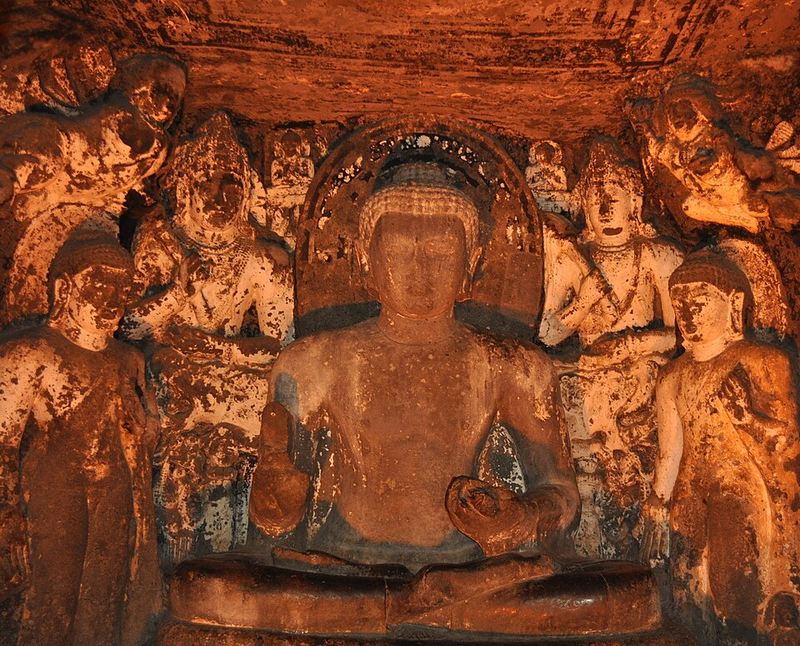
The Ajanta and Ellora caves are in Maharashtra
Asked in SSC CGL 2017 (20 Aug, Shift 3)
Practice (1)
Q156Ajanta and Ellora caves are situated in which state of India?
Show answer
Correct answer: C — Maharashtra
Answer: (C)
The Ajanta and Ellora caves are in Maharashtra. -
179
‘The Winner's Mindset' is a performance psychology book authored by former Australian cricketer Shane Watson.
It provides practical mental frameworks to help athletes and individuals build resilience and conquer pressure.
Asked in SSC CGL 2025 (21 Sep, Shift 1)
Practice (1)
Q157Which of the following best encapsulates the core philosophy presented in Shane Watson’s book 'The Winner's Mindset'?
Show answer
Correct answer: C — Psychological resilience and strategic adaptability in elite sports
Answer: (C)The title names the subject. The Winner's Mindset is about the mental side of performance, not the mechanics of cricket.
Its description on Goodreads has Watson using his own in-game experiences and 'an easy-to-understand mental skills framework', with techniques for 'any performance arena'.
Why the others are wrong(a)Technical manual on cricket techniques: A technical manual would teach batting and bowling mechanics. Watson's book offers a framework for the mind, not coaching drills.(b)Sociological study of sports and gender: Nothing in the book's description concerns gender or sociology. It is a mindset guide by a former cricketer, not an academic study of sport and society.(d)Biography of Shane Watson’s cricket career: The book draws on Watson's own in-game experiences, but as material for a mental skills framework. A biography would chronicle the career for its own sake.
A book about the mind under pressure fits psychological resilience → option (c). -
180
'Wings of Fire' is an autobiography of Dr. A.P.J. Abdul Kalam, and 'Open' is the autobiography of tennis player Andre Agassi.
Statement 1 is wrong: 'A Foreign Policy for India' is by I.K. Gujral. Statements 2 and 3 are correct
Asked in SSC CGL 2017 (20 Aug, Shift 3)
Practice (1)
Q158Which of the statements given below are correct?<br>1. The author of 'A Foreign Policy For India' is L.K Advani.<br>2. 'Wings of Fire' is a book written by A.P.J Abdul kalaam.<br>3. 'Open' is an Autobiography of Andre Agassi.
Show answer
Correct answer: B — 2 and 3
Answer: (B)
Statement 1 is wrong: 'A Foreign Policy for India' is by I.K. Gujral.
Statements 2 and 3 are correct.